
Today we had a full-day of touring Takayama with an early morning visit to the centuries-old Miyagawaen Morning Market. It was so nice to walk rather than jump onto a bus or train. On the way to the market we made a few stops along the way.
Takayama is a remarkably preserved Edo-period old town. There are old buildings, statues, and shrines hiding throughout the city. You can’t miss the three layer pagoda that is inside Takayama’s oldest temple complex,. The Hida Kokubunji Temple has a history dating back to 746 AD. Close to the pagoda is a huge 1,200 year old ginkgo tree designated as a National Natural Monument. It’s leaves were begining to turn golden. It is said that once the leaves fall the first snow is soon to follow. Some of the buildings in this complex date from the 15th or 16th century.
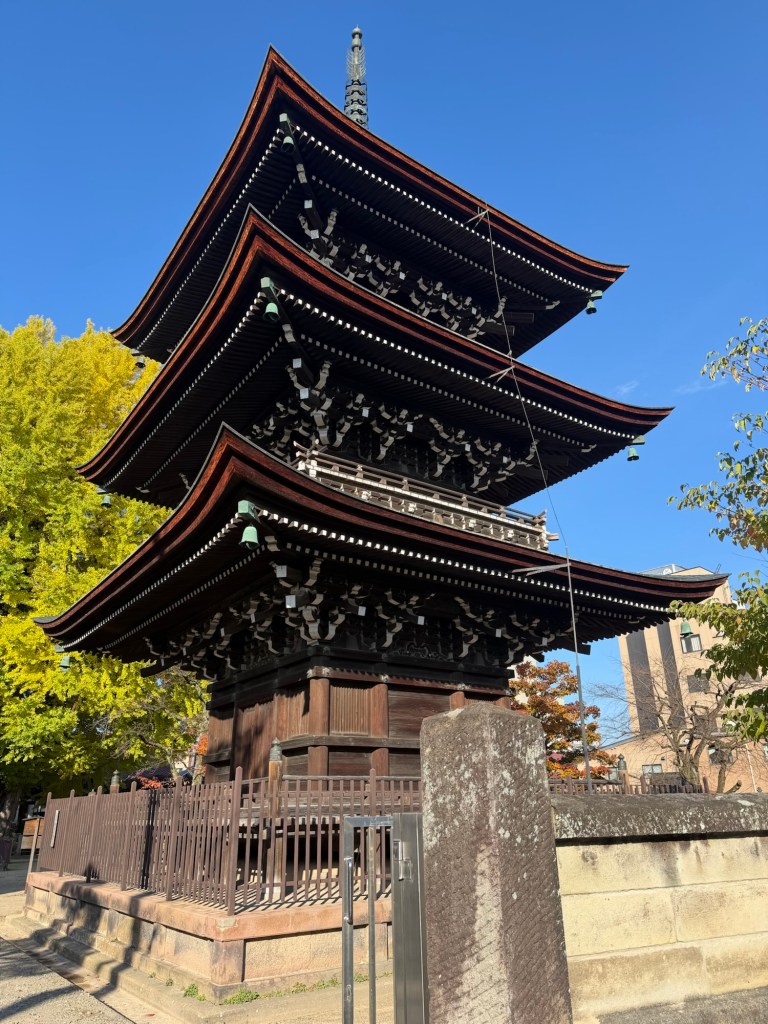
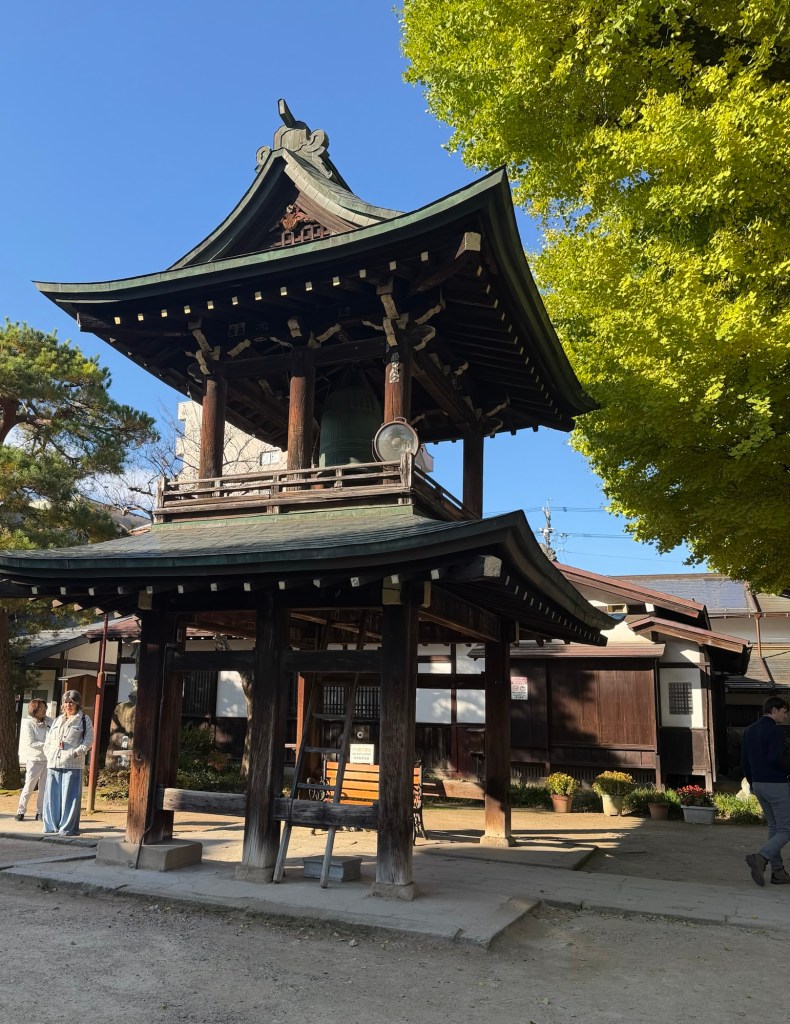
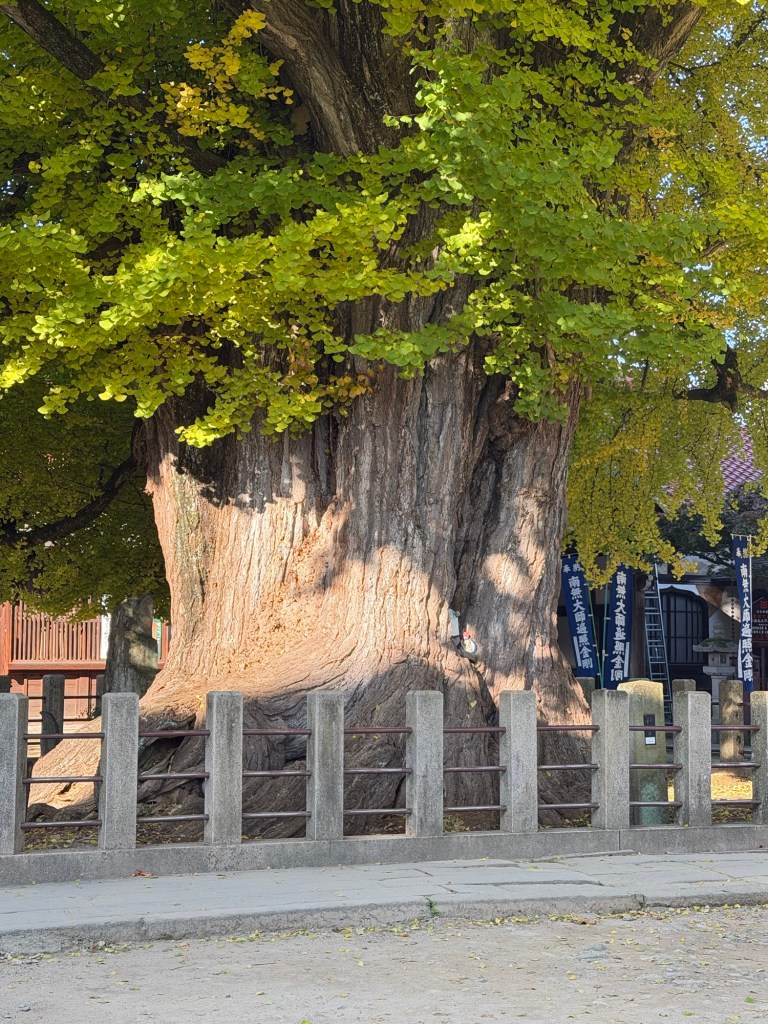
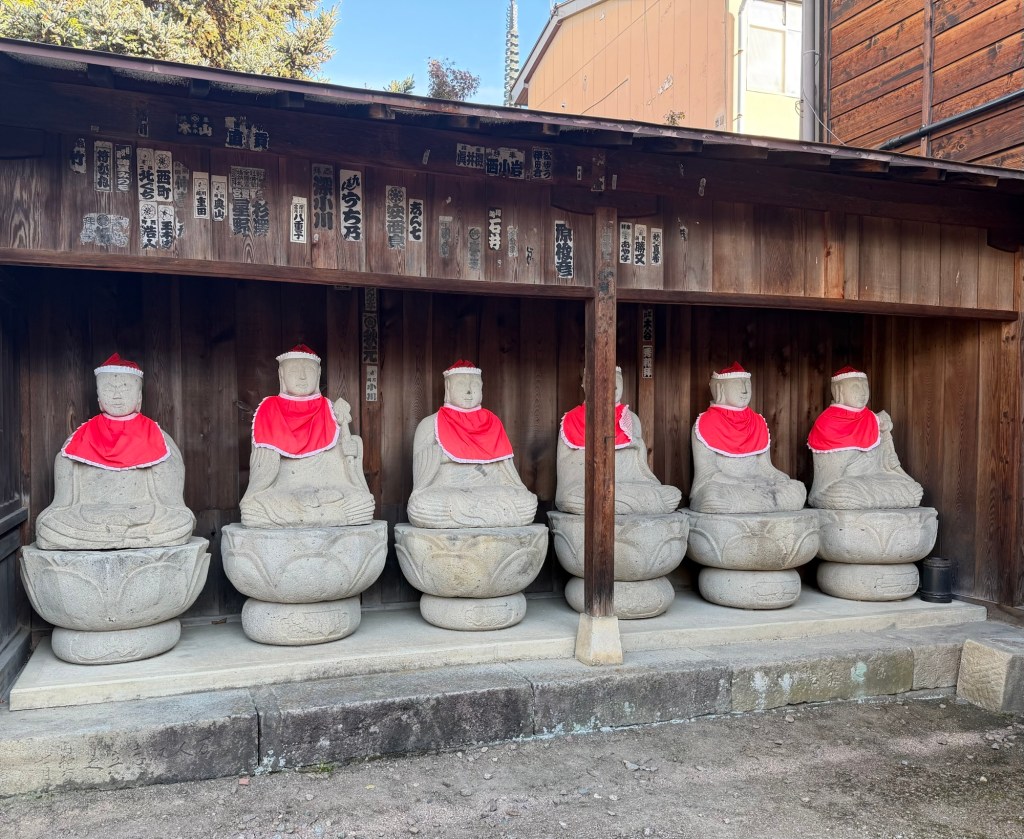
There was still more to discover on our walk to the Market. There were six Jizo Bodhisattva statues. They are revered in Japan as compassionate guardians of travelers and children. The red bibs are traditional offerings symbolizing protection and care. Red is believed to ward off evil and illness.
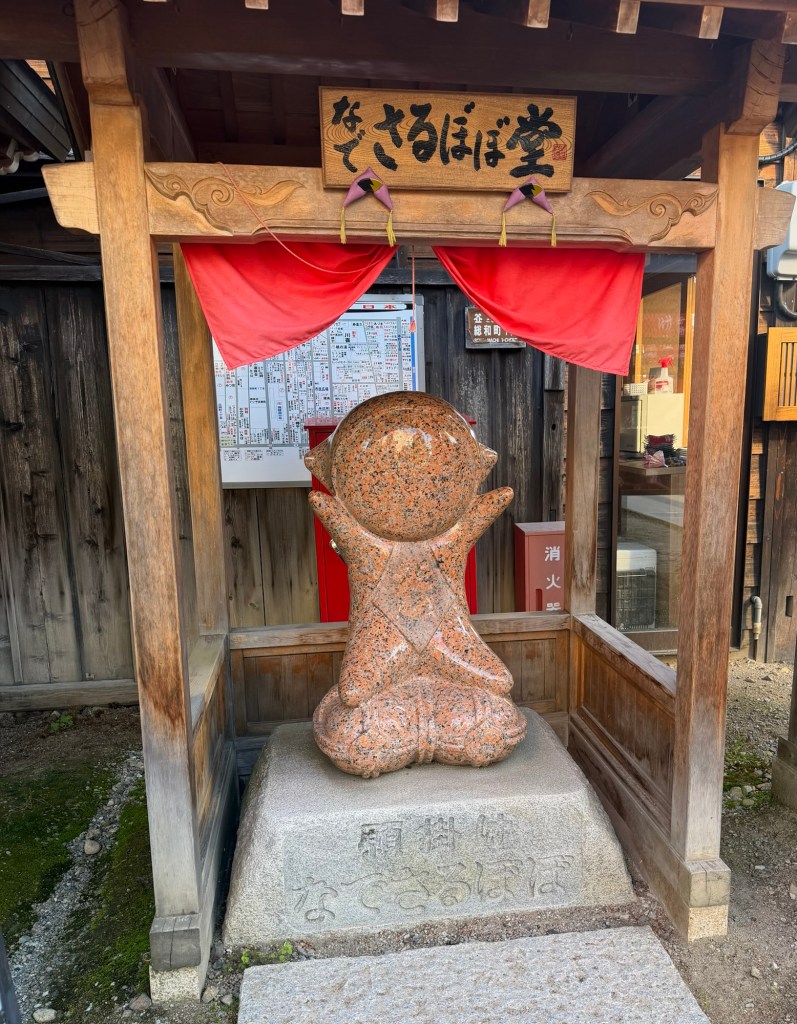
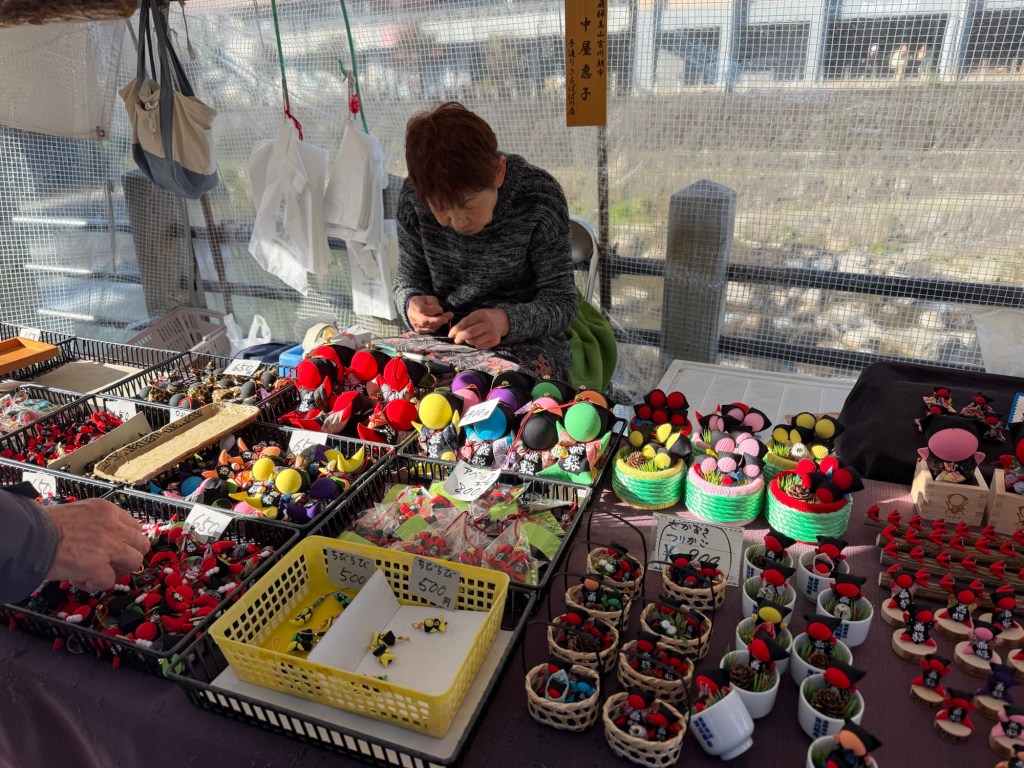
Another unusual statue we saw was of Sarubobo, a stone sculpture that represents a baby monkey and serves as a traditional good luck charm if you rub it. These faceless, human-shaped images are made into dolls which serve as protective good luck amulets for safe childbirth, happy marriages and healthy children. Without a fixed face it is said the owner can project their own feelings onto the doll. Red is the original color of these dolls, but they now come in a variety of colors each bringing their own blessings.
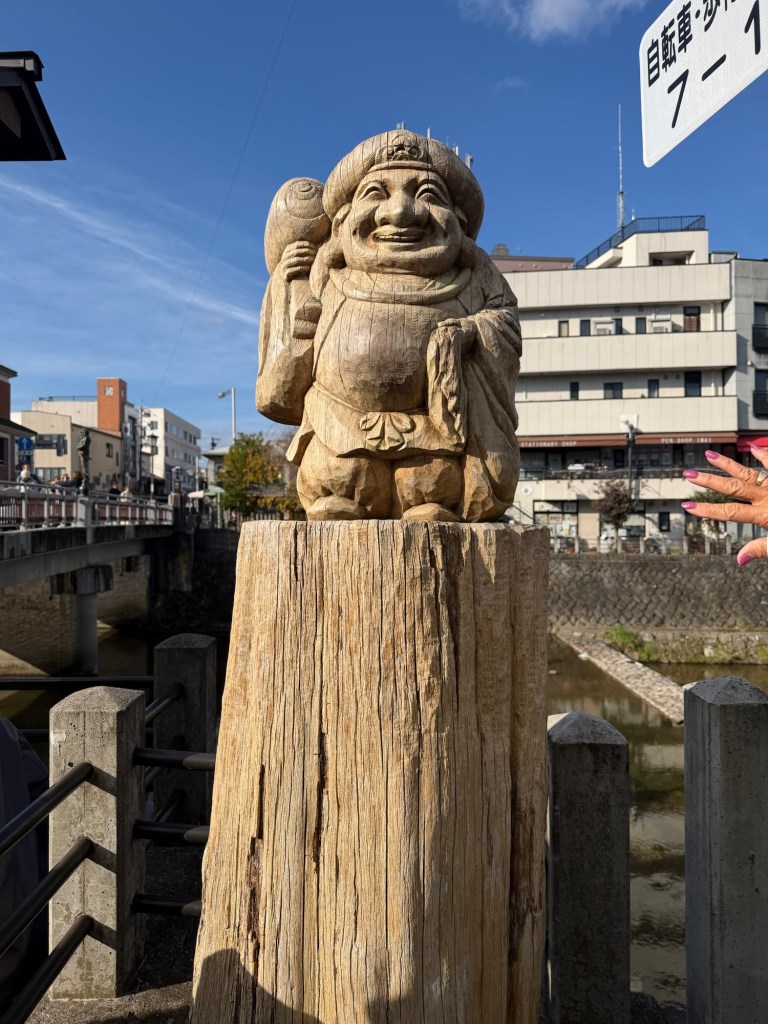
Located along the Miyagawa River, the Miyagawa Market vendors have been selling everything from fruit, flowers, souvenirs, and food for the past 200 to 300 years. An adorable yew carving greets you as you enter. There was a lot to see, but we weren’t given much time to explore. However, we purchased our very own Sarubobo doll from a woman who made them herself.
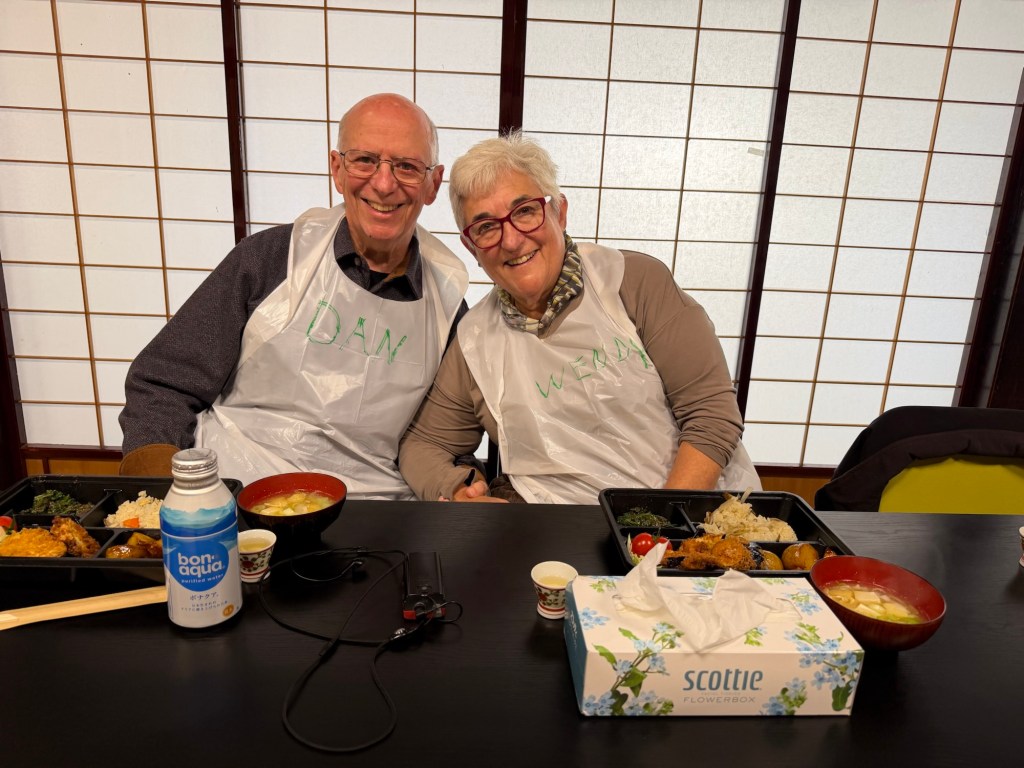
An authentic Japanese cooking class was next on the agenda. We walked along a stone walkway covered with yellow ginkgo leaves that followed a large water channel filled with trout and coy fish. We were greeted by a lovely woman and her three assistants. The women are members of the Takayama community and not professional chefs. Their goal was to teach us how to make a typical Japanese meal and then have us enjoy eating our creations.
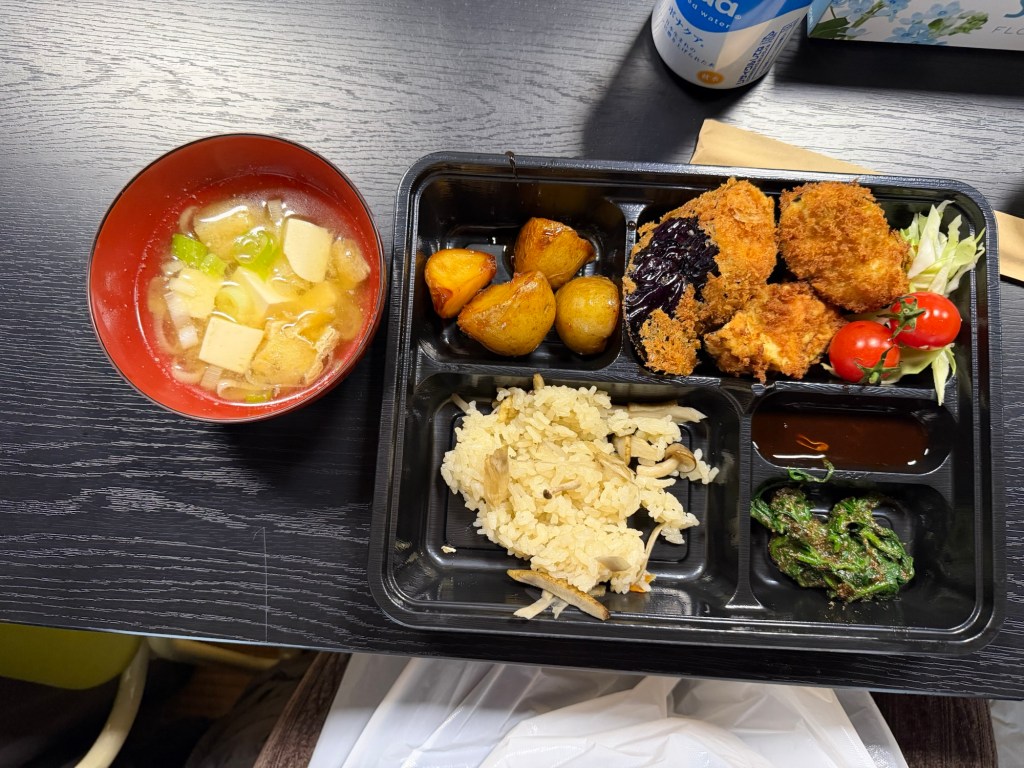
We made a Dashi Broth, Ajigohan (rice with veggies), matcha jelly (for dessert), Kokomo (a delicious potato made in a pot), spinach with egoma sauce (so good I want to find ground dogma), miso soup and fried eggplant. We truly enjoyed our lunch. It was one of the best we’ve had.
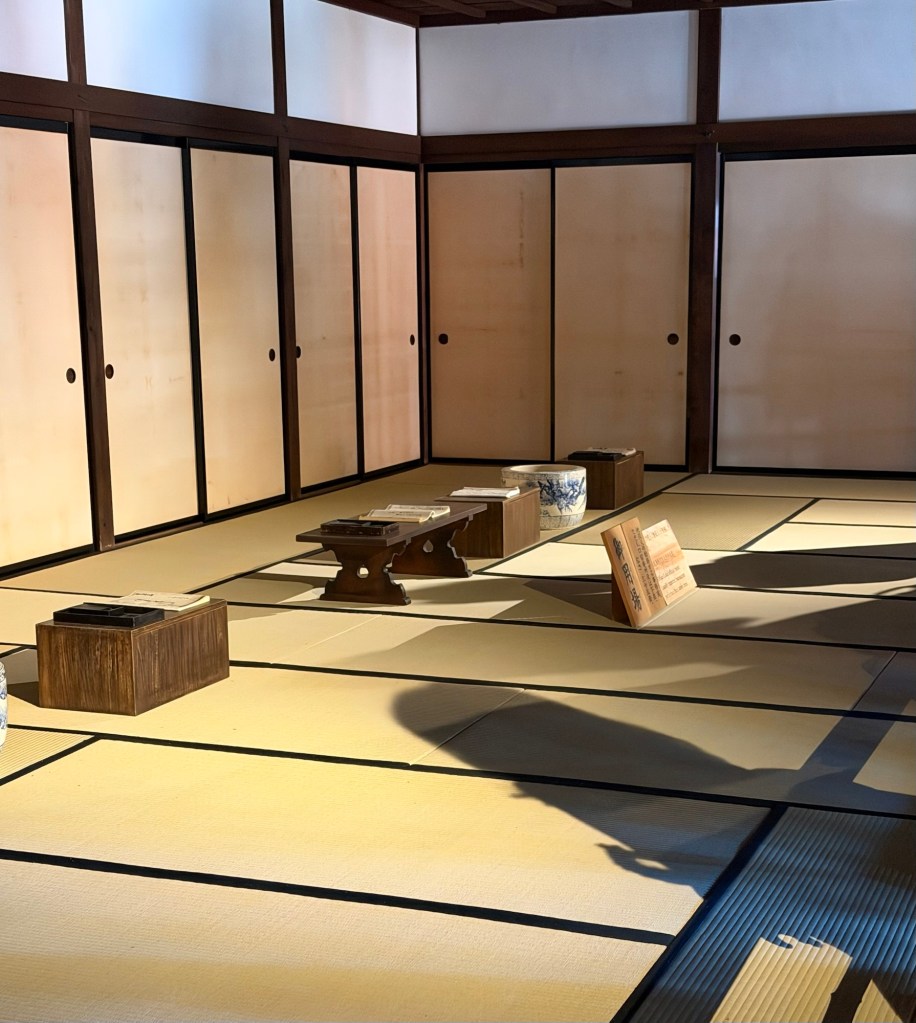
Cooking our lunch was not the last of today’s activities. After we enjoyed the fruits of our labor we went to visit the Takayama Jinya, a former government outpost. It is the only existing building of its kind in Japan. While the site dates back over 400 years, the building itself is from the 17th to 19th centuries. It served as the local administrative headquarters for the Hida region, where taxes were collected and trials held.
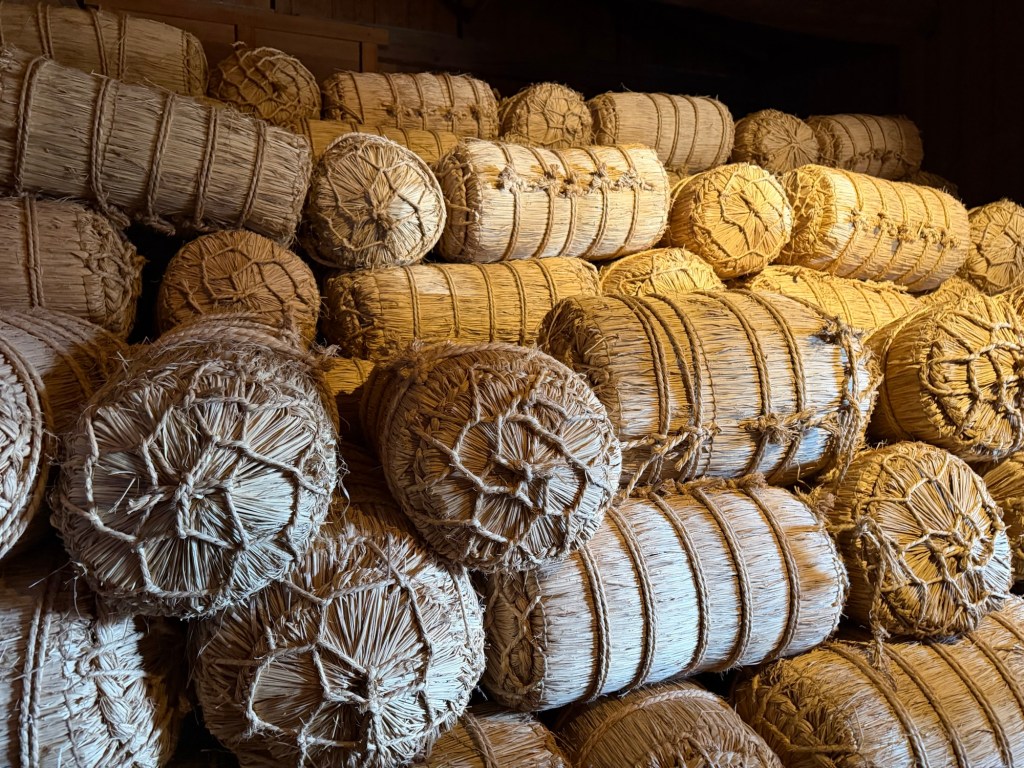
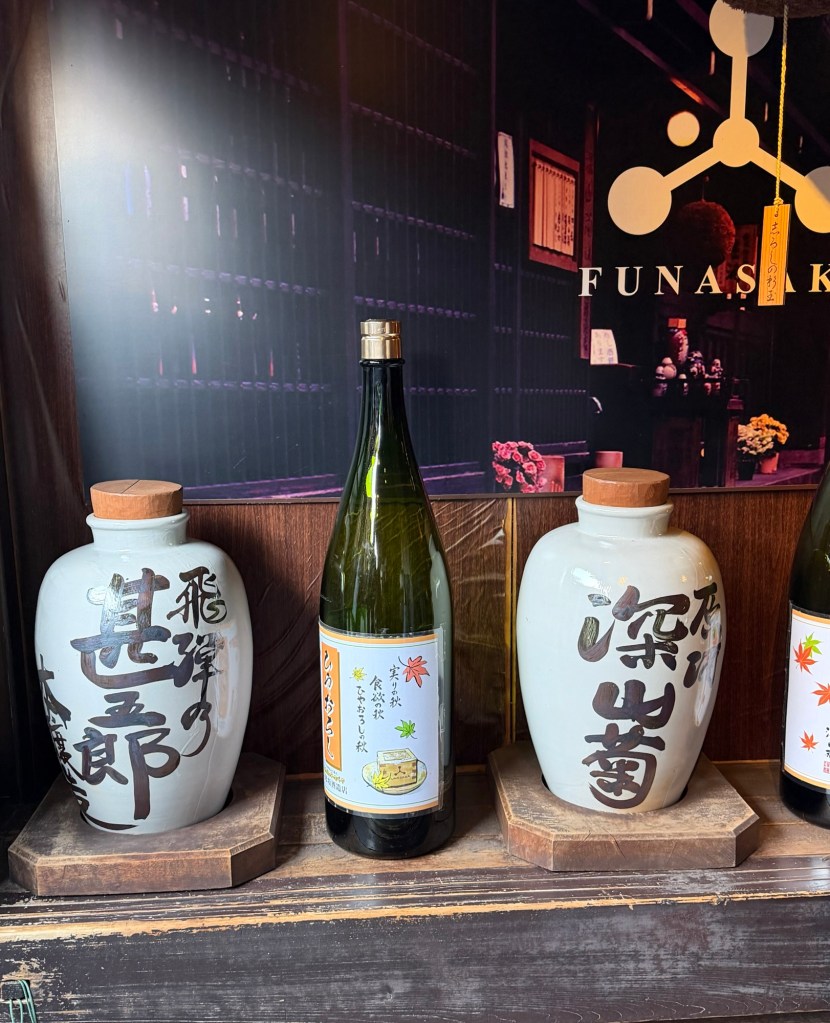
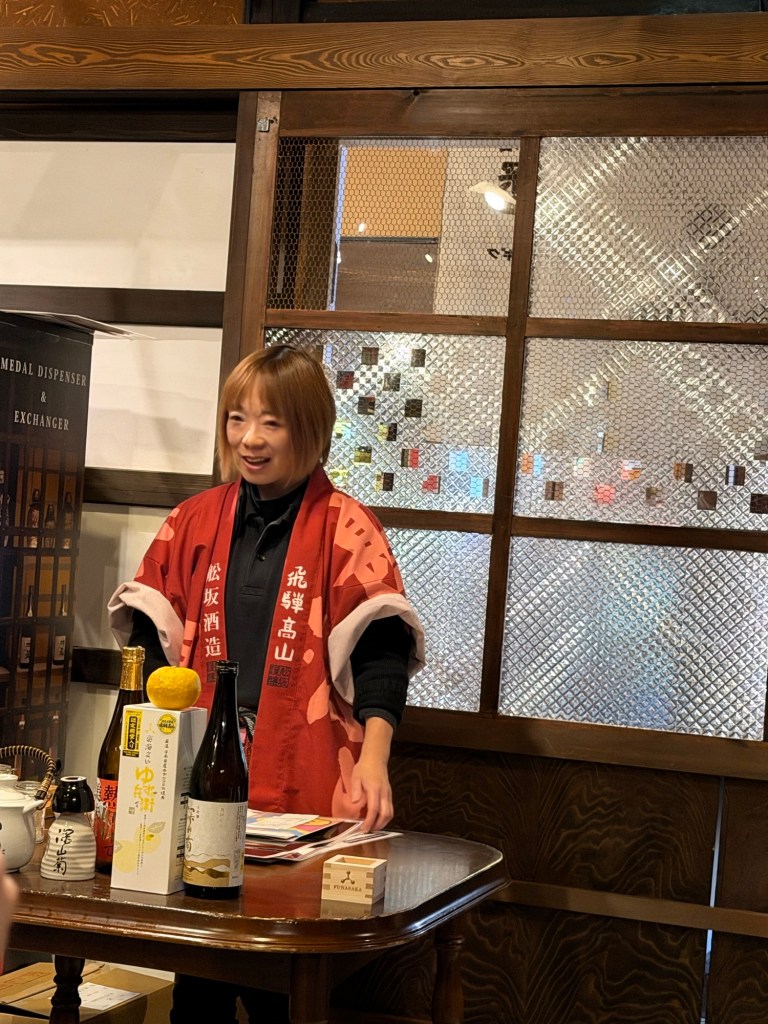
It was now time to head into the historic old town, but before we were set free to explore on our own we stopped for a tour of the Funasaka saki brewery. This region of Japan is known for its saki due to the availability of rice and fresh water. The tour included the tasting of two of their products. The one containing some citrus was very good, but there was no way we were going to carry bottles of saki around with us. We learned that the lower the number, the better the saki. One should never bother drinking anything higher than 50. It has something to do with the amount of polished rice that is used in producing the product.
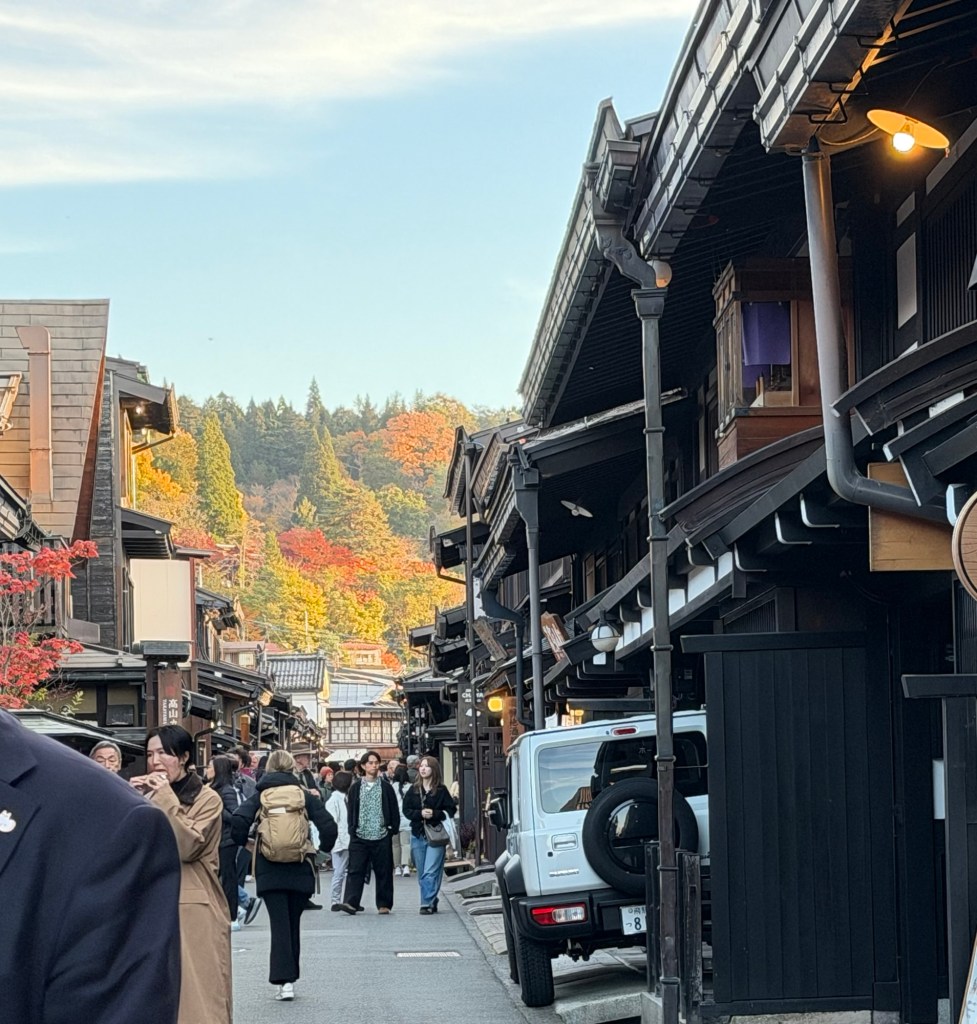
After the brewery we were free to explore the old town at our own pace. The buildings are beautifully preserved and are filled with retail stores and restaurants. It’s wooden buildings were crafted by master carpenters during the Edo period (1603 to 1867) and have all turned a black hue. Once again there are channels of fresh water running along the streets. I was told that the water had been used by residents and shopkeepers for drinking water and to fight fires should they break out.
We did a little damage while we were there. One thing we purchased was matcha. We found a small store run by an older gentleman who was producing his own matcha. Since our grandson, Mickey, likes to make his own we figured that might be a good gift for him.
There was a little time for us to get ready for a special Hida Wagyu beef dinner at Le Midi. It was a short bus ride and turned out to be a delicious and enjoyable evening. Dan and I don’t eat much meat these days, and tend to purchase lean cuts when we do. This meat was nothing like that at all. It is the marbling of the fat that makes this meat special. For one night we made an exception. It was very good, but in all honesty we can’t really say it was the best we’ve ever eaten.
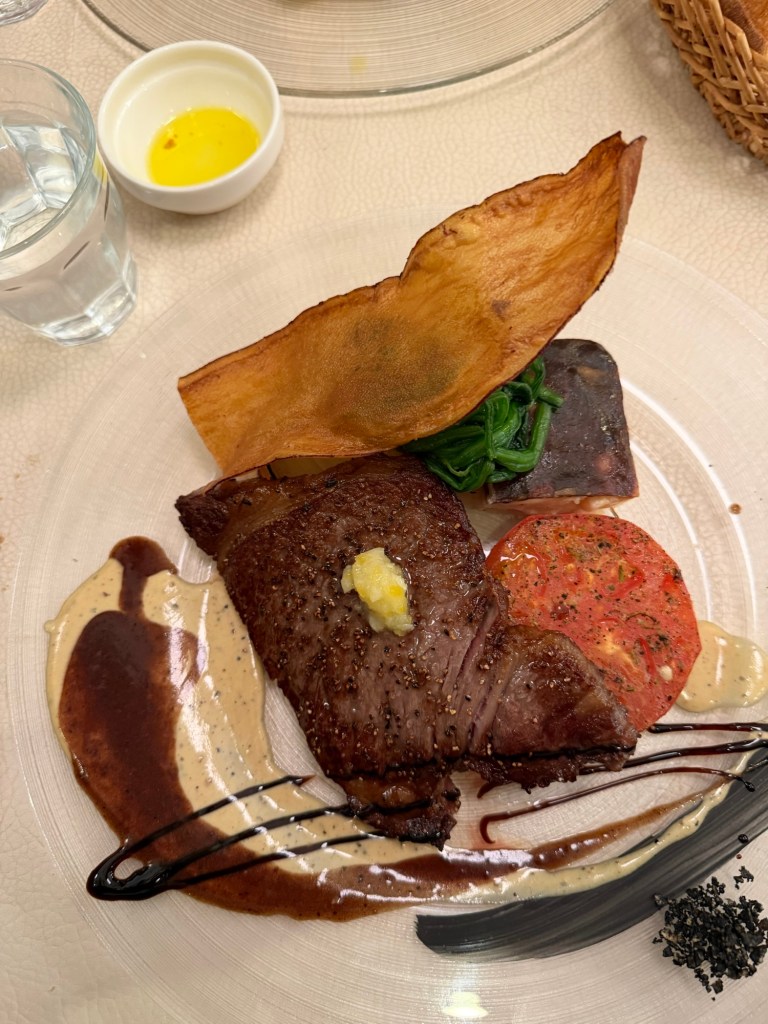
A very filling way to end a very busy day.

