
Our journey continued with travel via Bullet Train and the Limited Express to the mountain town of Takayama. The city of 81,000 has a beautifully preserved old town that dates back to the Edo period of 1600 to 1868. It is also known for its high-grade local wagyu beef.
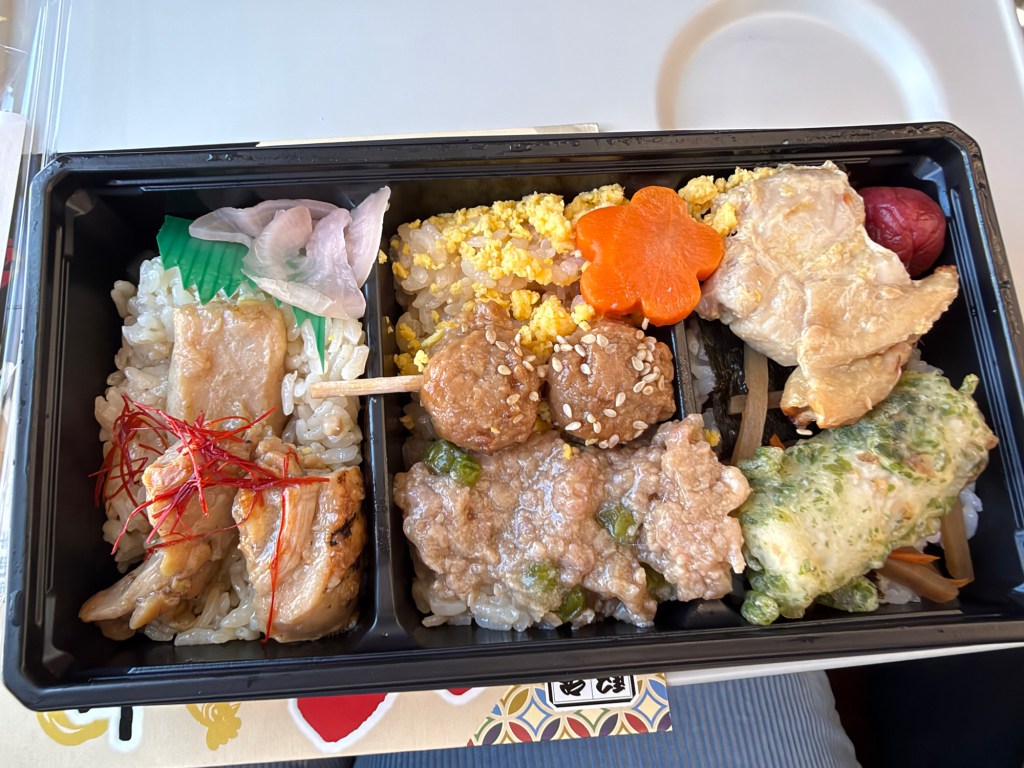
Before we left the station we had the option to buy a lunch to eat later on the train. Dan and I bought a Bento box to share — chicken for a change. A Bento box provides a single portion balanced meal.
Riding the Bullet train was interesting, because when the train is moving you don’t sense that you are traveling at between 300 to 350 mph. While waiting for our train to arrive several Bullet trains wizzed by at full speed— VERY, VERY, FAST The trains were roomy and comfortable. The regular express train we took was also very comfortable.
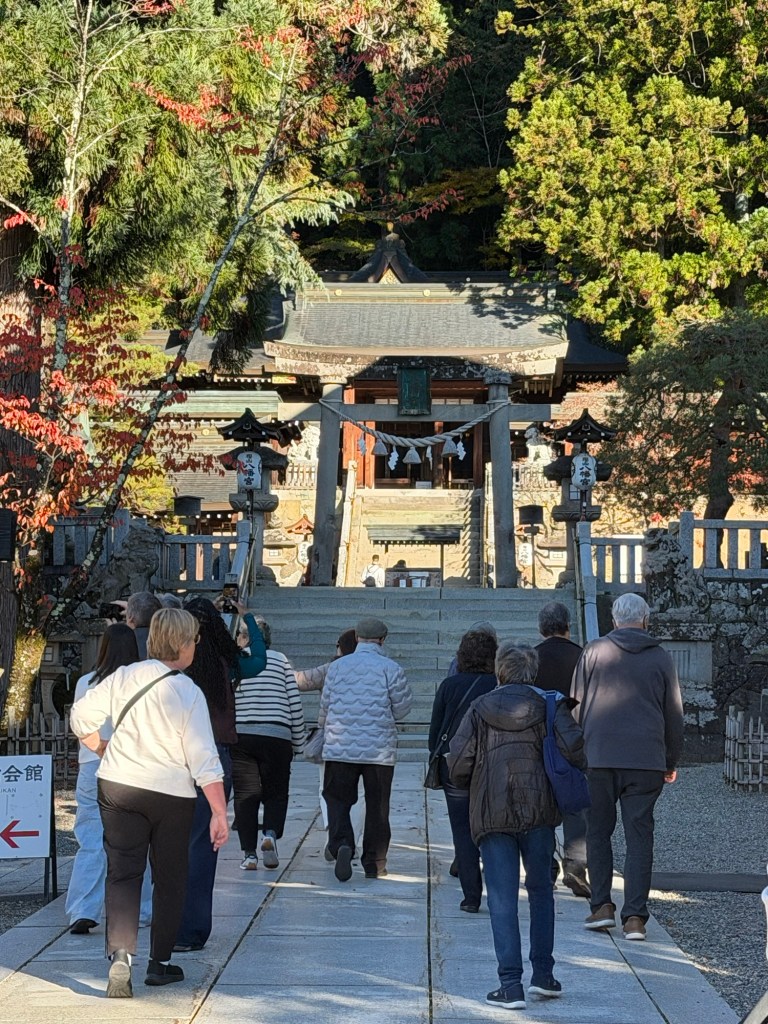
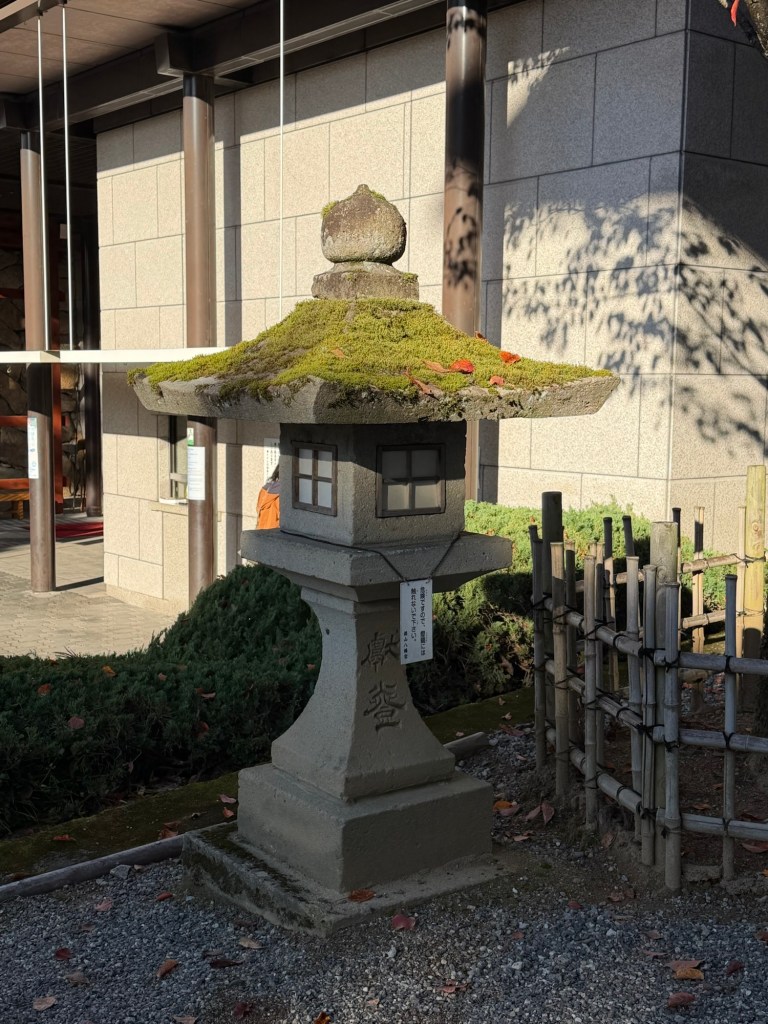
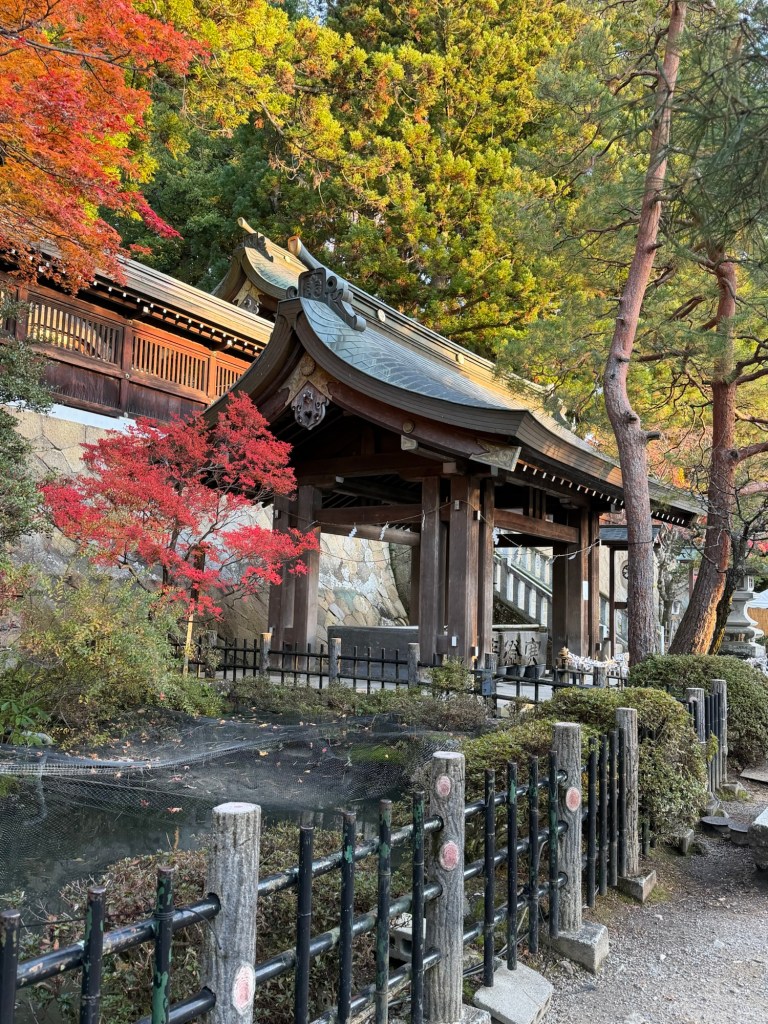
When we arrived in Takayama, Masako took us to Sakurayama Hachimangu Shrine. It is the oldest Shinto shrine in Takayama. It was founded in the 4th century, but expanded in 1683 under the powerful Kanamori clan who ruled the area. The grounds included tall cedar and cypress trees, along with moss covered stone lanterns.
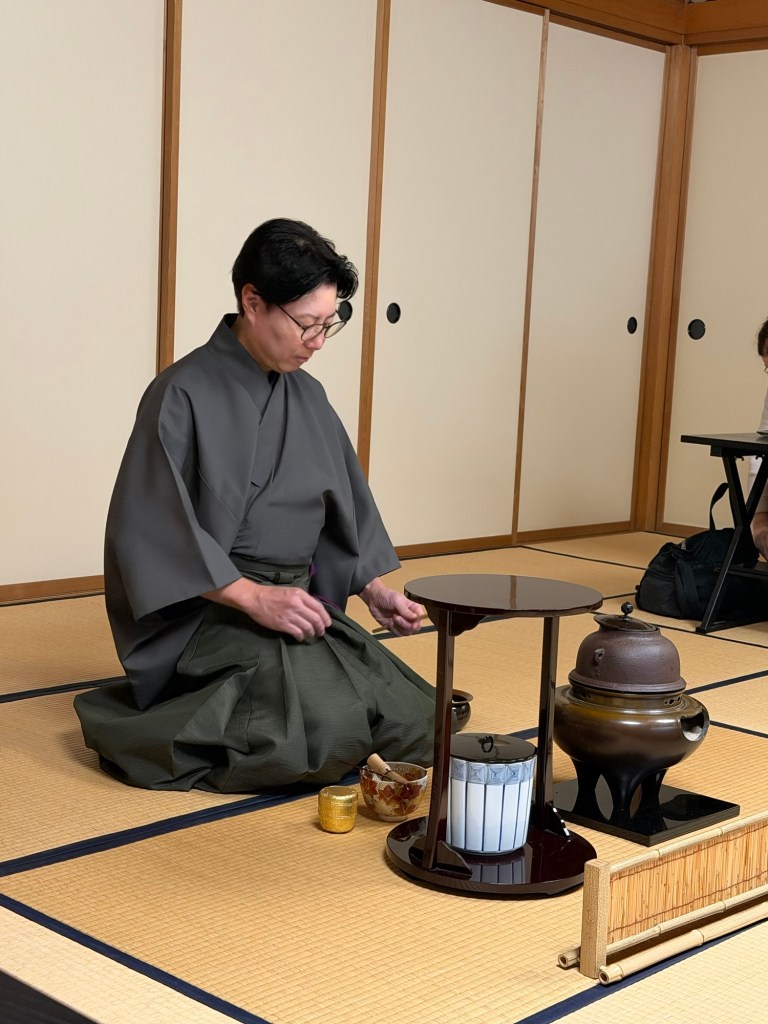
While visiting the shrine we participated in a very elegant tea ceremony. Japanese tea culture stretches back over 1,200 years, but the one we witnessed today has been performed in the same exact way for the past 450 to 500 years. All Samurai warriors were trained in the art of the tea ceremony which traditionally was performed by men only. Just like Kabuki theater, the entire ceremony moved slowly and precisely. Our host was dressed in a subdued-colored kimono, each of his movements was exact and all utensils were handled in very specific ways. Even the smallest of items, such as a silk wiping cloth, was carefully folded, used, folded and then returned to the host’s kimono in a well-rehearsed order. During the Edo period the ceremony was used to conduct diplomacy, show loyalty to the shogunate with no weapons allowed in the room.
Today the purpose of the tea ceremony is “mindfulness, cultural preservation, and genuine human connection rather than political.” The young man performed a ceremony that was beautiful to watch in its simplicity. All of us were served wagashi, a traditional Japanese sweet filled with anko, red bean paste. This was to help us enjoy the tea better since it tends to be bitter.
Each of us was individually served the tea in a ceramic cup. The server would bow to the guest they were serving and turn the cup in their left hand before handing it to them. The guest would bow in return, place the cup in their left hand and turn it until the side they sipped from had no design. It really was a lovely experience.
It had been a long travel day so nothing further was planned for the evening. Dinner was on our own, so we joined Cheryl and Jake Perelman and Ron Harnett at Matsuki Sushi. Wonderful for sushi, but not so much for Wagyu beef.

