
We took a Shinkansen bullet train and transferred to an express train for a 2-hour ride to Kyoto. Here is a brief overview of Kyoto provided by Odyssey. “Kyoto, was Japan’s imperial capital for a millennium and is now the country’s cultural and artistic capital. A true gem with more than 1,600 temples, hundreds of shrines, three imperial palaces, artful gardens and well-preserved wooden architecture. Kyoto embodies Japan’s rich culture and complex history. Japanese gardens, traditional cuisine, and superb crafts thrive here, attracting legions of visitors and Japanese alike.” As for attracting legions of visitors, it may not be Tokyo, but it is an extremely busy city. Most of the places we visited were uncomfortably crowded .
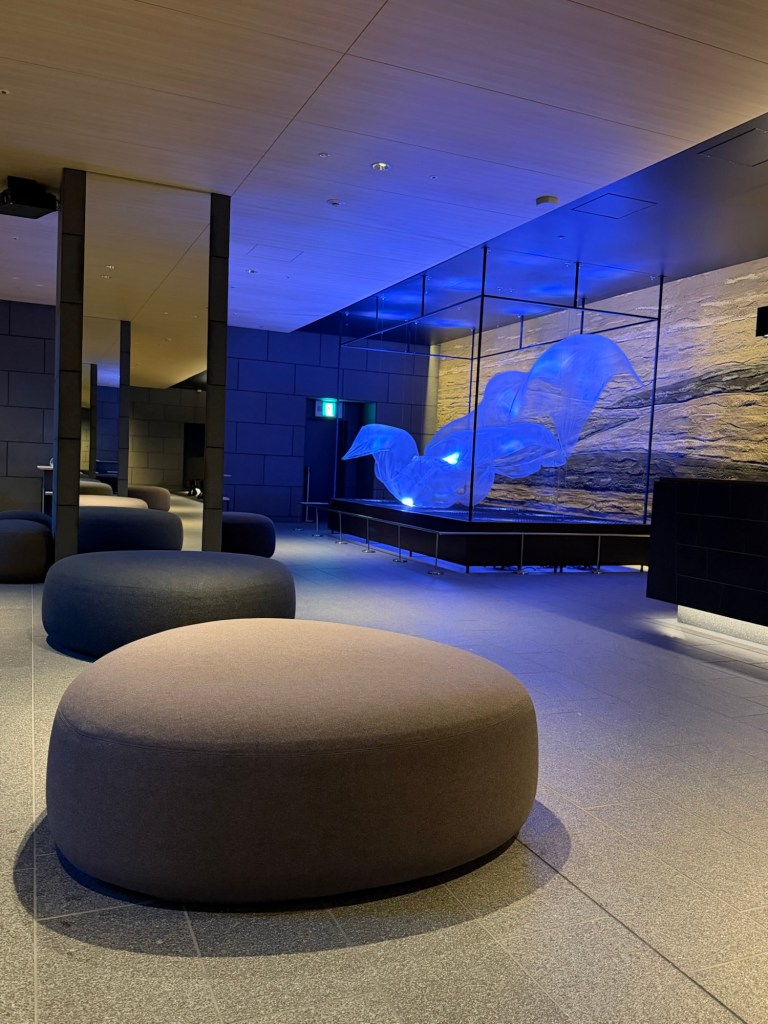
Before heading to Nijyo Castle, we checked into our hotel, The Thousand Kyoto. Tucked into an alley and side street, the hotel was very sophisticated in terms of design and in the technology used in its rooms. Lights , shades, and temperature were all controlled by a panel on an iPad. They also had a robot that would deliver things to your room such as extra towels. We didn’t stay too long because it was time to grab a quick bite for lunch. Dan and I picked a restaurant that served a very tasty variety of chicken served on skewers. It included marinated chicken, chicken meat balls, and chicken livers. I also ordered a local soft drink called Calais, which was somewhat citrusy and refreshing.
It was time to begin touring Kyoto in earnest by visiting Nijyo Castle the residence of the Tokugawa shoguns. The Castle is another UNESCO World Heritage Sites and one of the best surviving examples of feudal palace architecture in Japan. It is a massive, preserved historic complex. What visitors see is the surviving residential place complex, called Ninomaru Palace, and fortifications, rather than a towering stone-and-timber castle tower.
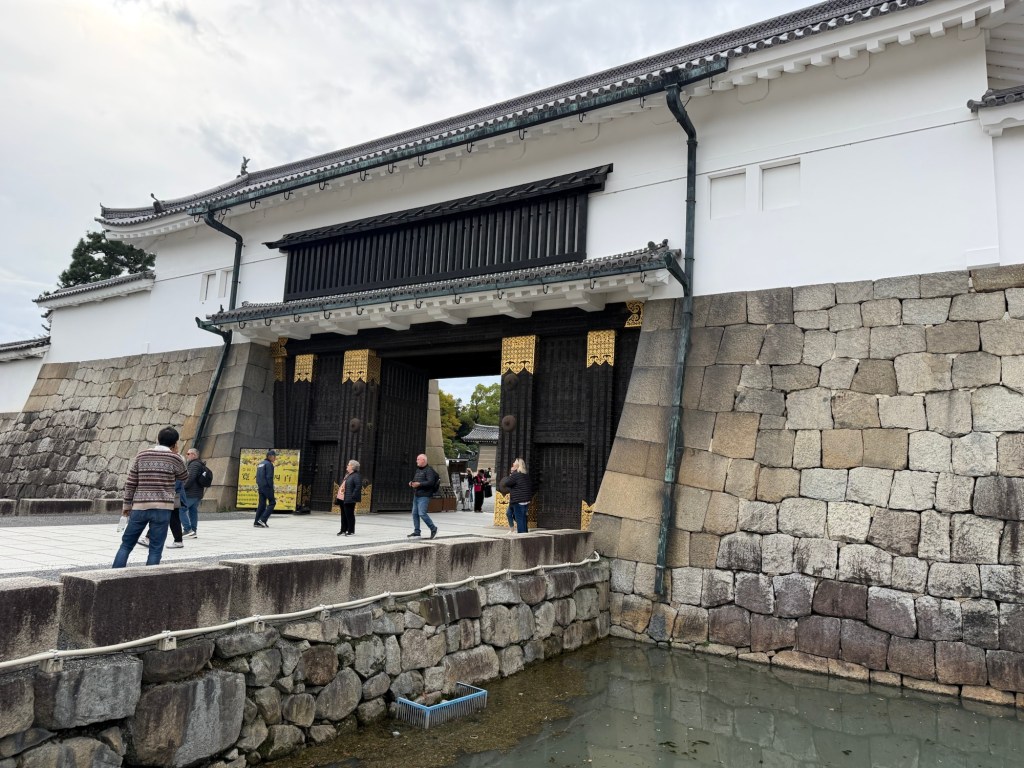
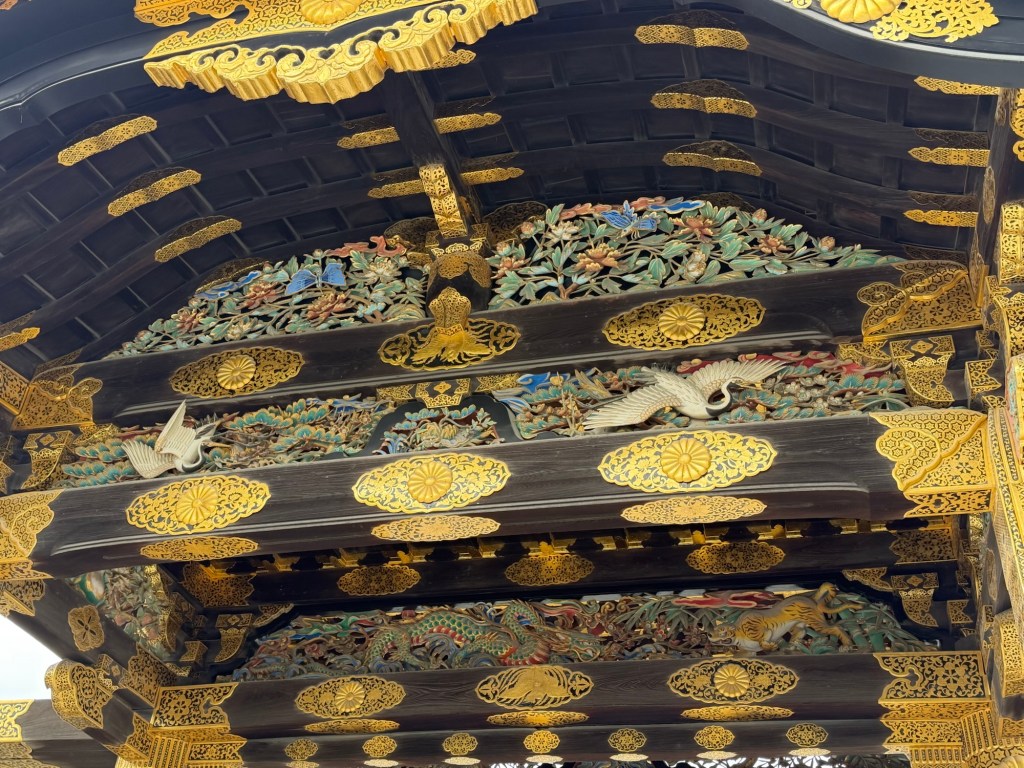
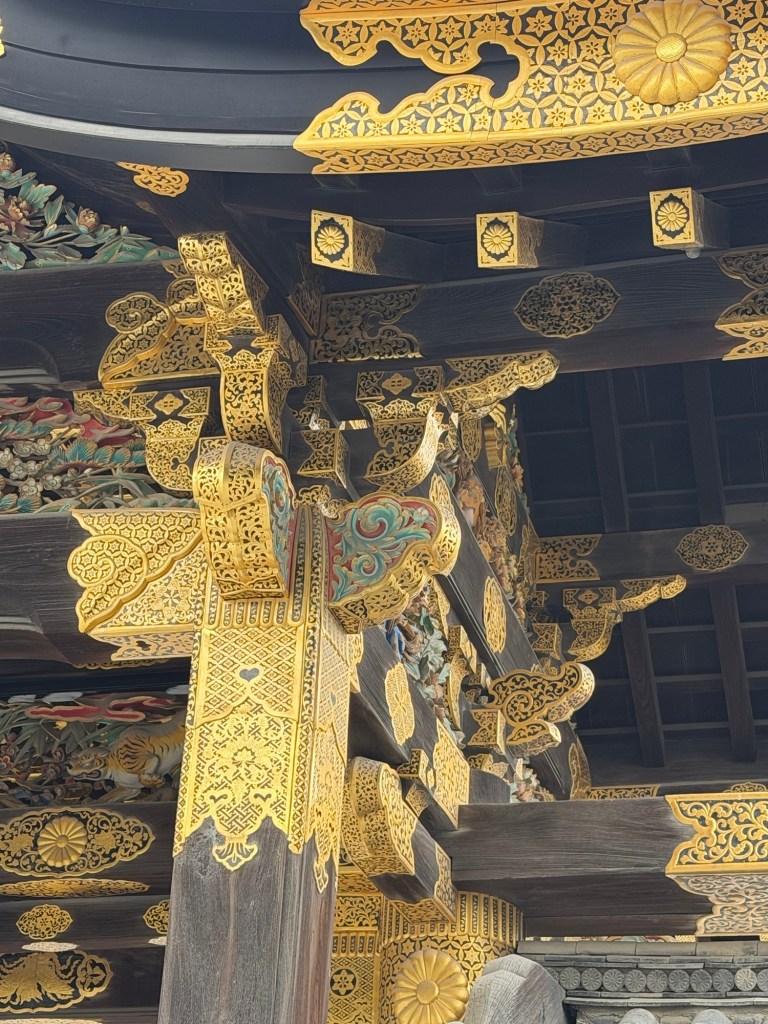
Tokugawa Iveyasu, founder of the Shoganate government, initially constructed the Castle in 1603. The Tokugawa family maintained its power from 1603 until 1867. (Also referred to as the Edo period.). After years of fierce fighting, Tokugawa united Japan, ushering in 260 years of peace and prosperity. The political rule of the Tokugawa family lasted for 15 generations, but was was lost in 1867 with the restoration of the Emperor.
The Castle featured imposing stone walls and deep moats, extravagant wood carvings and massive paintings that filled the walls of every room. Unfortunately we were not allowed to take photos. The walls were the painters canvas and the images created corresponded with whoever was meeting with the Shogun. In a room where he met with lower-level officials the walls were painted with fierce tigers thus showing the Shogun’s power and intimidating his visitors. (Tigers were not native to Japan, so the art was inaccurate. The artist confused tigers and leopards treating them as if they were the same animal.) Higher level visitors would meet in a room that featured huge black pine trees that also signified the Shogun’s power and signified his continuity. The Shogun always sat on a platform set above his visitors, with the exception of the Emperor. In that case, the Emperor sat on the platform above the Shogun and the walls painted in more subtle designs.
Upon entering Ninomaru Castle we had to remove our shoes. As you walked along the corridors you heard a constant chirping sound. The floorboards are called Nightingale Floors because they were purposely engineered to chirp like nightingales making it impossible to walk on them without making a sound. It was an early warning system against intruders. The woodwork in the building was outstanding particularly a carving made from a single piece of Cyprus wood. Each side had an entirely different designs. Amazing.
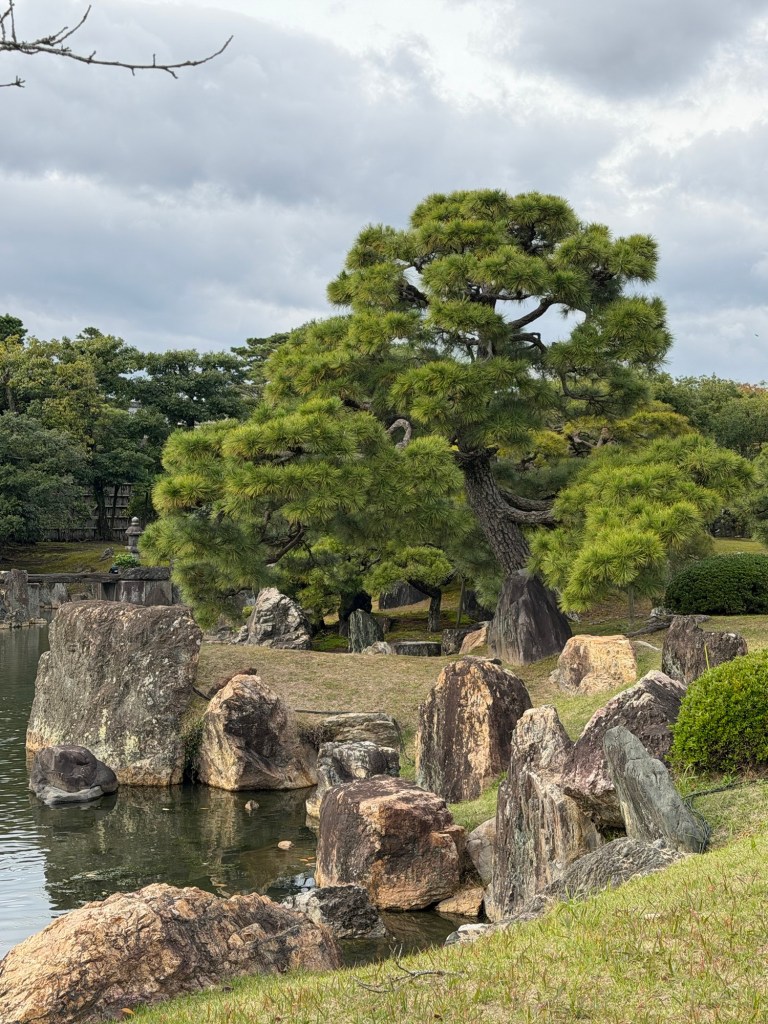
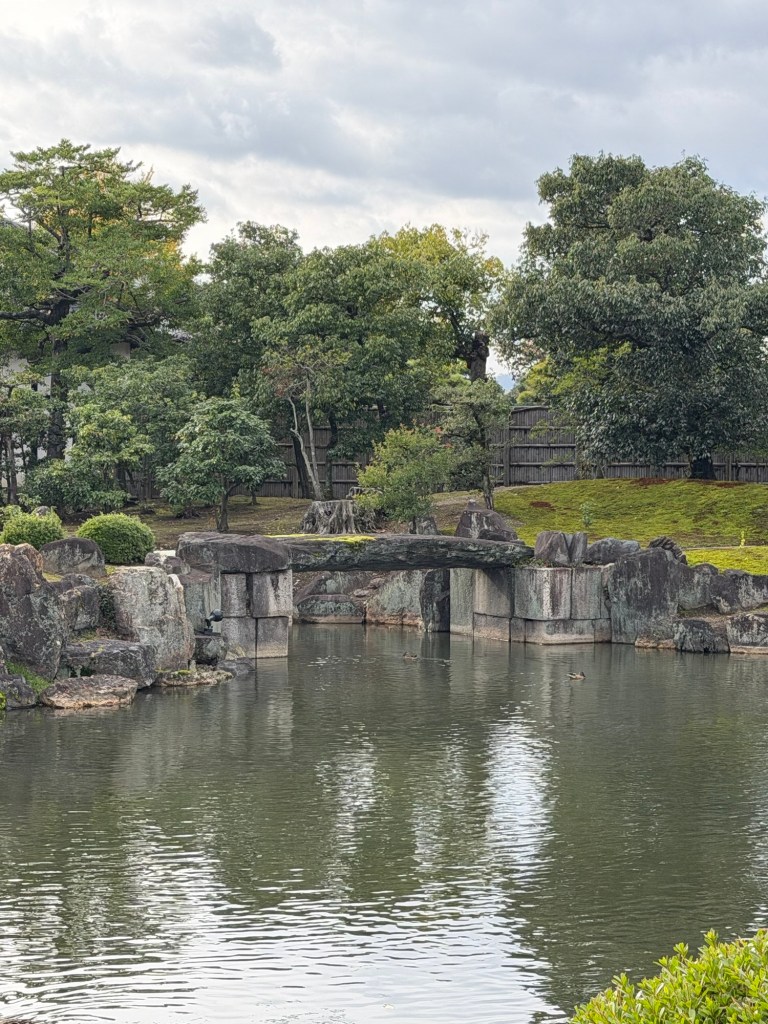
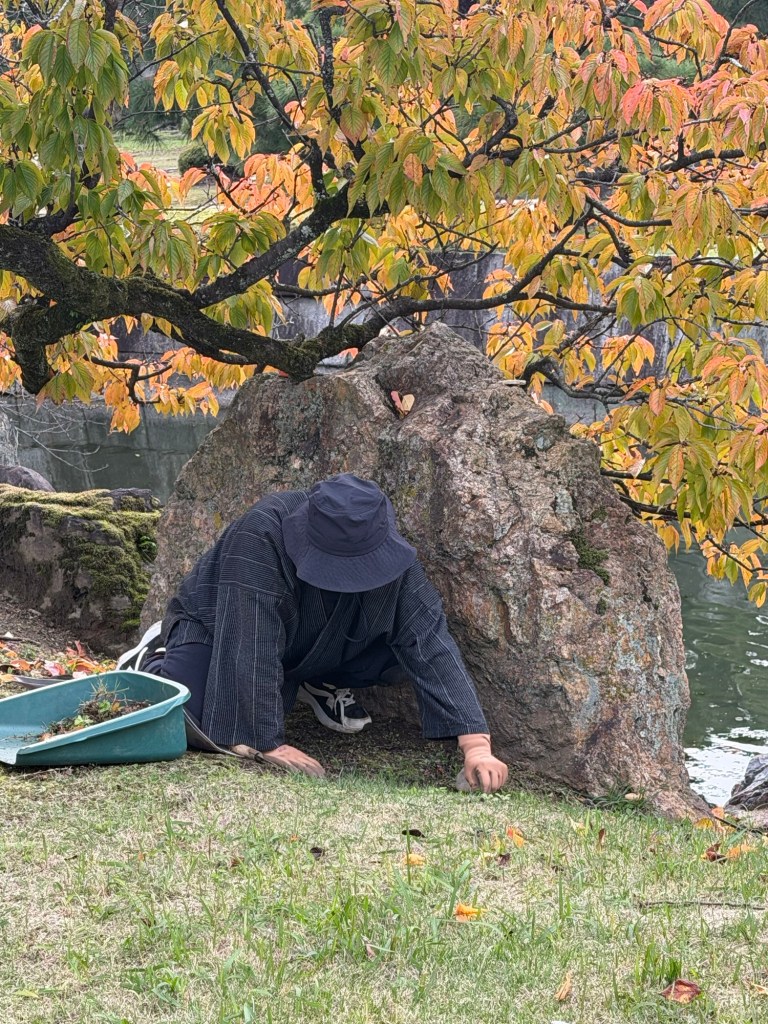
A walking tour of the gardens inside Nijyo Castle came next. Ninomaru Garden was built in the early 1600’s. It featured a large pond with three islands. The Seiryu-en-Garden was added in 1965. Half of this garden is traditional Japanese and the other a Western-style lawn. The gardens were so carefully planned it is almost impossible to take a bad photo.
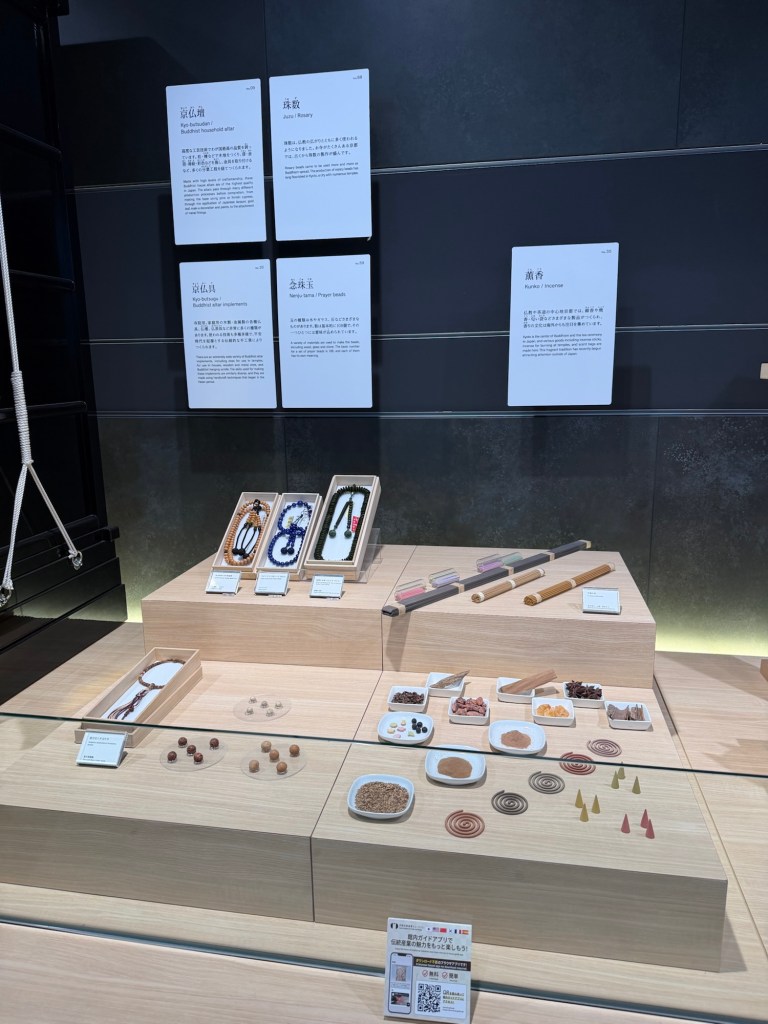
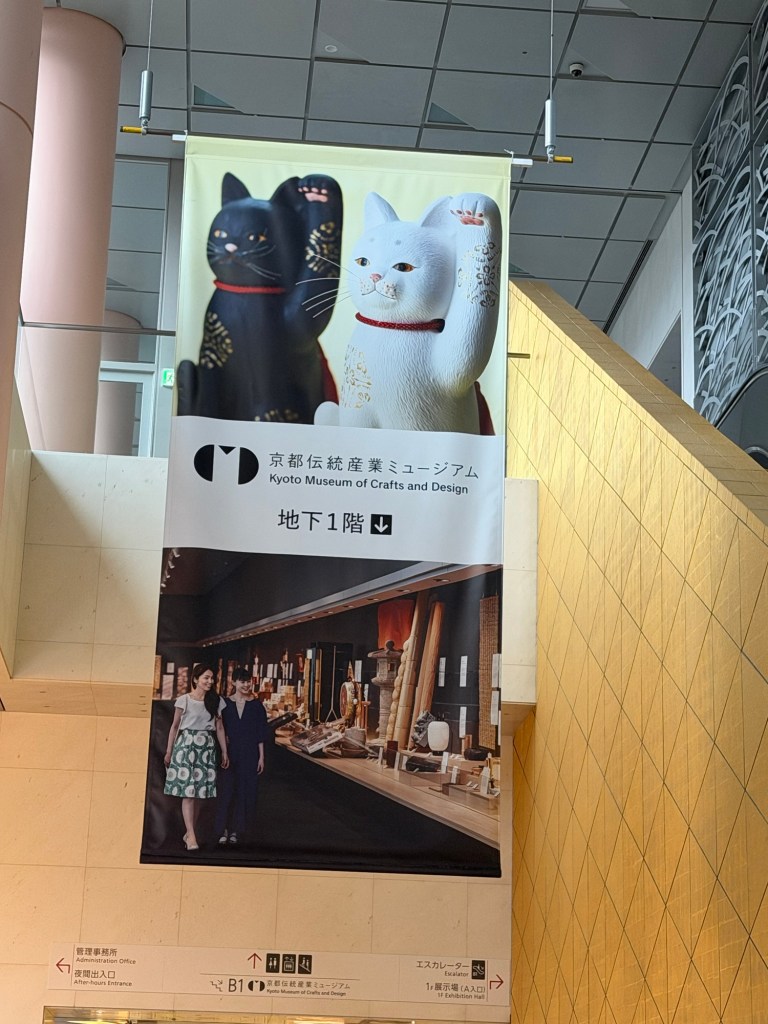
Our tour definitely leaned toward the traditional arts and crafts of Japan and this afternoon we went to the Kyoto Museum of Crafts and Design. The Okazaki district of Kyoto claims to be the cultural hub of Japan, and is dedicated to preserving 74 officially designated traditional crafts. The museum was designed to showcase all 74 crafts and did so in a spectacularly beautiful way. Each craft shown in an easy to understand description of how the article(s) were created and the tools used to create them. Included were woven textiles, pottery, lacquerware, bow and arrows, embroidery, cloisonne, cast bronze, tatami mats and Japanese garden landscaping. It was impossible to leave the museum store without purchasing something.
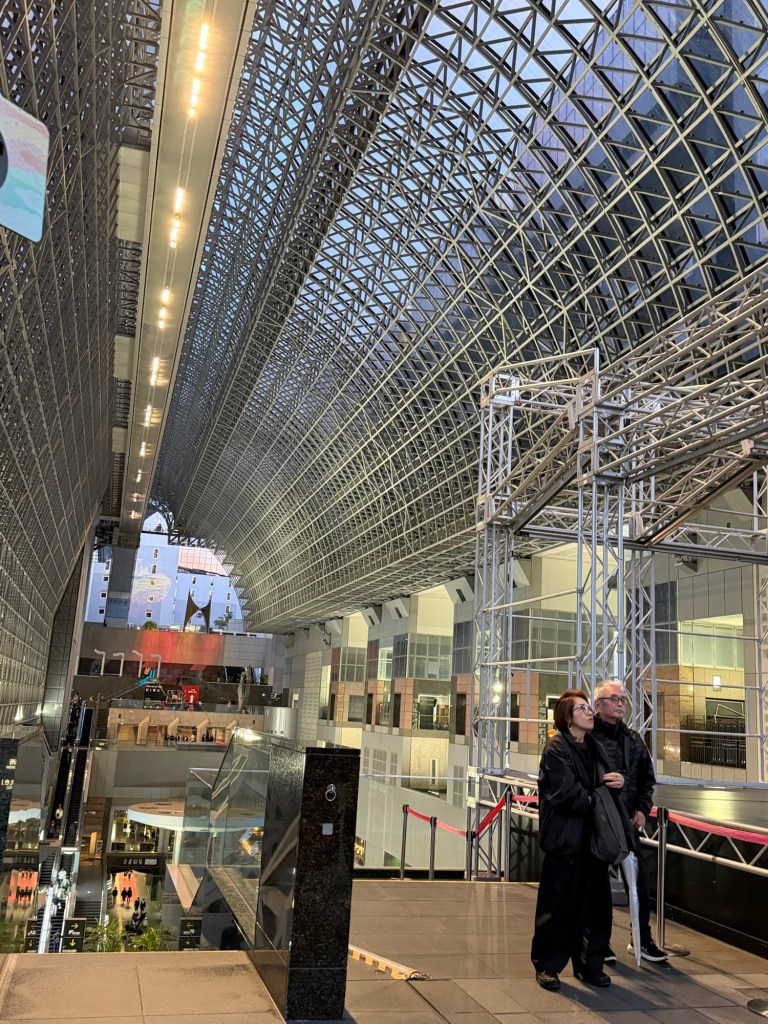
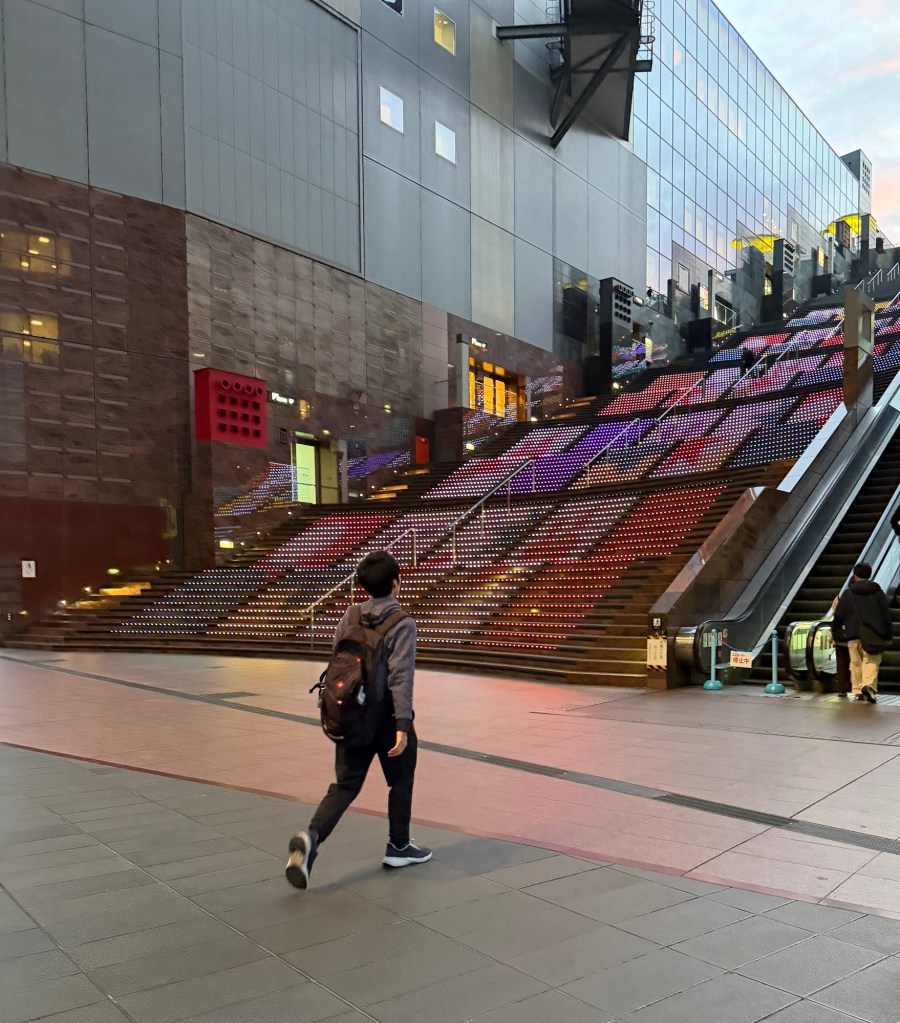
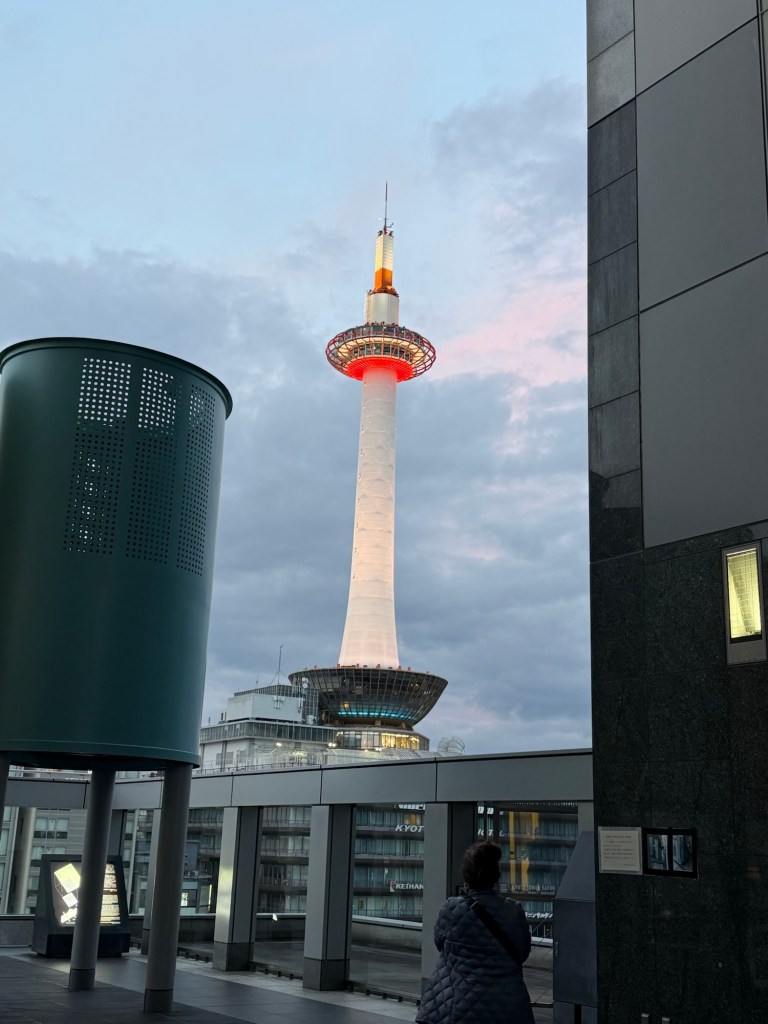
Before getting together for a tempura dinner, Masako offered to take those interested on a tour of the Kyoto Station. It is a destination for eating, shopping, movie theater, hotel along with trains, buses and taxis. We took an escalator that looked as if it would never end up 11 levels. On almost each level there was access to a high end department store, J R Kyoto Isetabn. Along the route there was a large staircase that was flooded with a colorful digital light display. At the end of the escalator was a plaza where we happened to arrive in time to see the sun set over Kyoto.
Before enjoying our tempura dinner, a group of us made a field trip to the local Don Quixote store. They are known for selling anything you can think of. Walking into that store sent everyone into sensory overload. The bright lights, the signage and amount of merchandise was overwhelming , and we Ionly had time to see the first floor.
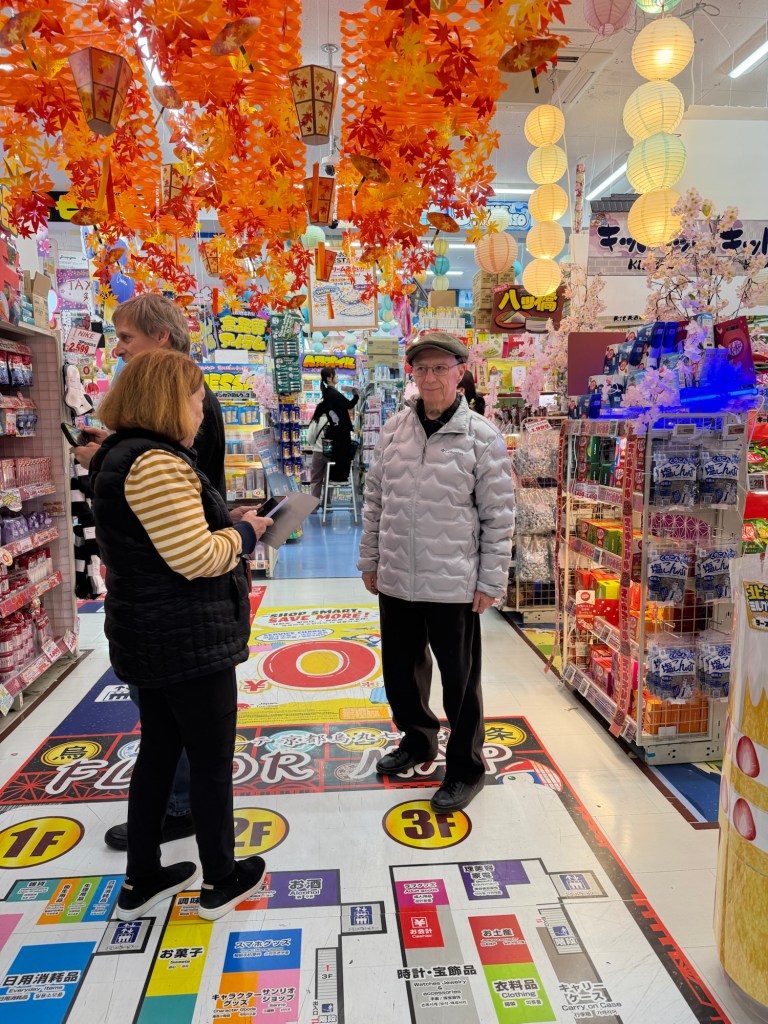
Dan at entry of Don Quixote store
We were more than ready to relax and enjoy our group dinner.

