It was nice getting a little extra time in the morning. The food bar at this hotel was incredible. It didn’t matter where in the world you may have come from, there was something for everyone. The selection included sashimi of various kinds, several soups including waygo beef, and sweet potato, made to order omelets, croissants, fresh yogurt and countless fruits to select from including lychee and gold kiwi, etc. etc..
I may have already stated that Kanazawa is a culturally rich city. It a coastal city that sits on the Sea of Japan. Sadly we never got close enough to see the water. It is known for its well-preserved Edo period districts, traditional crafts and the Kenroku-en Garden.
Gold leaf is a vital element in Japan’s religious heritage, historic preservation, and traditional arts. Kanazawa produces 99% of the nation’s supply of gold leaf. Gold leaf doesn’t tarnish and is used to restore many national treasures such as Kyoto’s Golden Pavilion, and temple altars throughout the country. It is also applied to lacquerware, pottery, and even textiles. The Hakukokan Gold Leaf Center is a fabulous museum that celebrates the art and craft of gold leaf technology and houses a collection of art and gold leaf objects dating back to the late 16th century.
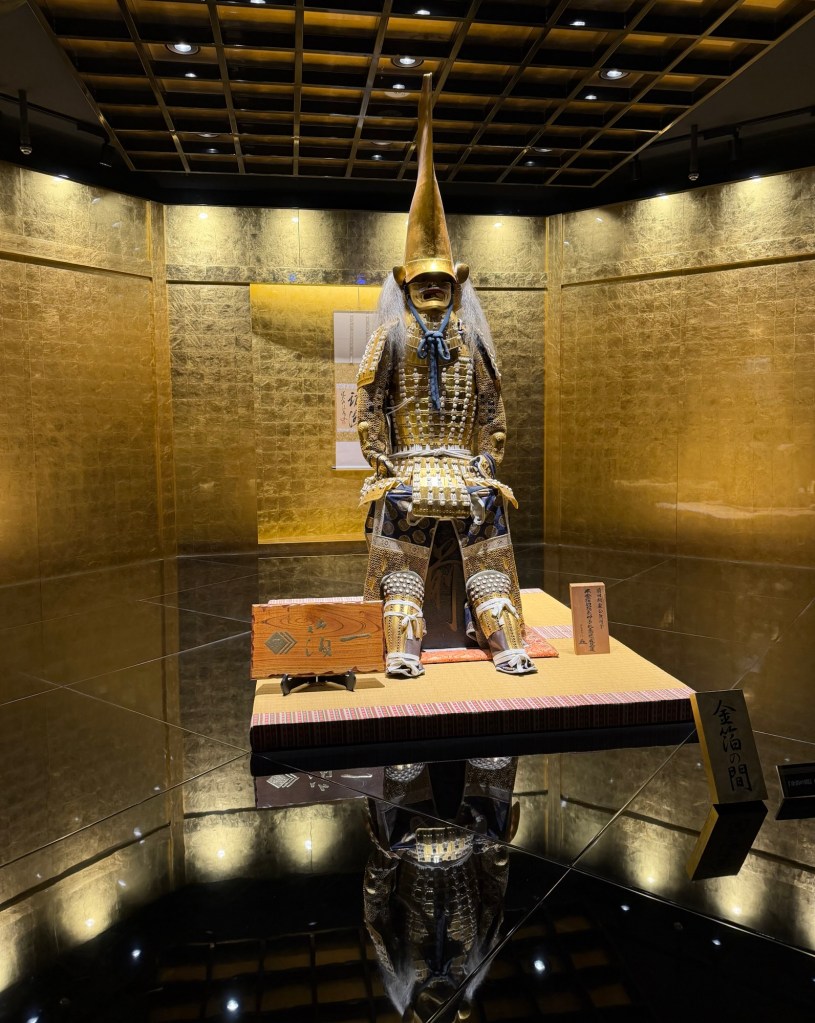
Hakukokan is an interactive museum, offering workshops, along with a beautiful shopping complex. We were greeted by a Samuraiwarrior wearing armour made of gold leaf. A gold leaf expert walked us through the production process. There was a full scale gold leaf pounding room, where the gold sheets are continually pounded until the leaf reaches about one ten-thousandth of a millimeter or 100 nanometers. Just 2 grams of pure gold—about the size of a small coin,can be beaten into a sheet that is about 1 square meter.
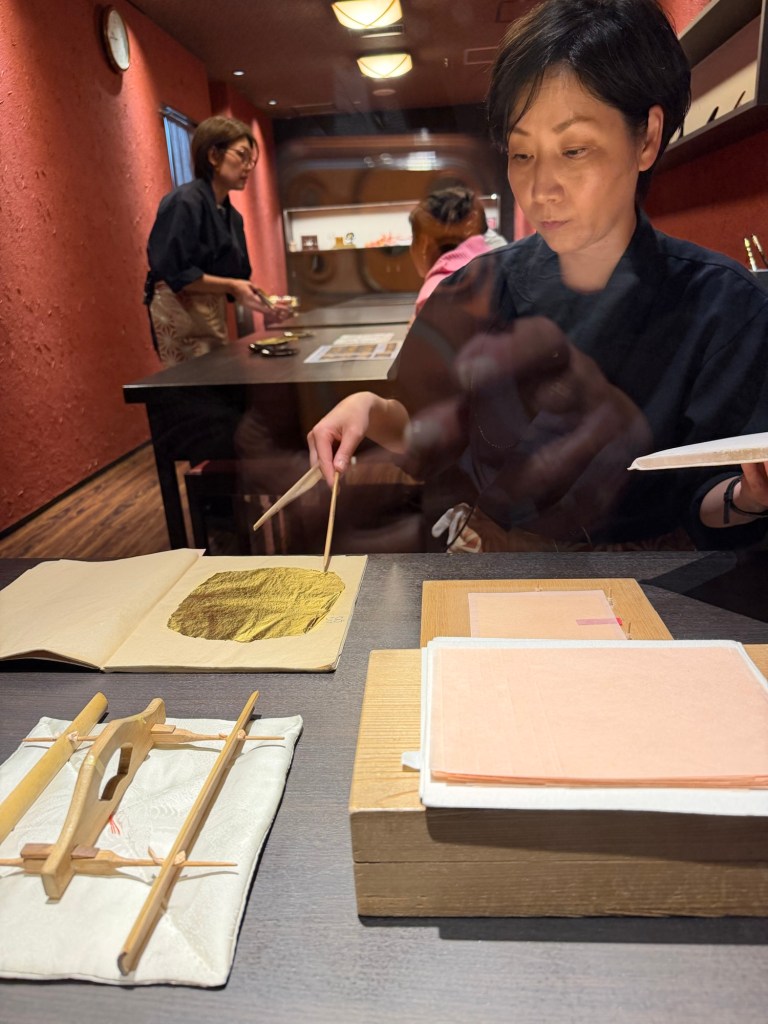
Stacks of up to 1,500 sheets over several days with machines or hand tools. In between the sheets of gold is handmade washi paper soaked in lye, persimmon tan on and egg white to prevent the gold from sticking or tearing. (The washi paper is sold as a cloth with cosmetic uses.) We saw a woman separate each of the gold sheets, and cut them into exact squares, many times blowing the sheet gently in order to get it to lie flat.
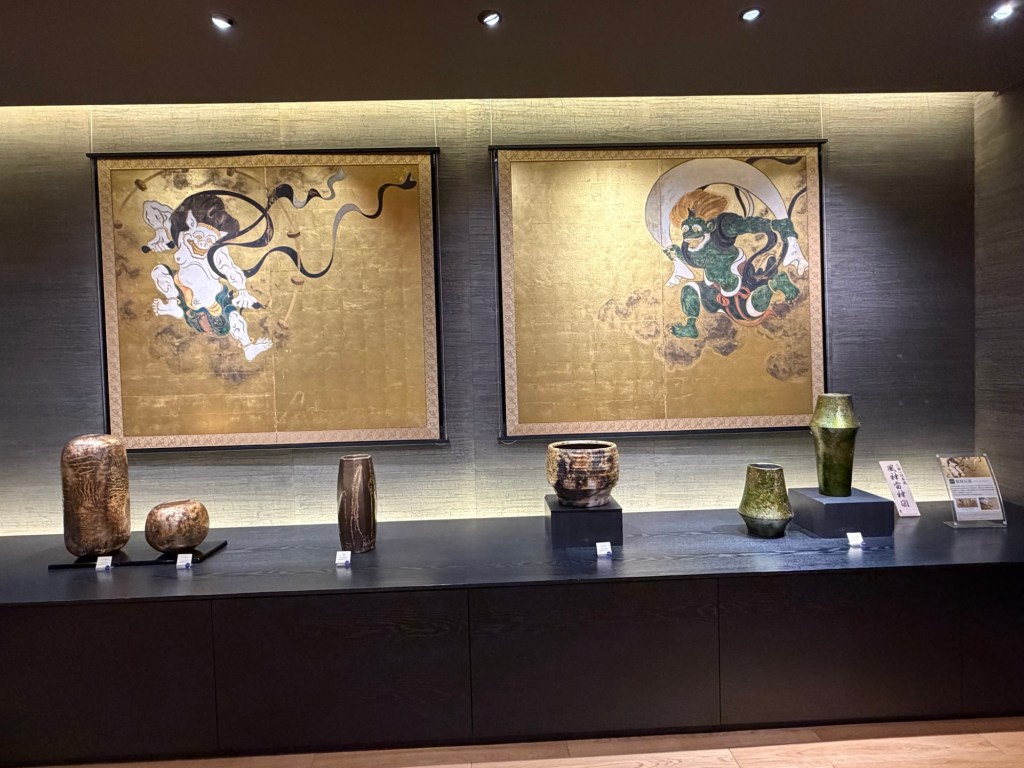
In the museum itself there were incredible examples of how gold leaf has been used over the centuries. There were examples of paintings, textiles and ceramics all of which involved the use of gold leaf.
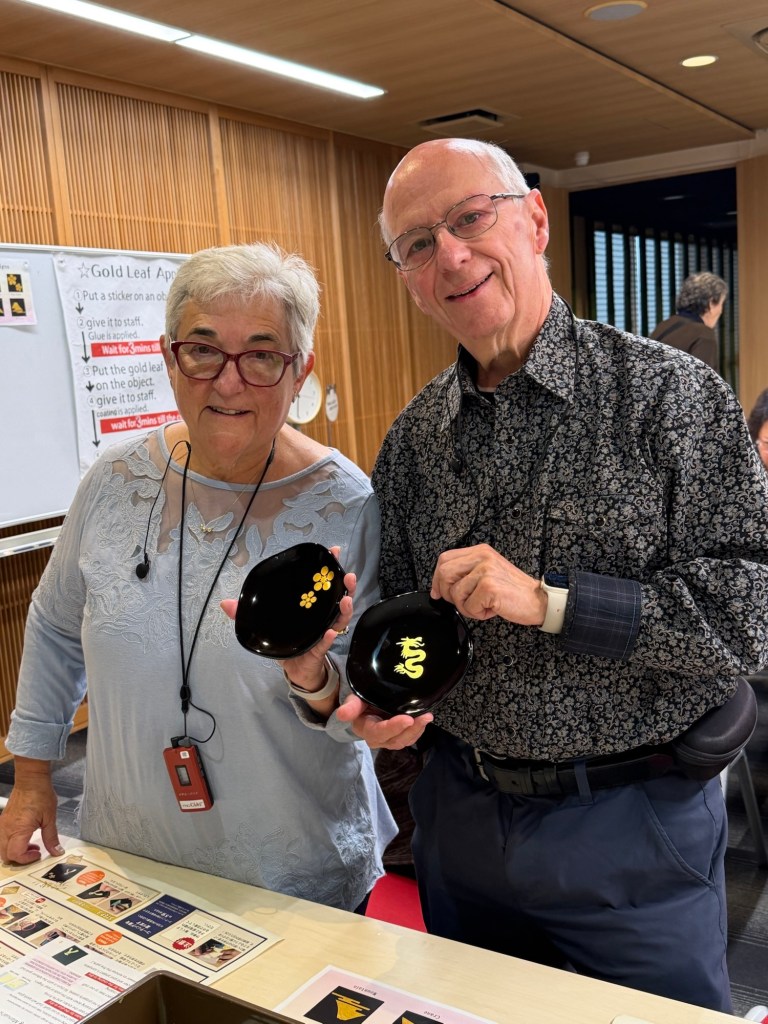
It was then time for us to participate in a little gold leaf artistry of our own. We were each asked to select a pattern we would like to see on a small black lacquered plate measuring about 8” wide. We were walked through a several-step process and ended up with a nice souvenir. We were then walked into an absolutely gorgeous showroom where we could buy anything from an ice cream cone topped with edible gold, tea with flecks of gold, and all sorts of decorative items.
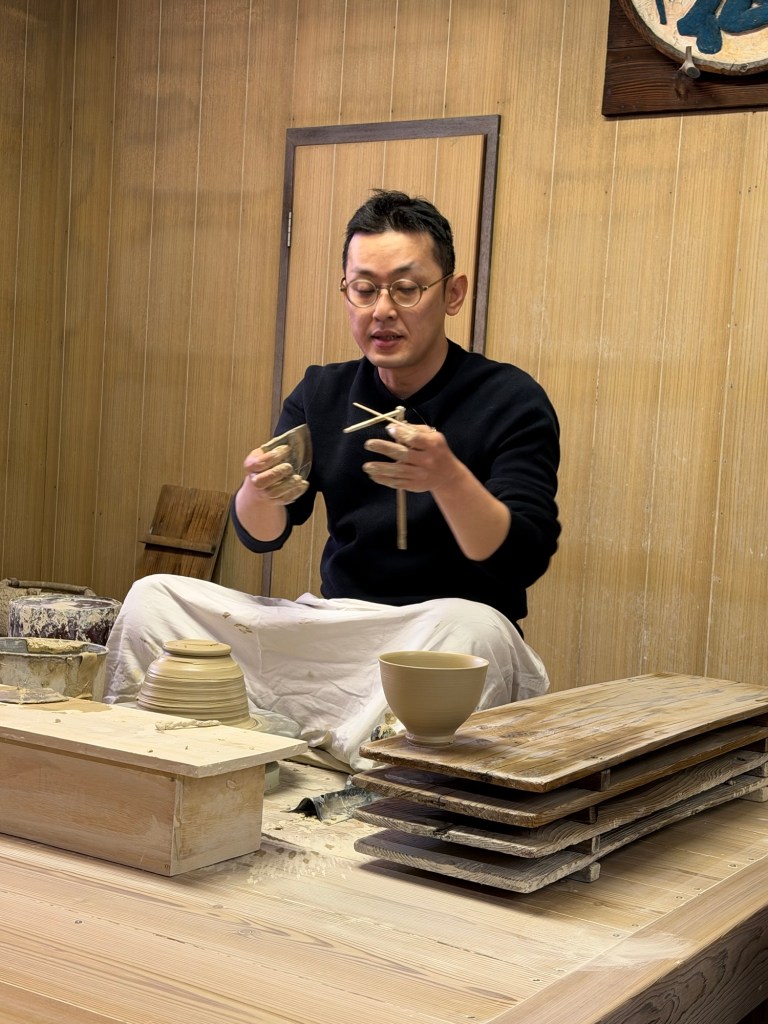
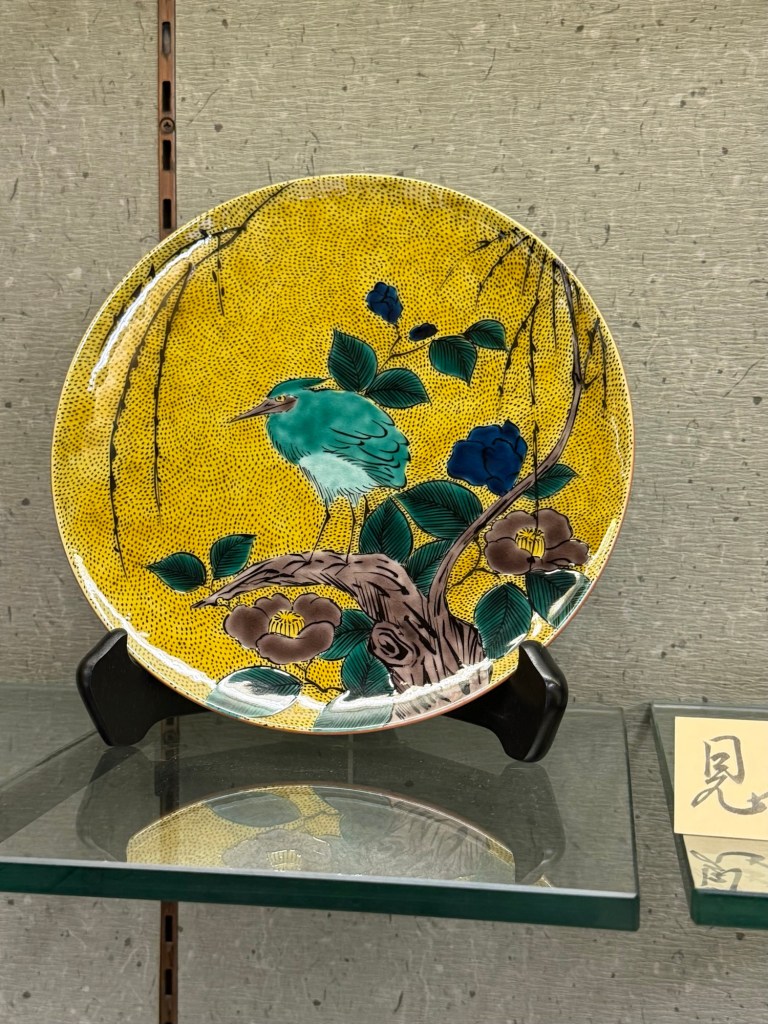
Our arts and crafts experience continued with a visit to Kutani Kosen Kiln, where artists fashion prized, highly regarded decorated porcelain. Mr. Kutani, whose family has owned the company since 1870. Walked us through his entire operation. Unlike most producers today, Kosen Kiln handles every step under one roof, from blending the raw clay, throwing the pieces on the potter’s wheel, glazing, painting and firing. The company specializes in traditional uwaetsuke (over glaze painting) using the classic five color Gosai palette of green, yellow, red, purple, and navy blue.
We had the chance to purchase art created by the Kosen Kiln. Unfortunately (or fortunately) for us a lot of things were out of stock.
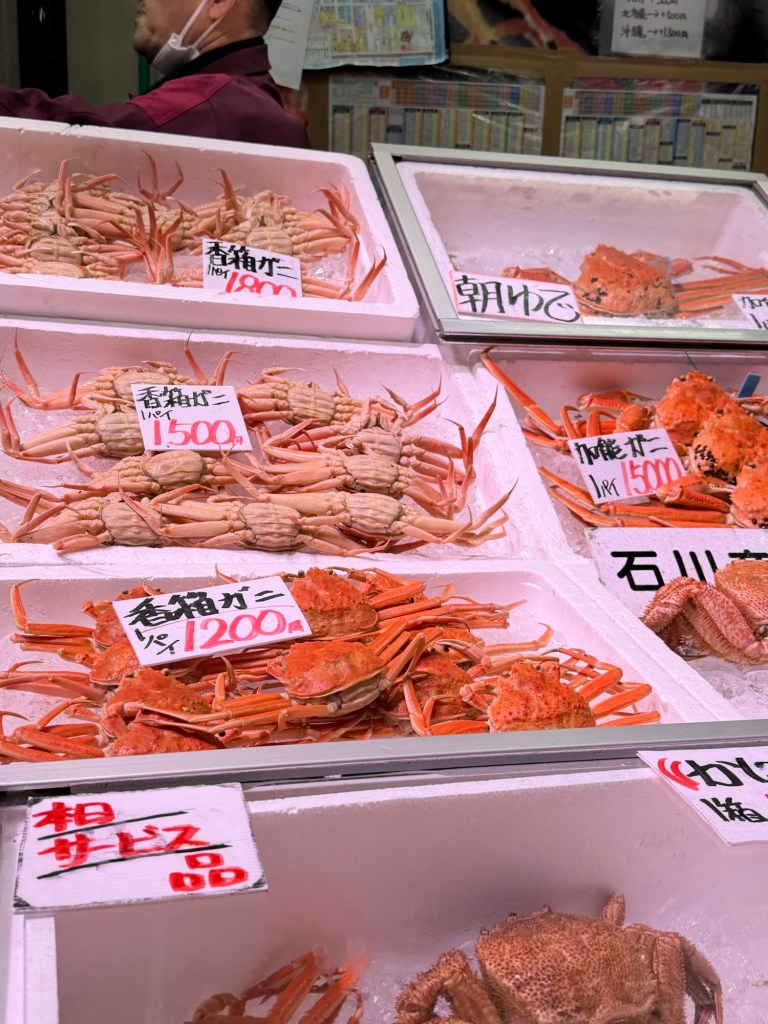
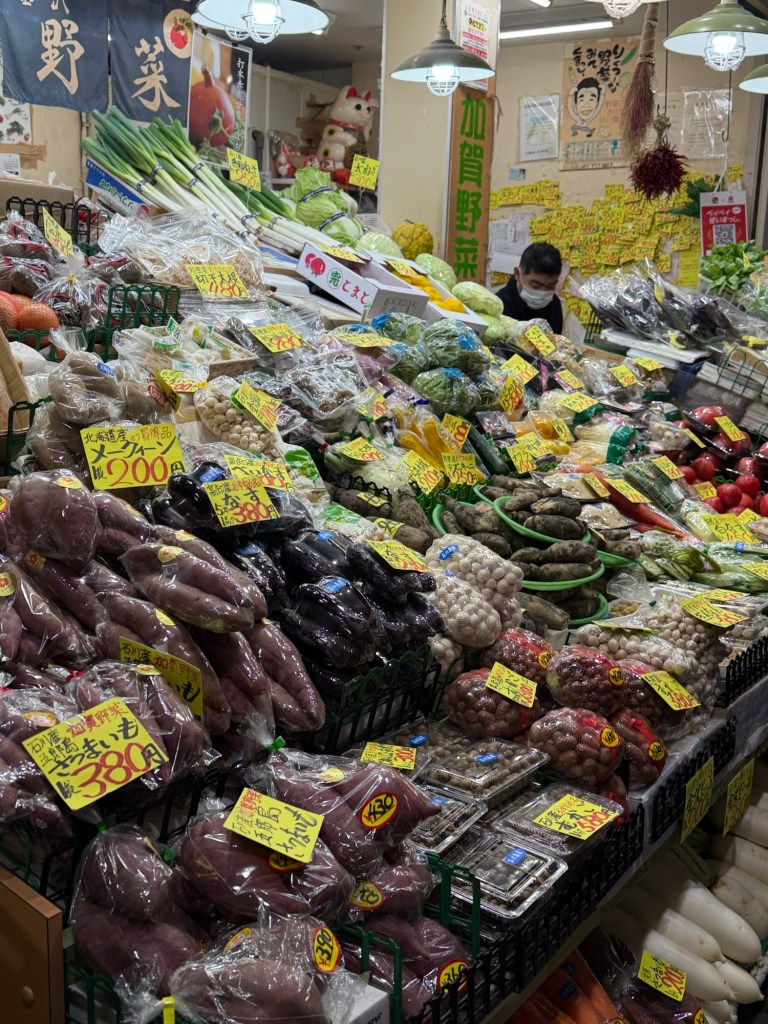
It was now time for lunch. We were given time to explore the Omicho market. The market was incredibly crowded. It was extremely difficult to follow Masako. We ended up having lunch with Cheryl and Jake. By the time we finished it was time to get back on the bus.

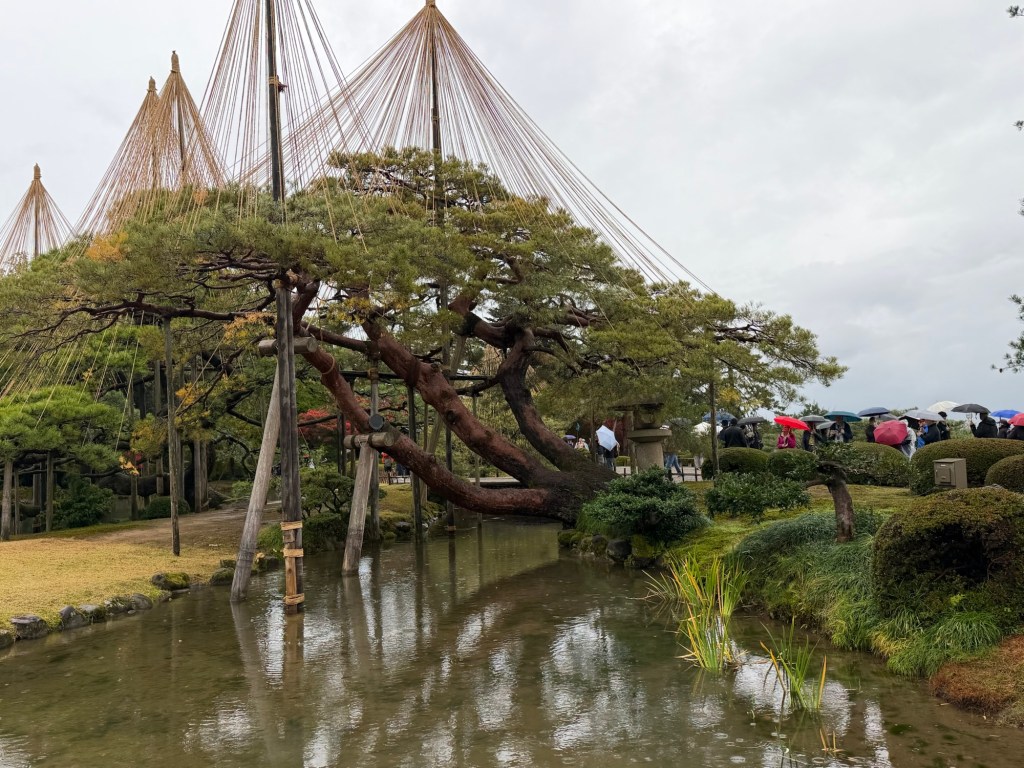
The Kenrokuen Garden ( Garden of Six Attributes) is a national landmark whose origins date to 1676. It is one of Japan’s finest traditional gardens. It’s 25 acres represents the six qualities for the perfect garden: extensiveness, artifact, antiquity, waterways, panoramic views, and quiet seclusion. It was an absolutely beautiful place. Every corner you would turn presented another gorgeous view despite the rainy day. Note the ropes holding up the tree branches. The concern is that heavy snows might break branches, so to prevent that from happening the limbs are supported by ropes. Sometimes trees trunks are supported by wooden braces.
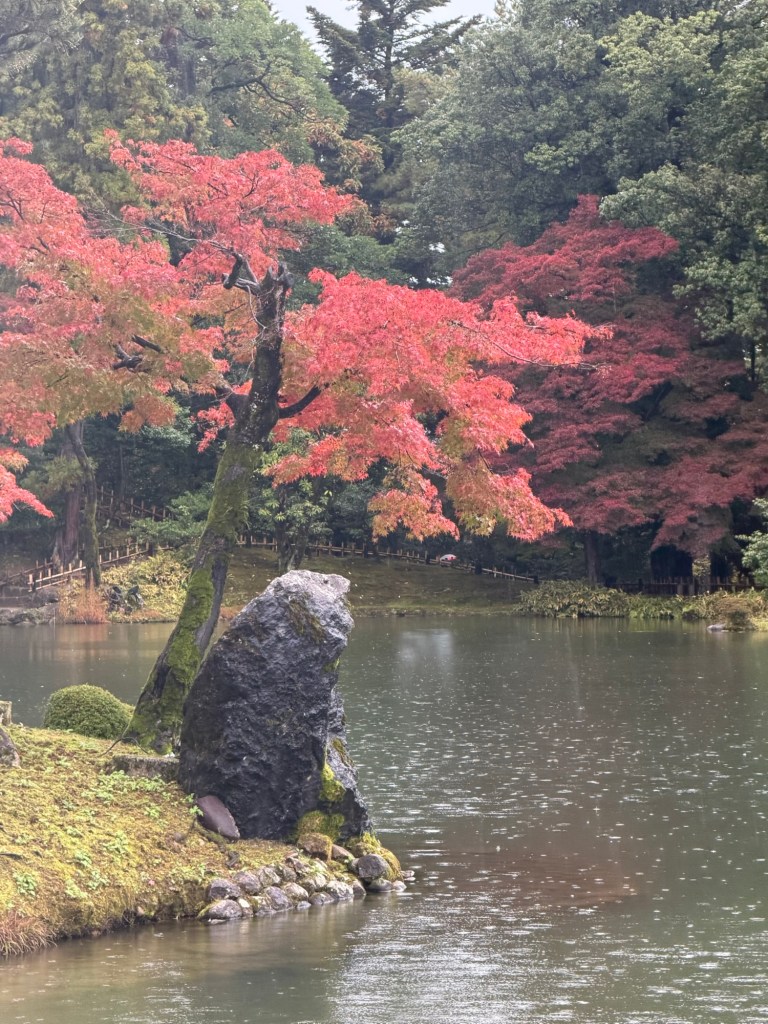
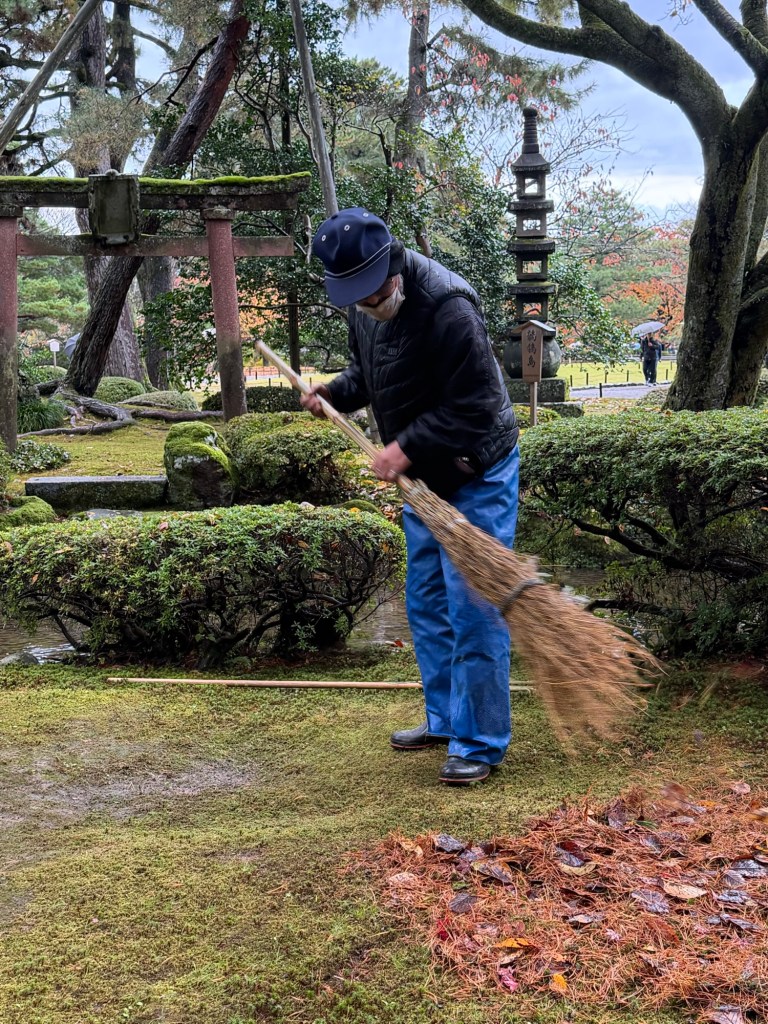
They really like moss in Japan. In fact they encourage its growth. At home I felt like moss was taking over parts of my yard, especially on the rocks in my backyard. However, I think I am going to take a Japanese point of view and learn to appreciate it. They even had people sweeping leaves off the moss with homemade brooms and kneeling on the moss literally picking out anything they didn’t think belonged there.
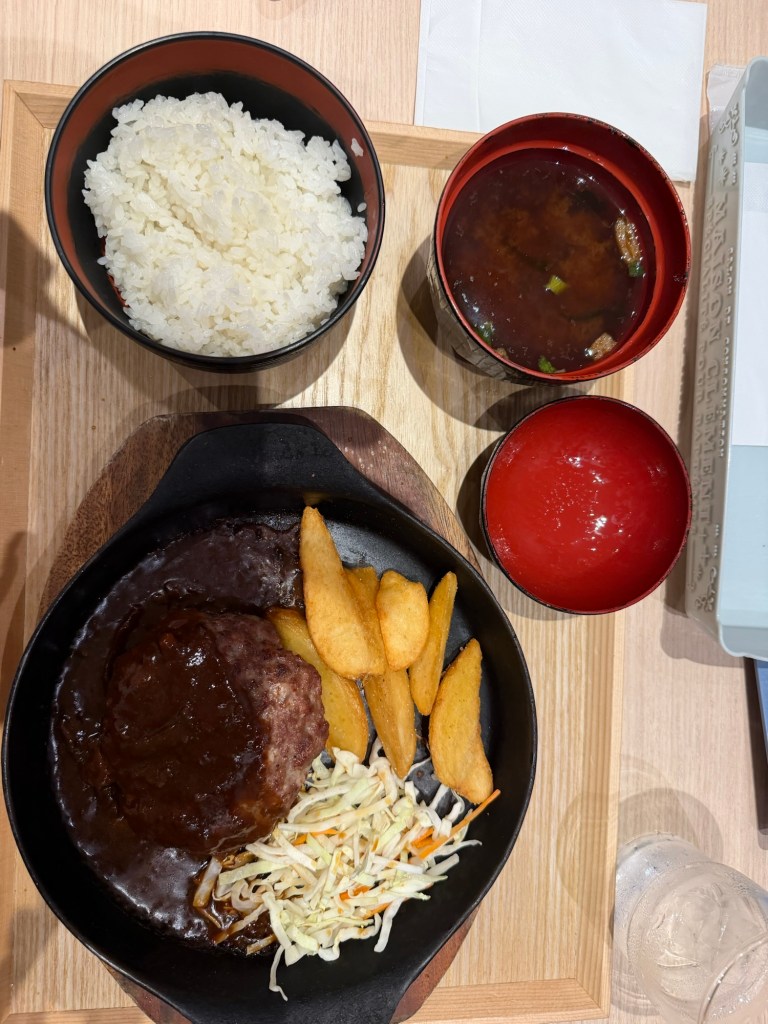
Dinner was on our own. We headed over to the train station because it was filled with a variety of restaurants. We arbitrarily picked a place that said they sold Wagyu burgers. Ellen from our group joined us for dinner. The burger was bun-free with a tasty barbecue-style sauce. It was served with a little shredded cabbage, ketchup, fries, miso soup and rice. The meat was quite tasty. The soup and rice were completely unnecessary.
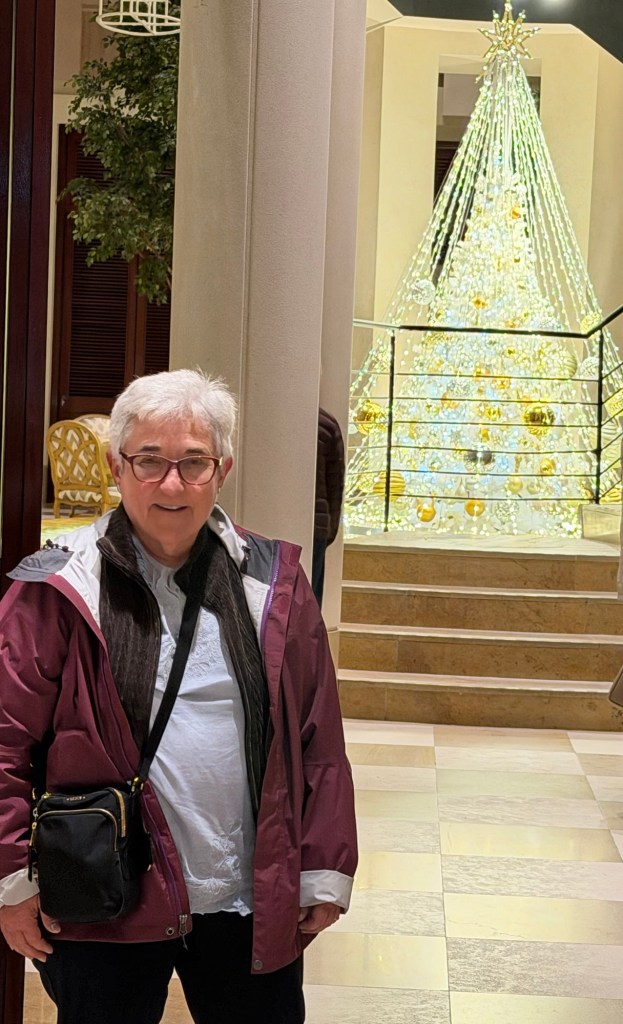
Our hotel’s decor was lovely. It had a bright crystal Christmas tree in the lobby.
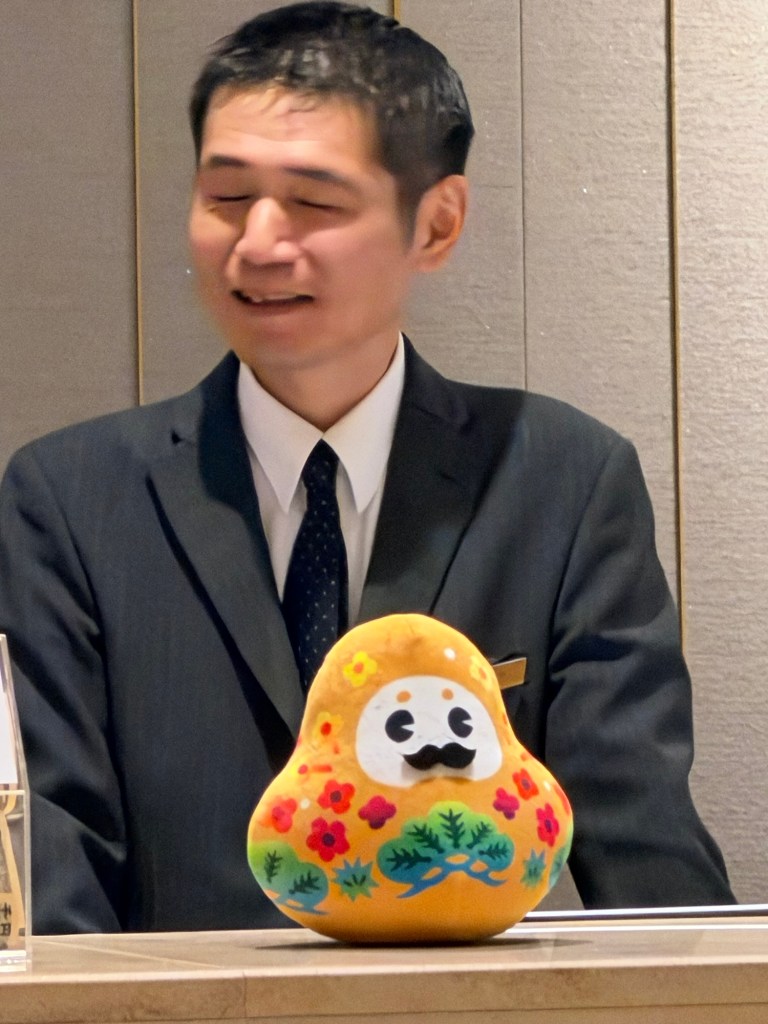
You also saw a rather cute looking creature featuring a mustache at the reception desk at the hotel and around the town. The stuffed toy was adorable, but the story behind it, not so pleasant. Long ago, there was a monk that was so passionate in his meditation that his legs atrophied, and because he never wanted to sleep, he cut off his eyelids. Charming story isn’t it? People admired him and his commitment to his faith. How this cutish creature came out of that story, is unknown.