
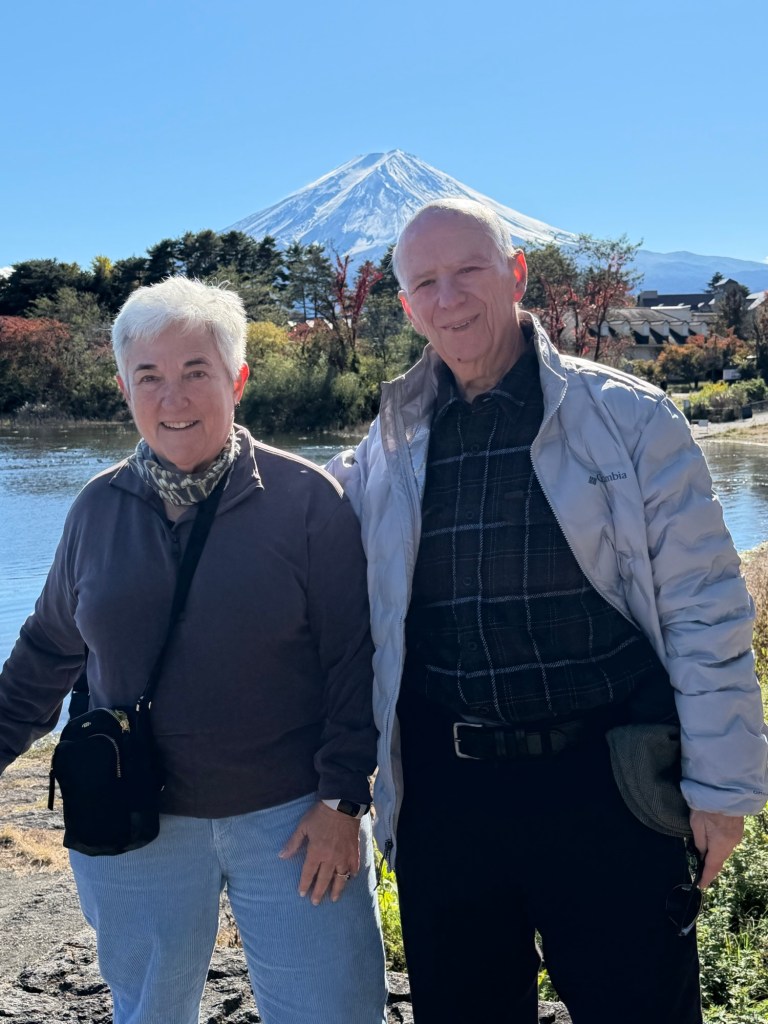
It is a glorious day today. The sun is shining and it is not nearly as cold. We got an early start and are headed toward Fuji-Hakone-Izu National Park via bus. We had been told that Mt. Fuji can be quite elusive, but not for us. The mountain is almost perfectly symmetrical and stands at 12,388 feet high. It is a dormant volcano that last erupted in 1707. The ash was said to reach all the way to Tokyo.
Glimpses of Mt. Fuji were possible as soon as the bus made its way out of Tokyo. We made a quick stop at one of Japan’s highway rest areas. It was an impressive place that offered an incredible variety of things. Nothing in the U.S. compares. Masako said that families often take a drive just so they can visit the rest area.
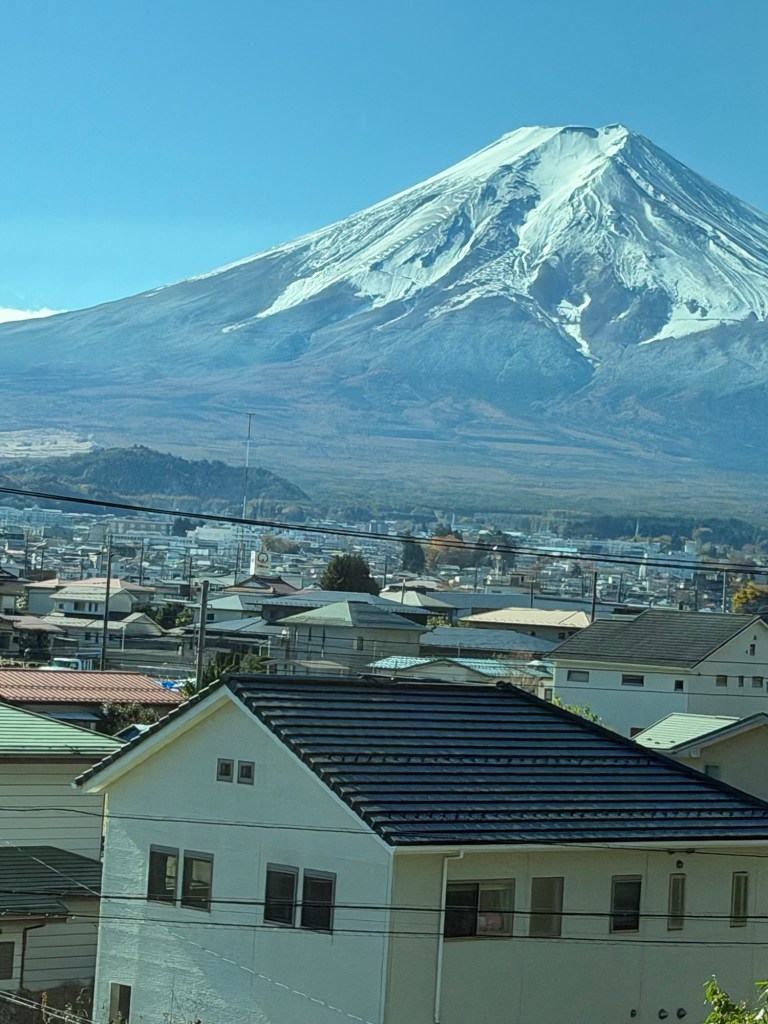
We reached the Mt. Fuji World Heritage Center where we watched a short video about the mountain. There was also a viewing platform, but oddly enough it didn’t provide a good view of the mountain. However, now that we are higher in the mountains we are seeing more signs of Fall, especially the Japanese maple trees, which have turned bright red.
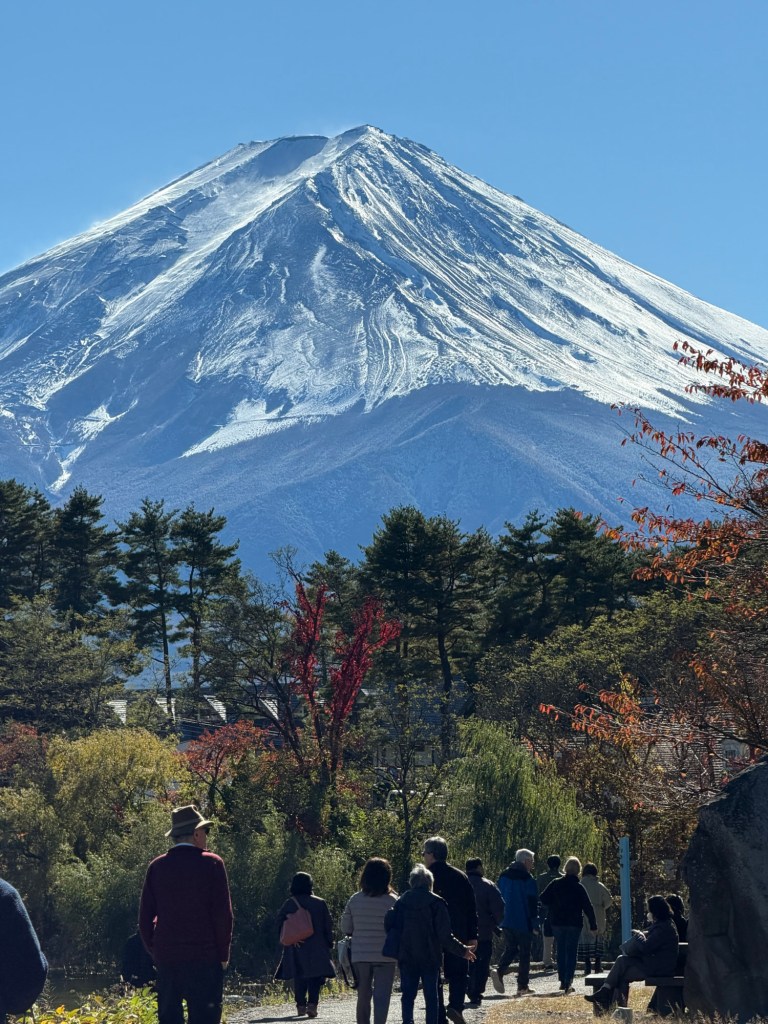
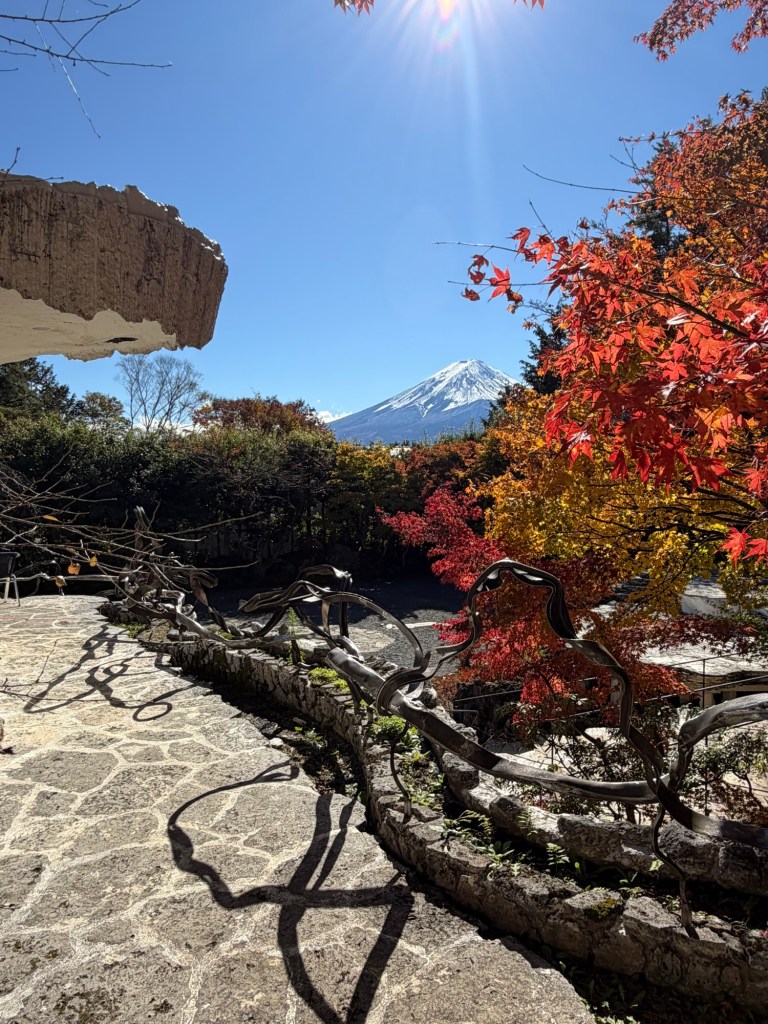
Our tour is more arts-oriented than we had realized, but this is not a bad thing. After leaving the Park, we visited the Itchiku Kubota Art Museum. It is located on Lake Kawaguchi, one of five lakes surrounding Mt. Fuji. Kubota, who died in 2003, is famed for reviving a long-lost style of Japanese textile dye technique known as tsjuigahana. The museum is in the artist’s home and showcases a collection of hand-dyed Mt. Fuji themed kimonos. These are not your typical kimonos. The “Symphony of Light” depicks Mt. Fuji across seasons where multiple huge kimonos sit side by side and act as a massive canvas. The details, colors, and textures are impossible to properly describe, but are incredibly beautiful. Nothing stands between you and the kimonos. Unfortunately you can’t photograph his works.
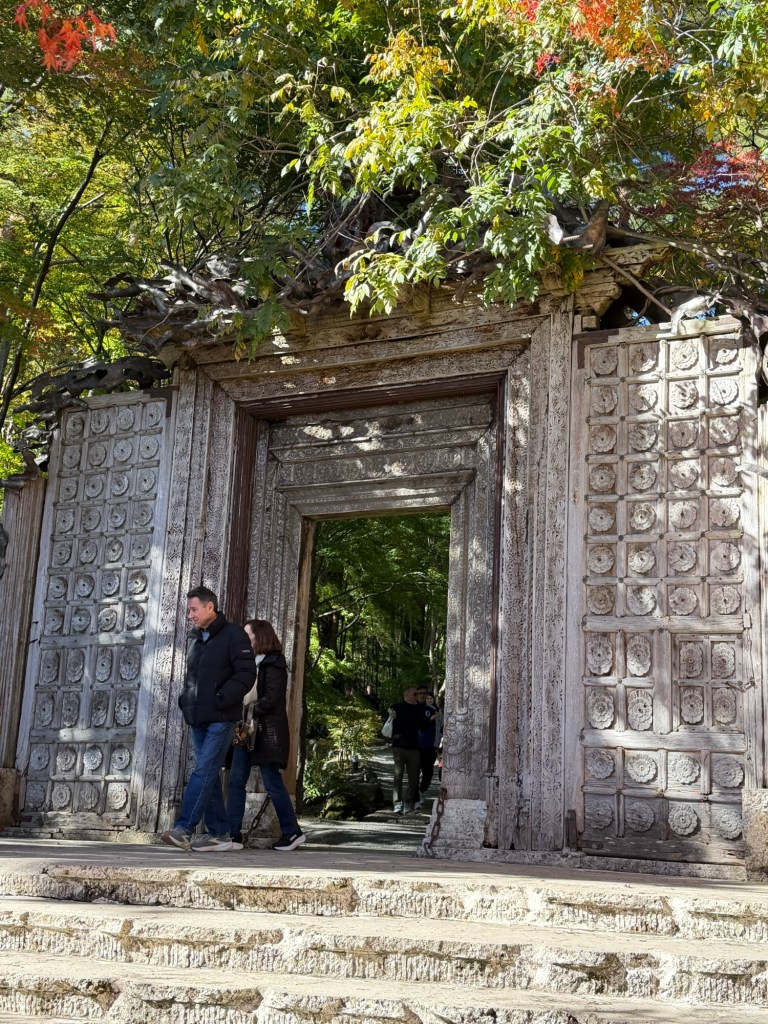
Kubuta’s home and grounds are worth seeing on their own. The structure of his home was supported by 1,000-year-old timber beams and integrated traditional Japanese woodwork with “Gaudi like flair.” Okinawa Tyukyu limestone was also used. The grounds are zen-like with waterfalls and beautiful red-pine and red maple trees. In addition, there were better views of Mt. Fuji here than in the park.
Because it was such a beautiful day, Masako added an additional stop on Lake Kawaguchi. Here we took additional photos of Mt. Fuji before stopping at a what is considered a mall area to buy lunch. A group of us headed to the local burger joint, Mo’s. Not the best fast food we’ve ever eaten, but quick. The best thing there was what was on television —a major suma wrestling competition.
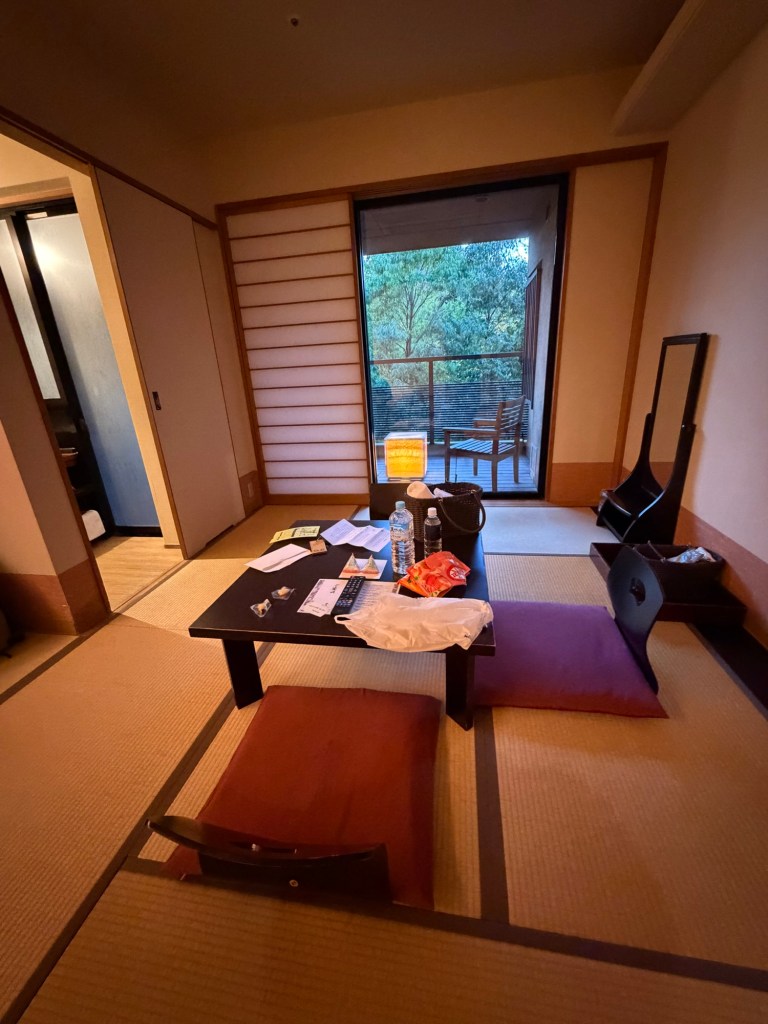
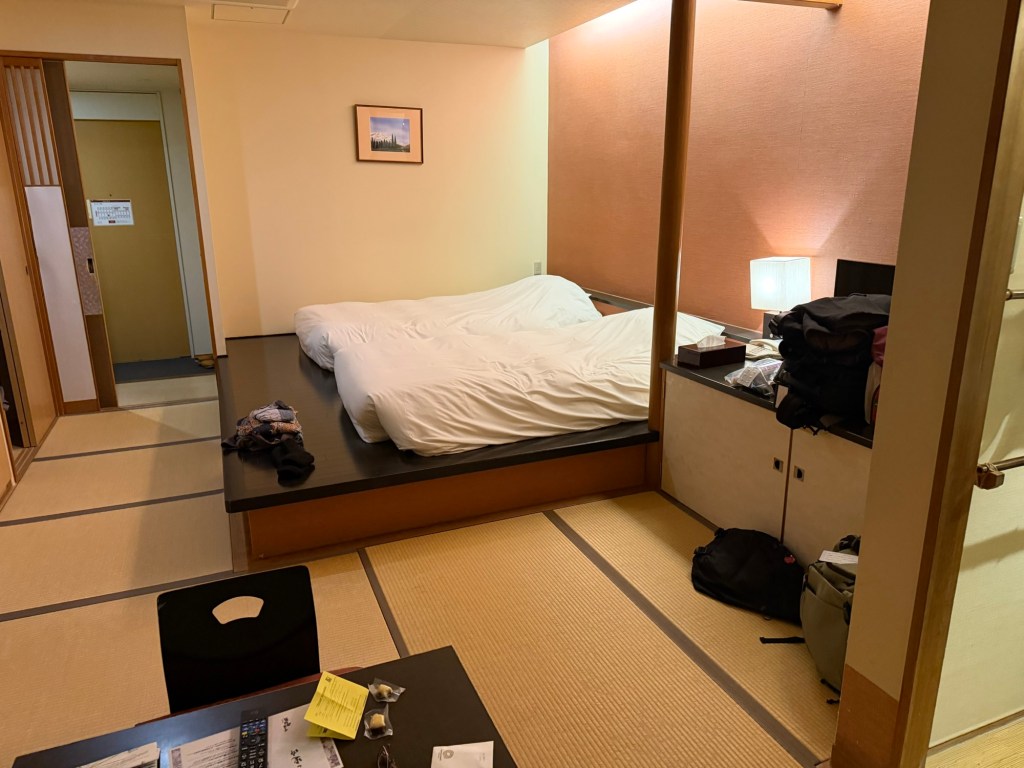
At long last we reached Hakone and our traditional ryokan lodgings for the night. When you entered your room you removed your shoes before stepping on the tatami-matted floors. The bedding was on a low platform, and the only seating was around a low table and was essentially a cushion on the floor with a seat back. We also had a wooden bathtub outside on our balcony had we wanted to use it.
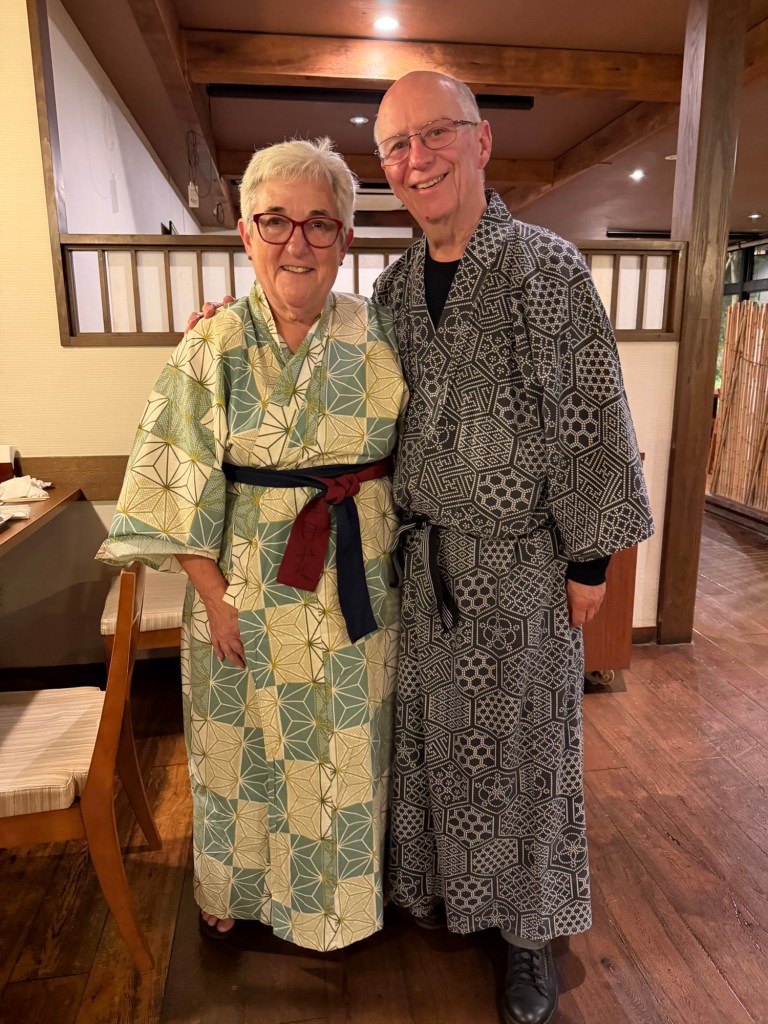
What was fun was that when we first checked in Dan and I got to pick out a kimono (a Yukiana robe made of lightweight cotton) that we would wear during our stay. It was hard to decide which one to select because they were all so colorful. Finding the correct size was easy. One size fit all and you would select your kimono based on your height. Dan and I both look adorable in our new clothing.
Our ryokan offered natural hot spring baths, both indoor and outdoor—men’s and women’s of course. There is a strict etiquette code in using these baths with the first rule being you go in naked. That was the hardest rule to overcome. Dan had no problem, but I was extremely happy that hardly anyone was at the bath when I showed up. I tried both inside and out. It was really was relaxing and my skin felt very smooth afterwards.
The entire group met for a Kaiseki dinner. Dinner consisted of multiple courses that highlighted seasonal and regional ingredients. Dan and I found the dinner to be overly soup oriented. The sashimi was good, but we found ourselves craving something that didn’t taste like fish, like a piece of chicken. Even the desserts are odd by our standards. There was something that looked like a small ball of ice cream without much flavor and a jello like substance with fruit. There is a reason the Japanese aren’t obese like us Americans. None-the-less, dinner was enjoyable.

