
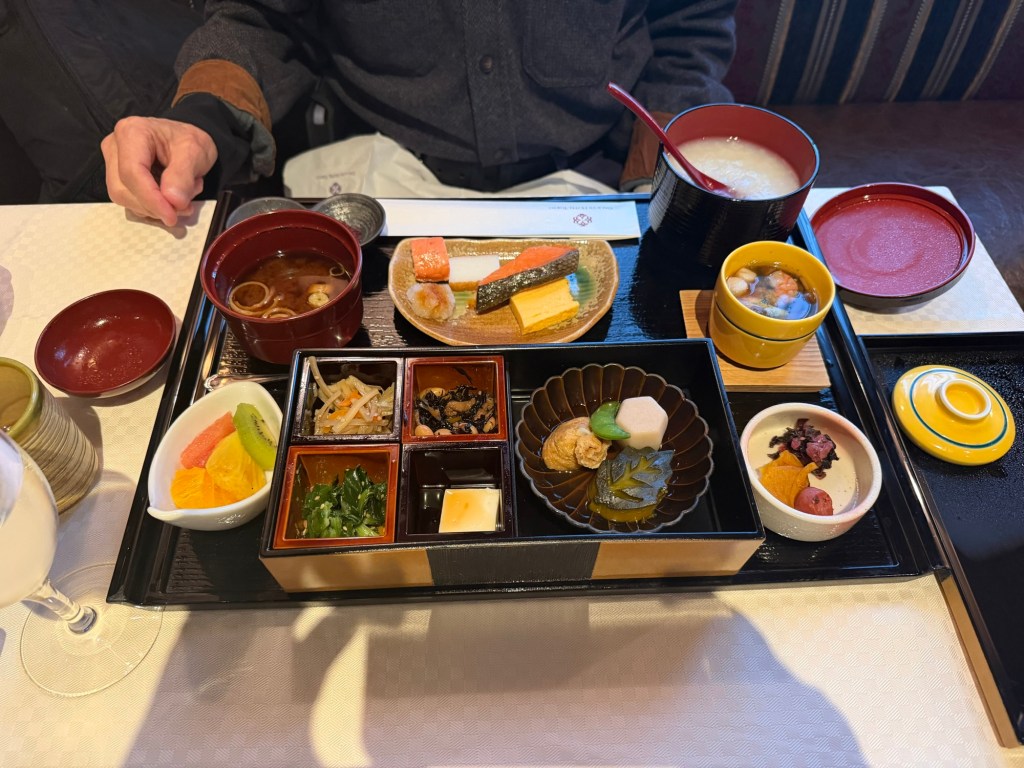
Today was the first day on our trip that we actually ordered breakfast. Dan and I figured that we should try a Japanese breakfast. Breakfast arrived in an assorted number of covered cups, plates, and a bento box. We could identify a few of the items, but to a large degree we had no idea of what we were eating. Breakfast included fruit, yogurt, rice porridge, assorted salads and small pieces of fish. To be honest it was an interesting experience, and we definitely had enough to eat, but once was enough
.
At 8:30 AM we went downstairs to meet our group by the Christmas Tree in the lobby. The hotel, and businesses all over Tokyo, were already decorating for Christmas. You wouldn’t know that only about 2% of the Japanese population was Christian. According to Masako, the Japanese people enjoy the beauty of the holiday, but have no religious sentiments about it. The fact is that most Japanese practice a combination of Shinto and Buddhism.
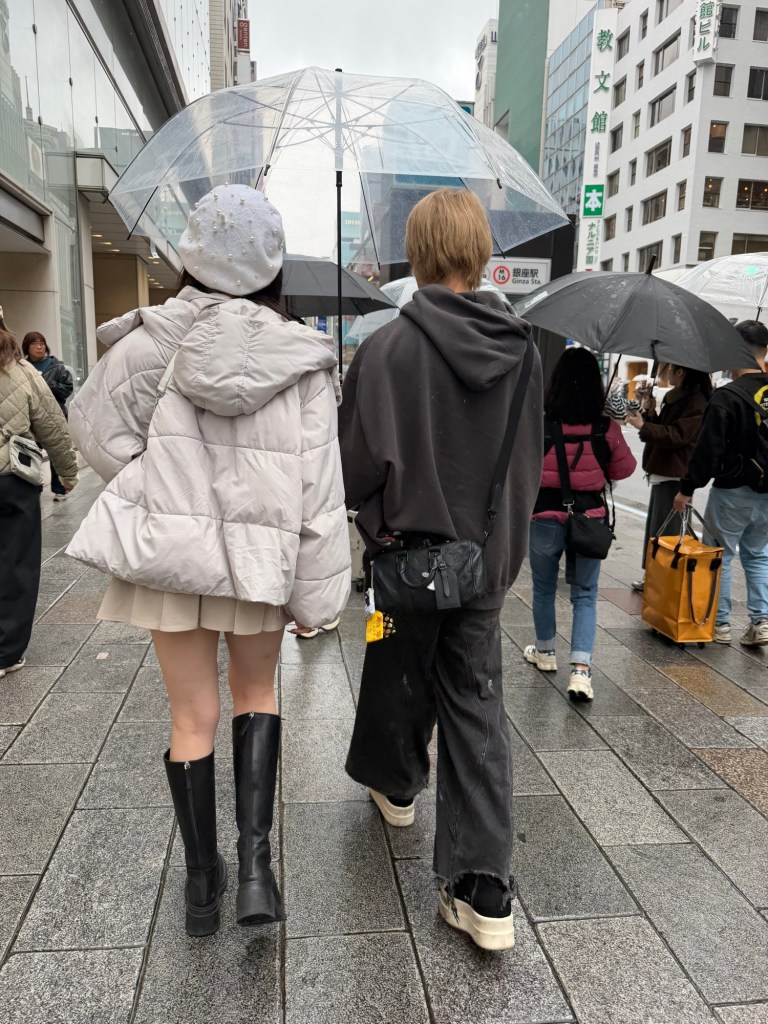
Weather-wise, we had been lucky to have blue skies and comfortable temperatures. Not today. It is raining with the temperature in the 40s. We were happy to have our rain jackets and puff jackets.
Shinto is the indigenous religion of Japan centers on sacred spirits of the natural world. It sounds very similar to the beliefs of Native Americans. These spirits are called Kami and they are all around us. The religion has no scripture or rigid moral code, but is deeply ingrained in the Japanese people’s way of life and cultural tradition. Buddhism, on the other hand, was introduced to Japan in the mid-6th century by the Koreans. Buddhism focuses on personal spiritual development and rebirth. The people of Japan embrace both, which is why you may often find a Shinto Shrine that celebrates life events like weddings and the blessing of young children for long fruitful lives, and Buddhist temples where funerals are held.
Our tour group is a very nice group of 24 people that are from all over the U.S. I would say the majority are older, but there is a family group that includes two young women. I get the sense that all of us will get along just fine. Dan and I are already getting friendly with a couple from Minneapolis.
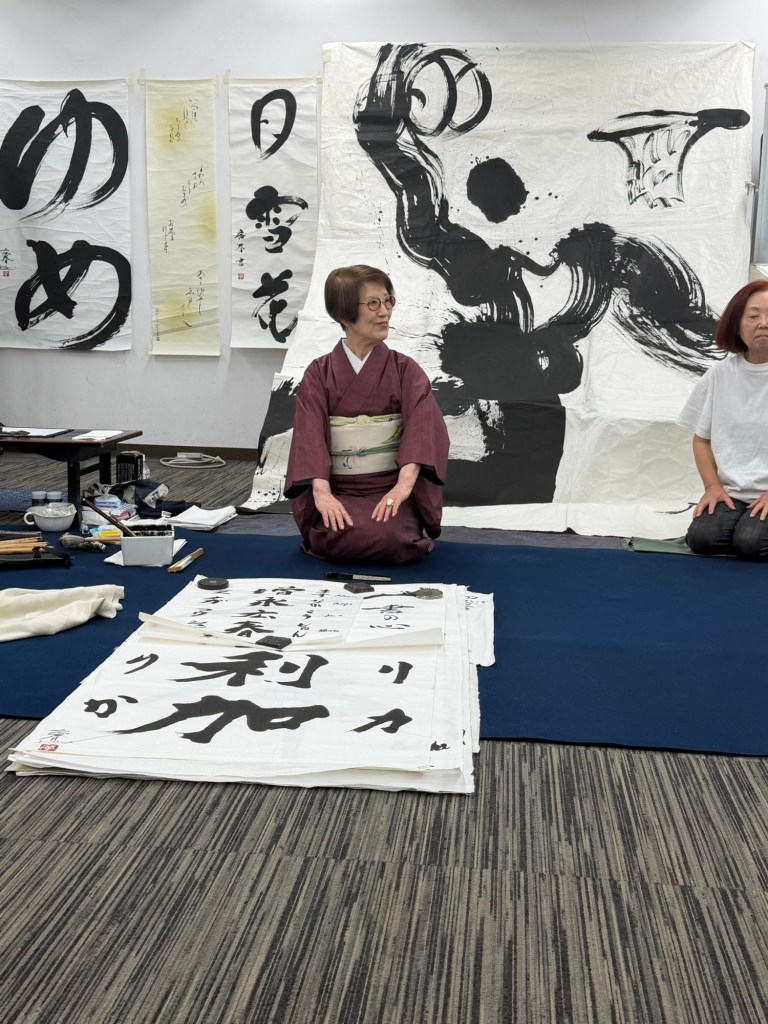
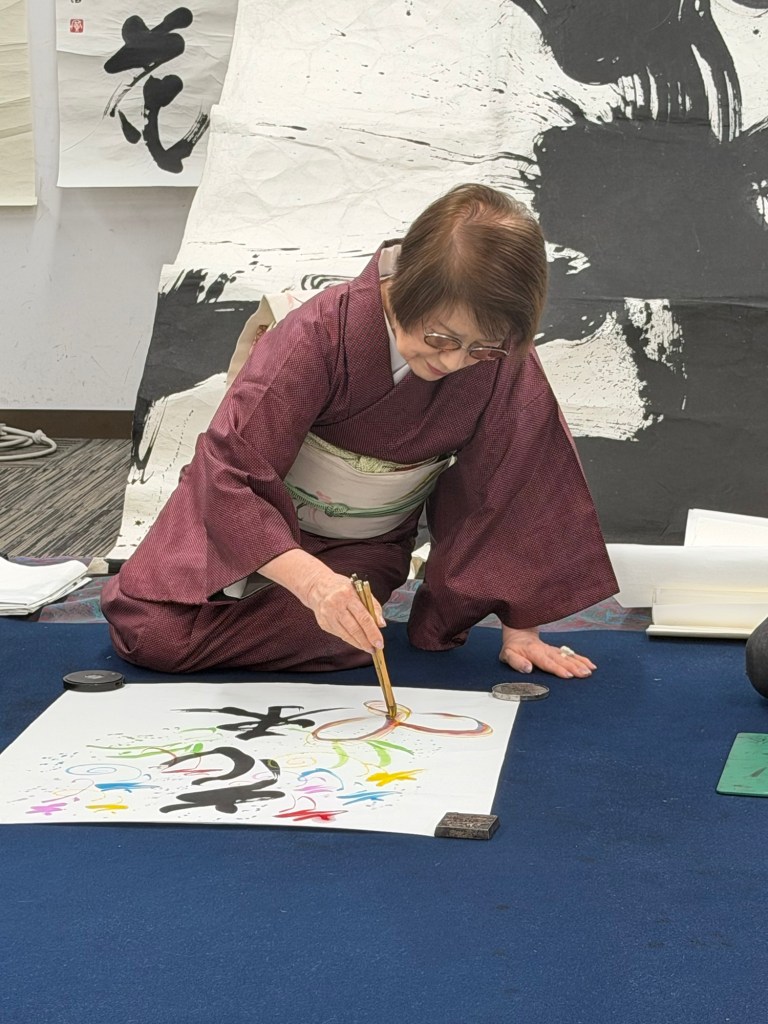
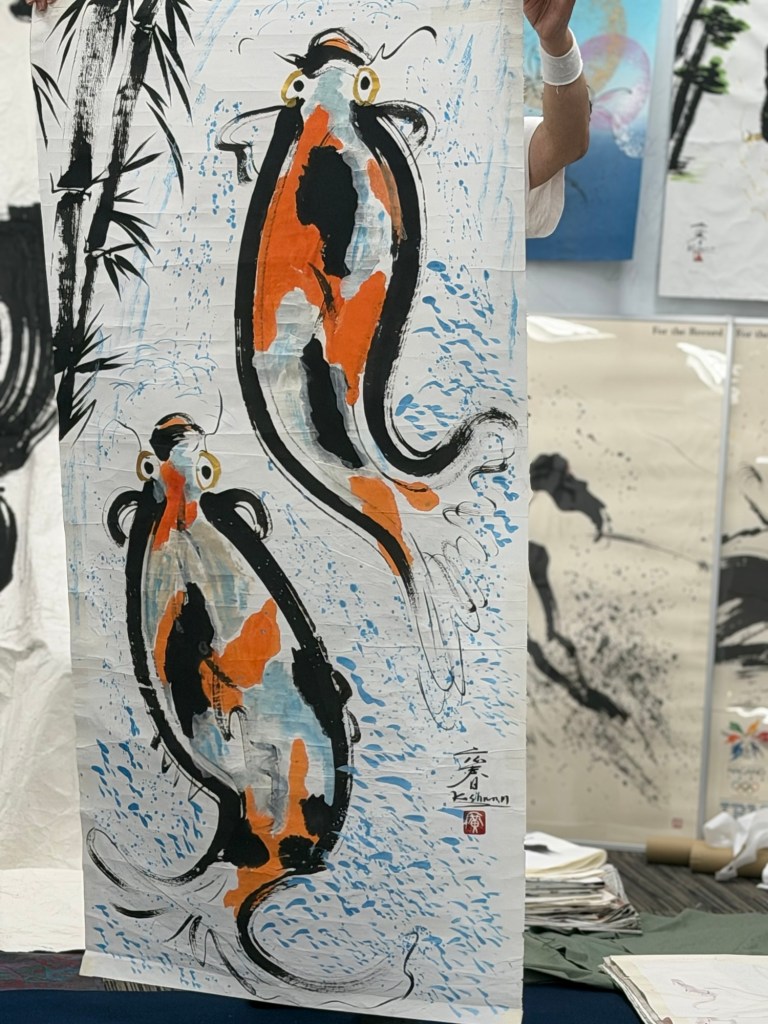
The very first activity was truly an enlightening experience. We went to visit the workshop of a reknown calligraphy artist, Koshen Masunaga. She explained (in Japanese) with Masako interpreting. We learned about how she developed her craft combining ancient calligraphy skills with her modern approach. Masunaga essentially developed her own calligraphy language that she calls Souboku, which “fuses together traditional and modern simple calligraphy bringing the letters to life.” We watched as she created artwork right before our eyes. Each of us received artwork based on our names that we are taking home with us.
It is nice in that our tour gives us free time to wander on our own. Today we were dropped off at Ginza Six, one of Tokyo’s most upscale department stores. Each brand has its own boutique. We didn’t stay there too long and instead headed to a well known stationary store called Ginza Itoya. The main store has 12 floors with the most notable being the 3rd where fountain pens are sold, and the 7th that is dedicated to fine papers. It was amazing and incredibly crowded. We made our way through several floors, but ran out of time.
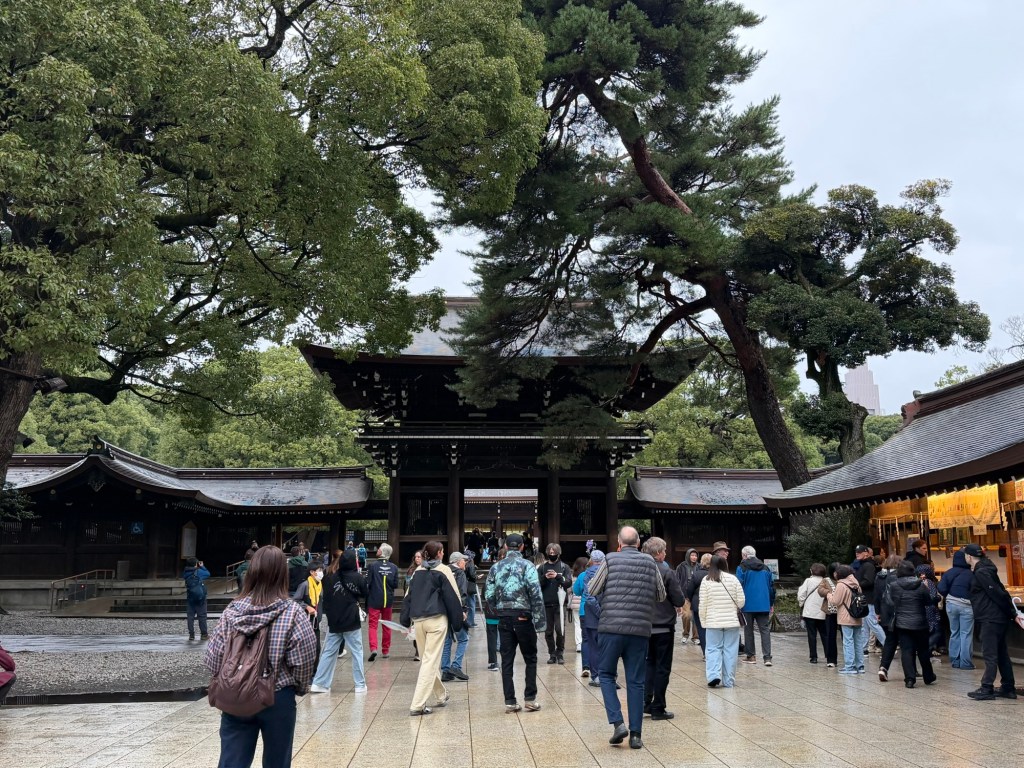
The Meiji Shinto shrine, completed in 1920, is the largest and most famous in Tokyo. The area consists of a peaceful enclave of temples and gardens dedicated to the late 19th century Emperor Meiji and his wife, the Empress Shoken. They are revered because they served “as the fundamental symbols and architects of Japan’s transformation from an isolated feudal state into a modern global power.”
Along with the shrine’s construction, roughly 100,000 trees from all over Japan were planted. Today is has turned into a massive man-made forest.
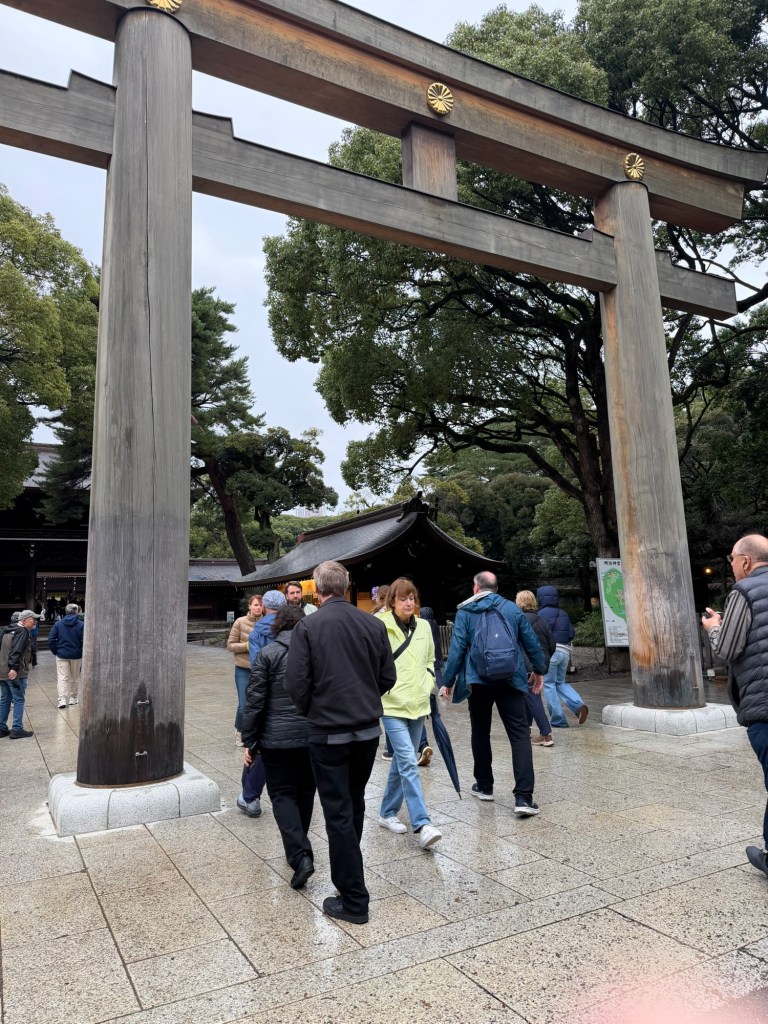
At the entrance to the shrine is a huge wooden Torii gate that signifies the boundary between the everyday world and sacred grounds. One should never walk in the middle of a Torii gate. That space is set aside for the spirits. You must also bow before entering. Marika also showed us how to wash our hands, and clean our mouths before entering the shrine. We were instructed on how to bow, clap twice to wake up the spirits, pray and then bow again. She pointed out a hug gong that is used during ceremonies. Unfortunately, no photos were allowed inside.
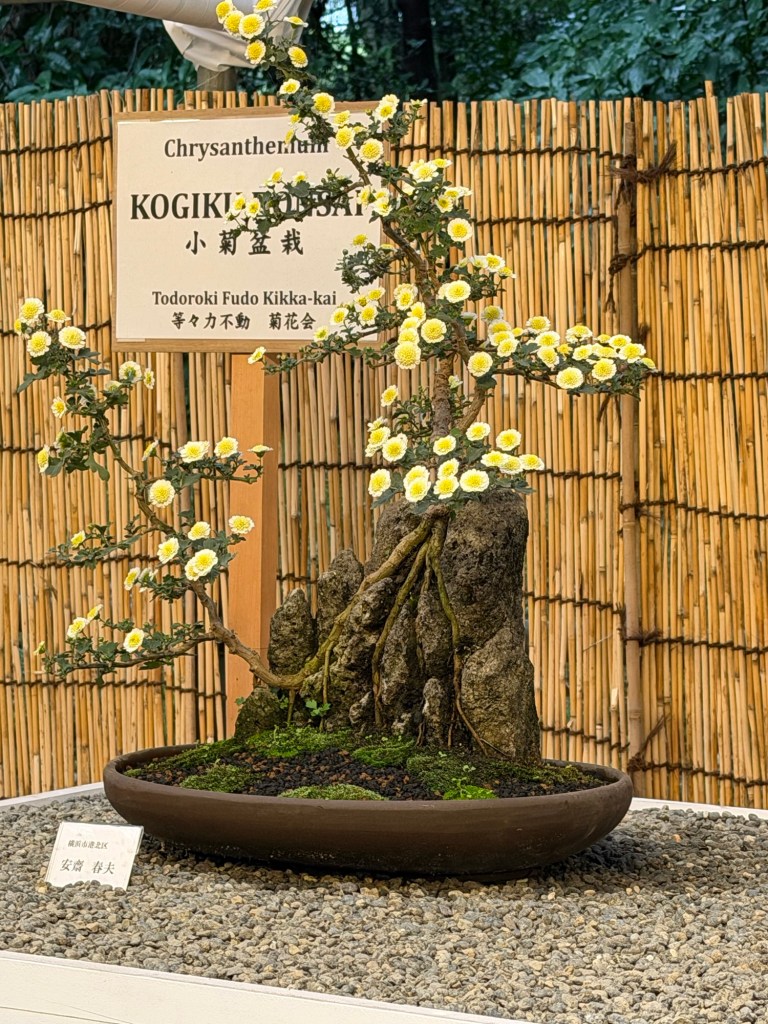
Chrysanthemums. There was a competition and some of the flowers were amazing
We were able to relax a little before the final event of the evening, our seven course welcome dinner. Each course was a traditional Japanese food. Much of which were fish. Over the past few days I feel as if I have eaten more fish than I’ve eaten in my entire life. Some of it delicious and others, not so much. Dinner was really quite good and took over 2 hours. It gave us the opportunity to get to know a few of our traveling companions a little better.
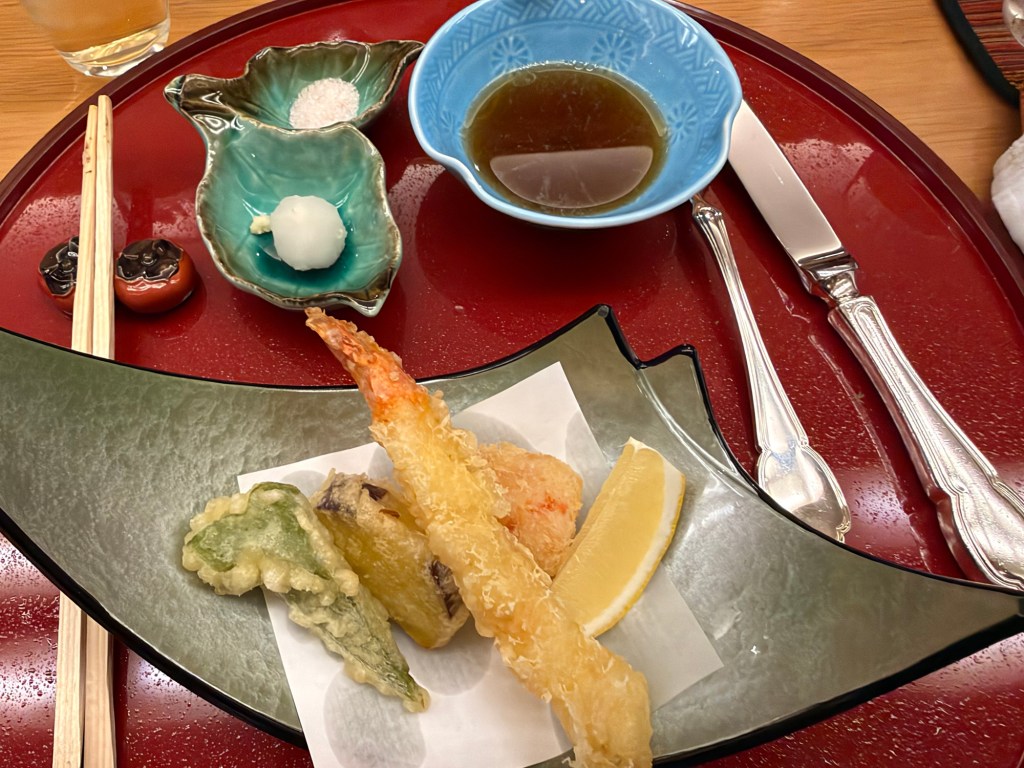
One of our many courses

