
Tuesday, June 5, 2018
We apologize for the delay in our postings, but we had no internet for several days and as a result have fallen behind. Over the next several days we hope to catch up, but for now will start with today.

Dan and I were in line to enter the Park by 8:45 AM, but that wasn’t early enough. We made it easily to Madison. Madison is the main junction when traveling from West Yellowstone. From there you can head either East or South. The quickest route to Yellowstone Lake, our main objective for today, was to head South. That is where we were caught up in a huge traffic backup. It was probably due to people trying to locate parking at the first major stopping point, but we’ll never know. We turned around and took a longer route mile wise, but at least we were moving.
On the way we stopped at Virginia Cascade. It was quite beautiful seeing the powerful water flowing downhill. We stopped at the ‘Grand Canyon of the Yellowstone’ and the Lower Falls of the Yellowstone River. The Park’s name was derived from the yellow rock walls of the Canyon. Because of the snow-melt all the rivers and streams are flowing so strongly they have white caps. This made waterfalls, cascades, etc. even more impressive.
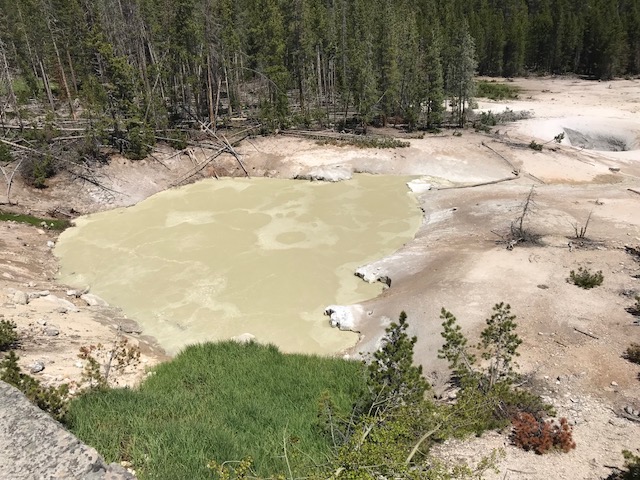
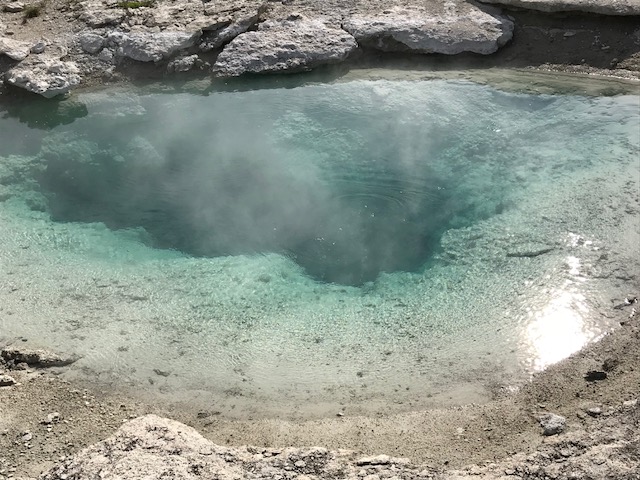
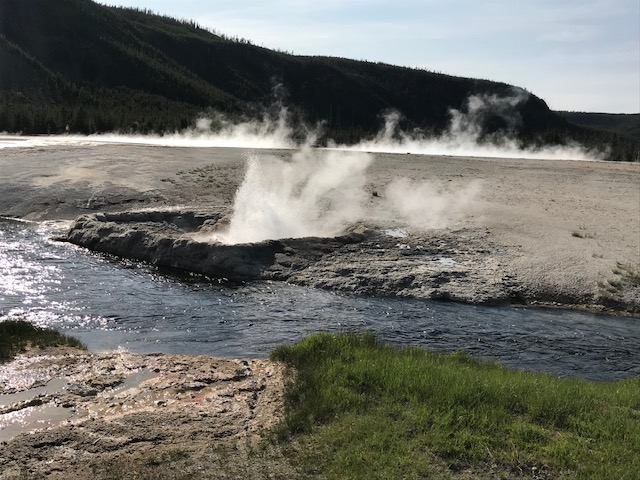
‘Sulphur Caldron’ (a bubbling pool with hot smelly steam coming out of it) and, Mud Volcano, a geyser that shot mud up into the air, were our next two stops. After grabbing a bite to eat, we headed to the Lake Butte Overlook. From that vantage point we could see across the Yellowstone Lake, a distance of 30 miles. Except for Grant Village, there is no significant development between the point we were at and Jackson, WY, one hundred miles South. It is the largest wilderness area in the lower 48 states.
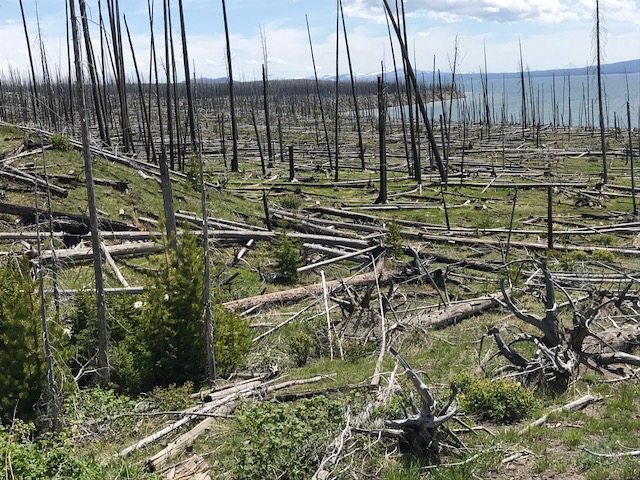
The elevation of Yellowstone Lake is 7,733 feet, the highest and largest alpine lake in the continental U.S. Surrounding us at the butte vantage point were acres and acres of dead trees, destroyed in a forest fire. In 1988 a massive fire wiped out most of Yellowstone Park, but much of it has regenerated on its own. Most fires are started by lightning strikes and occur almost every year. Fire fighters’ main objective is to keep the hotels and other buildings safe.
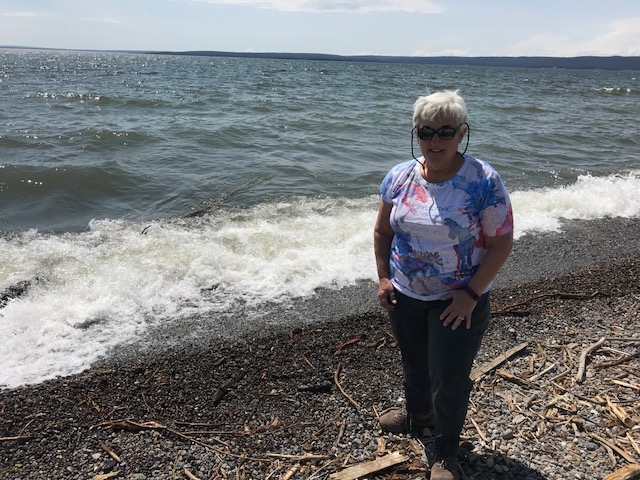
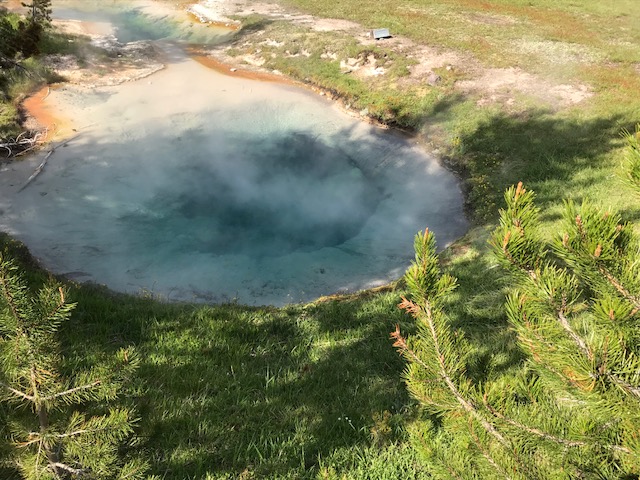
We then headed to the Natural Bridge Trailhead. The trail was closed, however, due to bears. In fact, there have been several locations we could not enter due to the bears springtime activities. Instead of our hike we spent a considerable amount of time at the West Thumb Geyser Basin, which is literally part of Yellowstone Lake. It did make us wonder how all of the acidity, and various chemicals impact the Lake. Apparently not much since we spotted a number of fishermen.
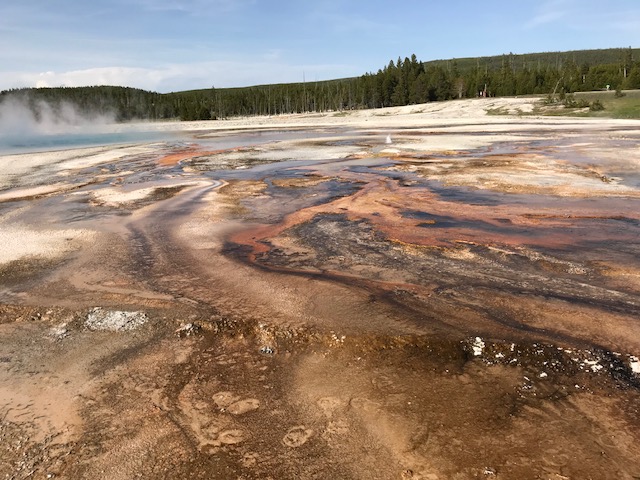
It was getting to be time for us to start heading back. We stopped at a few spots we had missed. Another beautiful cascade, called the Kepler Cascade and more geothermal action at The Black Sand Basin. Fortunately, our ride back was uneventful. We did stop to see the Yellowstone Historic Center Museum which is inside the Union Pacific train depot built in 1909. Another historic building we saw today was Lake Lodge. Tomorrow we head back to the Northern part of Yellowstone Park; which is mountainous; and still has snow at the higher elevations.
NOTE: Recommendation to others visiting Yellowstone: Leave seeing high traffic tourist places such a ‘Old faithful’, ‘Midway Geyser Basin’, etc. for the late afternoon; after 4:00 pm. The car traffic is much less, and these hot tourist spots are much more accessible. Plan to see other places first during the day.
 BY THE WAY WITH WENDY & DAN