
JULY 3, 2025
Finally a relaxing morning allowing me the perfect opportunity to segue into the subject of breakfasts. The Condesa neighborhood is known for having some of the best bakeries in Mexico City. In our search for breakfast a day or two ago, we discovered a small bakery. There was a line of people waiting to order their pastries and coffee, and then having a seat at one of the outside tables to enjoy their goodies. We took the line as a good sign and joined everyone in line waiting for our turn. When we first walked inside our immediate reaction was to turn around and run out the door. The place was swarming with bees. (At least it wasn’t flies.) Evidently the bees wanted their pastries too. It wasn’t an easy thing for the four of us to do, but we put our gringo attitudes on hold and gave the place a try. Are we ever glad we did. The pastries were fantastic and the coffee perfect.
As much as we loved our little bakery, we were headed somewhere else today so we could get a small taste of Jewish life in Mexico City. We had heard of the famous New York style delicatessen, Mendl’s, and made our way there.
Mexico has a prominent Jewish community of about 67,000 people, about 95% of which live in Mexico City. Most are Sephardic and Mizrahi Jews who came from Southern Europe, the Middle East and North Africa. Mendl’s, however, serves Eastern European Jewish foods.
Conversos, Jews forcibly converted to Catholicism, first arrived in Mexico in 1519. Some truly converted, however, others practiced Judaism in secret and were called Crypto-Jews. The persecution of Jews had followed them from Spain to “New Spain,” although it was never as severe. It wasn’t until 1821, when Mexico gained its independence, that religious tolerance evolved. In the late 19th to early 20th centuries there was an influx of Jews from around the world settling in Mexico.
Mendl’s menu was similar to one you would find in New York City or at Cleveland’s Jack’s Deli. A bit of Mexican flavor intermingled with standard deli fare that you wouldn’t see on a menu at home. For example, house-made salsas were available to add to dishes like corned beef or pastrami sandwiches. I also thought I detected a hint of Mexican flavoring in their corned beef. We really hadn’t had a bad meal since arriving in Mexico, and Mendl’s was no exception. Everything was fresh and delectable.

I was really looking forward to visiting today’s destination — the Museo Frida Khalo, located in the Coyoacan neighborhood of Mexico City. We had made reservations at noon for the four of us, as well as for our cousins.
The Kahlo house is also known as Casa Azulejo (Blue House) because it is painted in azul anil, a deep, vibrant blue typical of Mexico. Essentially you toured the house on your own simply by following a clearly marked path and reading explanations in English along the way. What was so nice was that you could take as much time as you wanted and were never rushed.
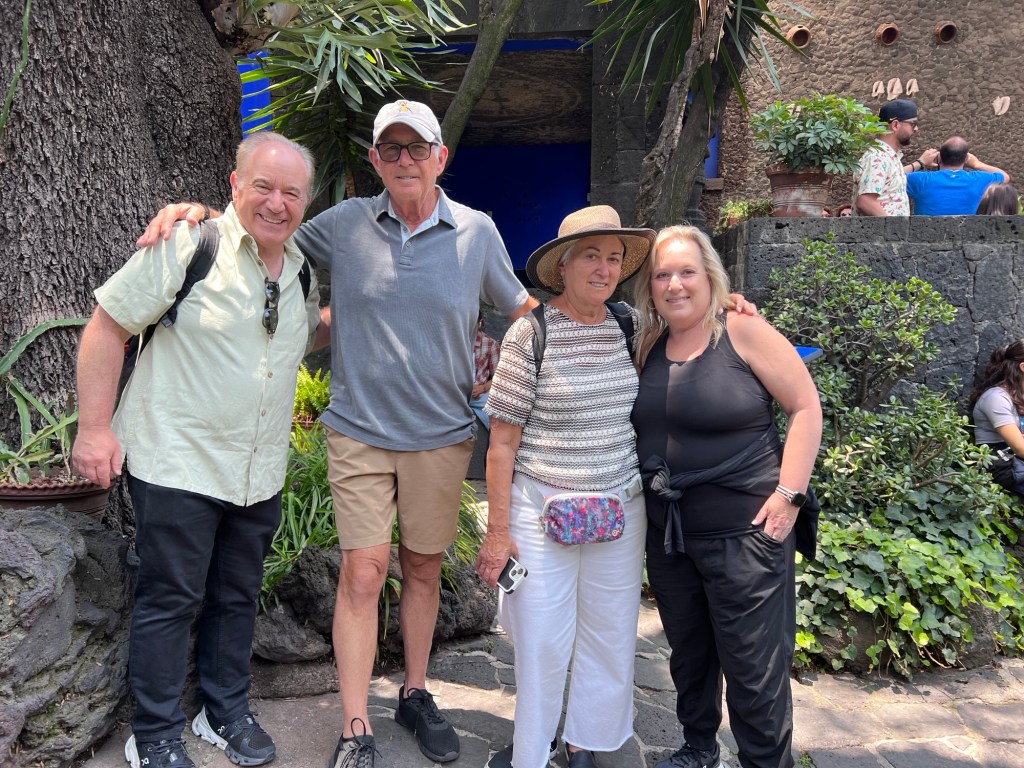

The house was built by Frida Khalo’s father, Guillermo in 1905. He was originally from Germany and made a living as a professional photographer. Her mother, Matilde Calderon y Gonzalez, was of indigenous and Spanish descent and a devout Catholic. Kahlo was born in the blue house in 1907. It was her lifelong residence, her creative sanctuary, and where she died in 1954 at the age of 47. Even in death she is still literally in the house. Her ashes are kept in a pre-Hispanic frog shaped urn which sits on a table in her bedroom. I found out later that the urn’s toad shape symbolized her affection for her husband, Diego Rivera. Her nickname for him was “el sapo” or the frog. If you’ve seen photos of him, you might understand why she called him that. He was an unlikely lady’s man, but his artistic talent, personality and fame must have been what drew women to him.
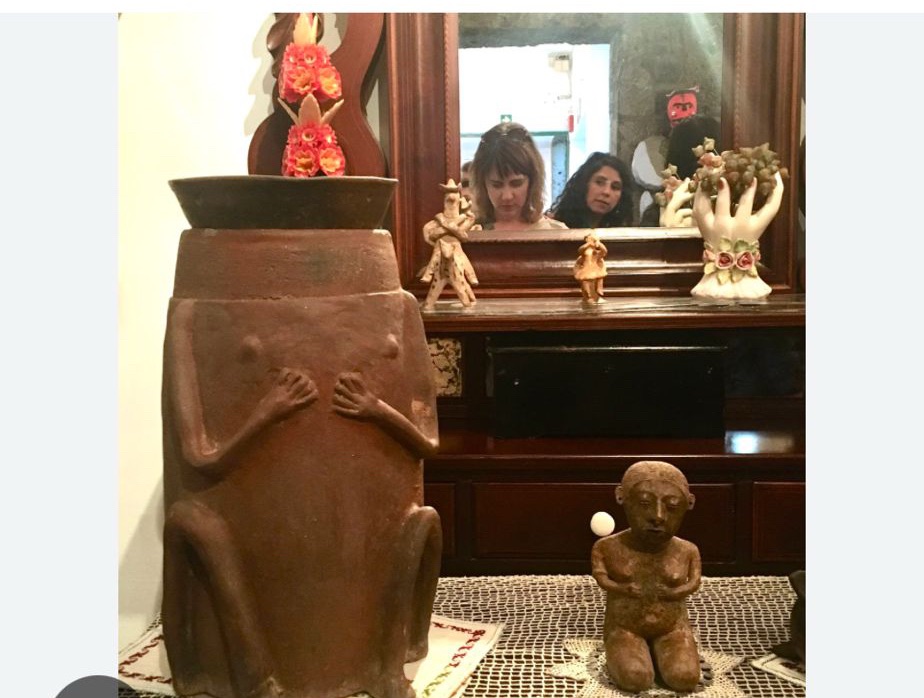
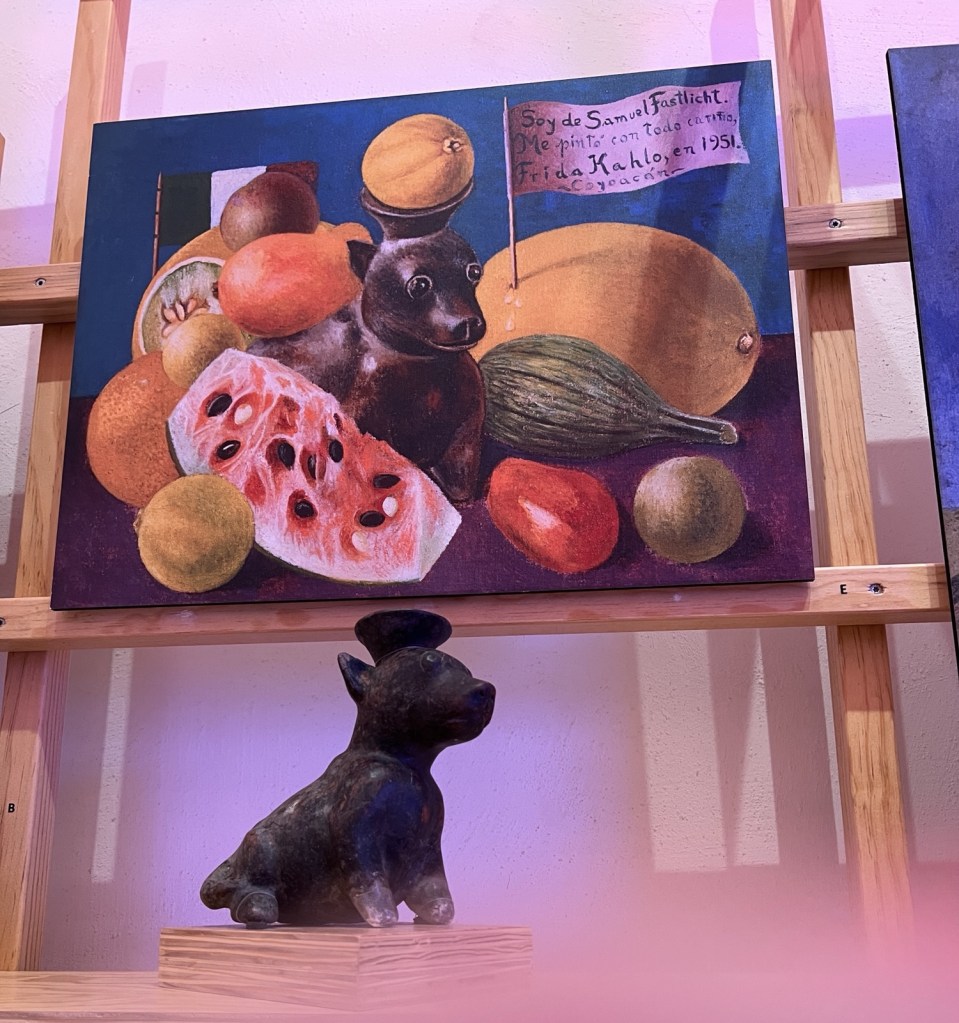
Frida Khalo was one of the 20th century’s best known artists, and her life and artwork continues to fascinate people. The artwork of both Khalo and her husband Rivera, are displayed in the house along with their collection of Mexican folk art and pre-Hispanic artifacts. Khalo dealt with terrible illnesses and injuries throughout her life. She contracted polio as a child, and tried to cover up the fact that one leg was thinner and shorter than the other by wearing Tehuana dresses, (the traditional clothing worn by indigenous Zapotec women), as well as corrective shoes.


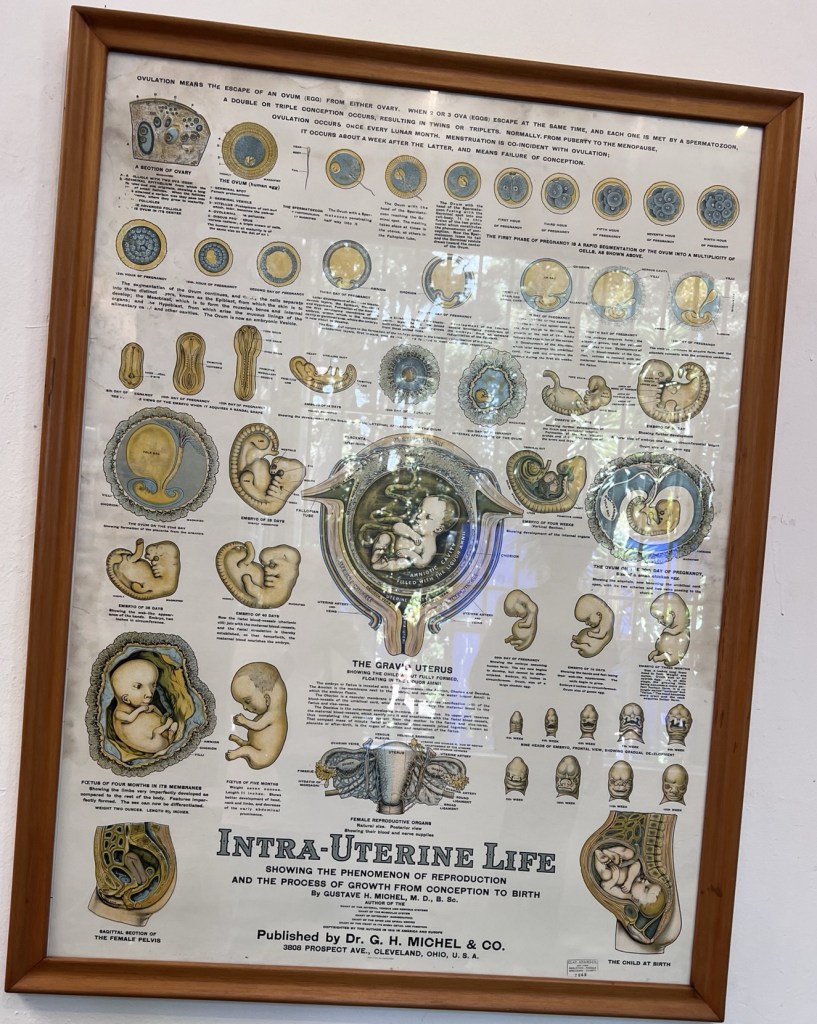
At 18, Khalo sustained horrific injuries in a bus accident, and as a result she suffered from chronic pain the rest of her life. Internal injuries were most likely the reason she incurred multiple miscarriages. The sadness of never having a child weighed heavily on her and was often reflected in her art.
While bedridden, Kahlo began painting. To help her daughter through her convalescence, her mother placed a mirror above Frida’s bed so she could see herself and paint. Many of her paintings were self portraits. The pain in Kahlo’s life was not only physical. Her marriage to muralist Diego Rivera was passionate and destructive. It was marked by infidelities, separations, and eventually divorce in 1939, primarily due to his affair with her sister, Cristina. They remarried in 1940, and despite continued infidelities, their saga continued until her death.
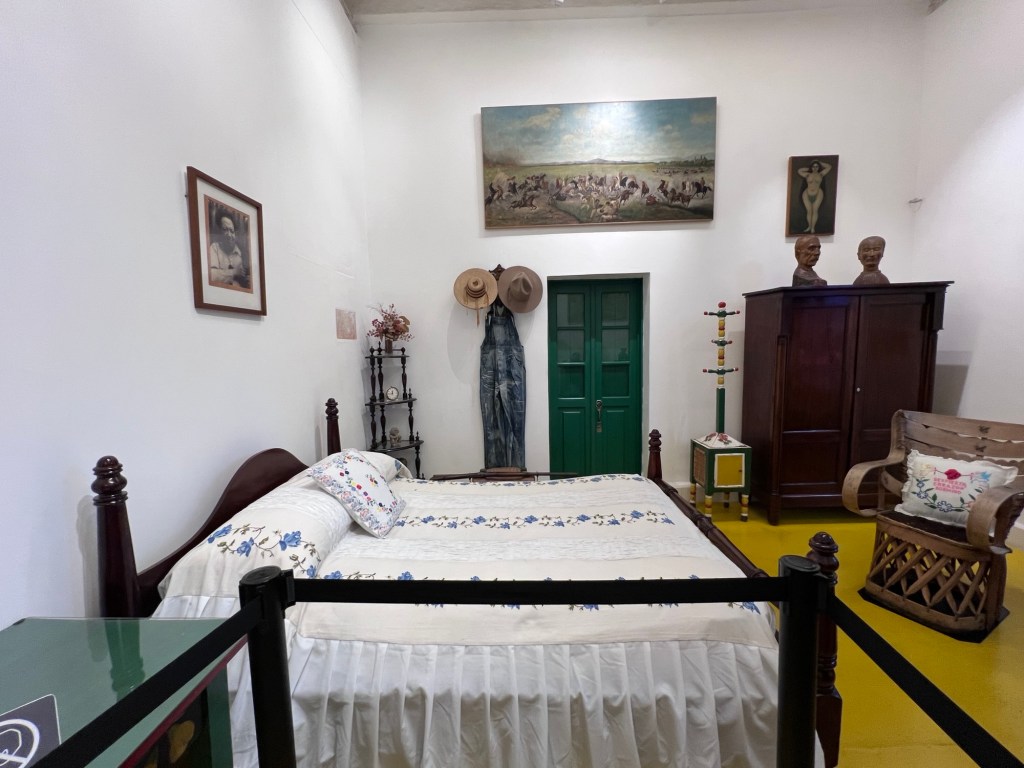
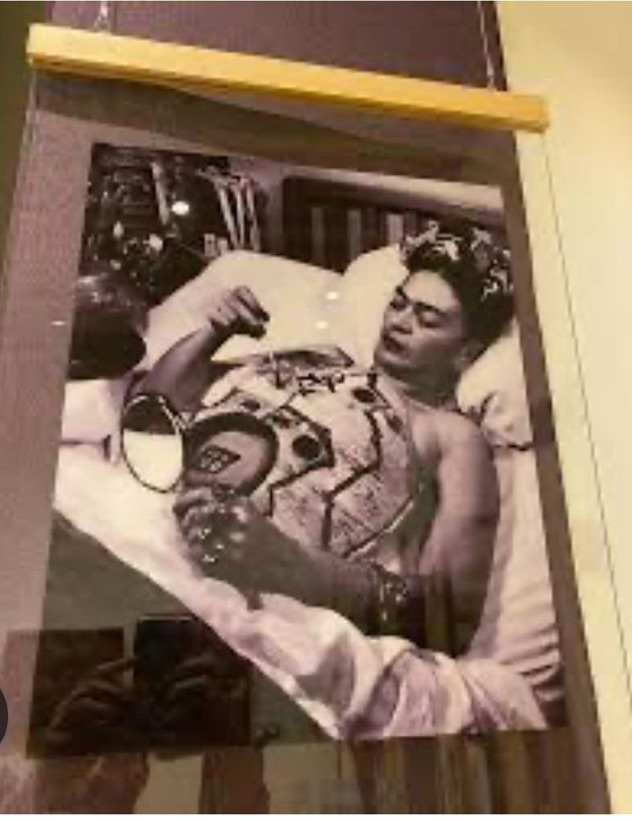
Khalo joined the Communist Party in 1927 and was politically active her entire life. She embraced post-revolutionary nationalism, advocating for indigenous culture. This stance was reflected in her art, her Tehuana dresses, and even her garden filled with native plants. In 1937 Frida and Diego welcomed Leon Trotsky to live at their home. She had a short affair with Trotsky, but their relationship remained cordial. Despite that, she was falsely suspected of being involved in his assassination and was briefly jailed. While she continued to be supportive of Soviet ideals, she eventually became disillusioned with Stalinism.
It was an all encompassing experience being surrounded by her art and belongings. You couldn’t help but come away with a better understanding of the woman, her world and her art. Seeing her bedroom was especially poignant since the mirror over her bed was still there, as were her ashes. It was a charming house. The courtyard garden was lovely, and you could imagine Frida Khalo enjoying the view outside her bedroom window.
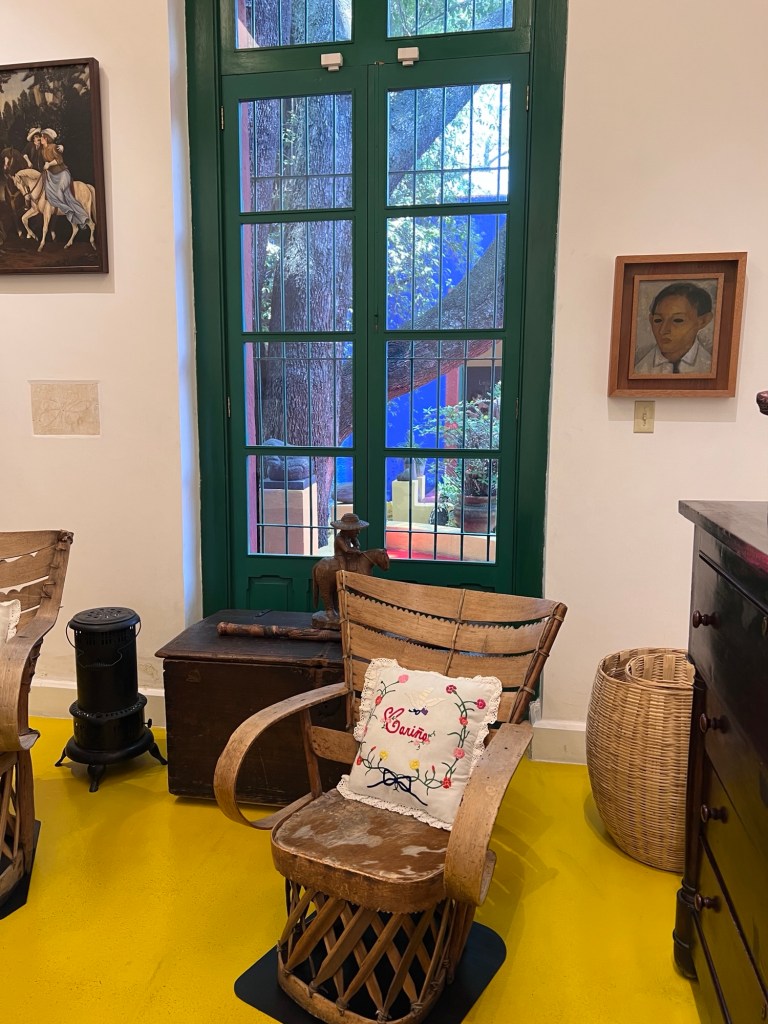
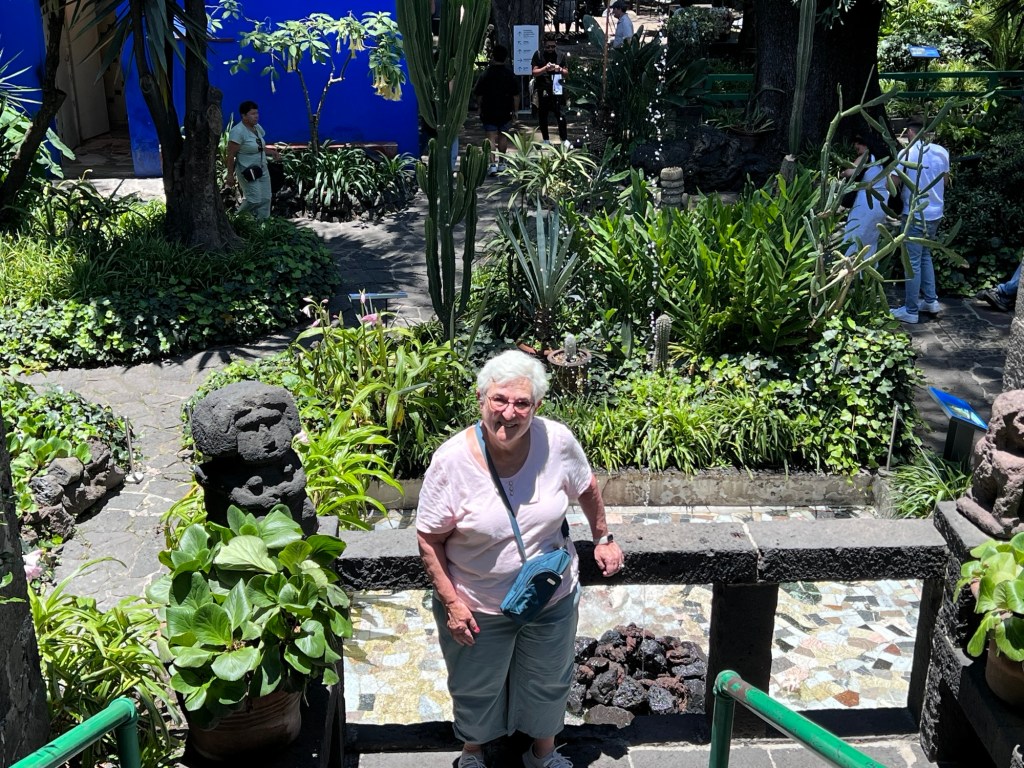
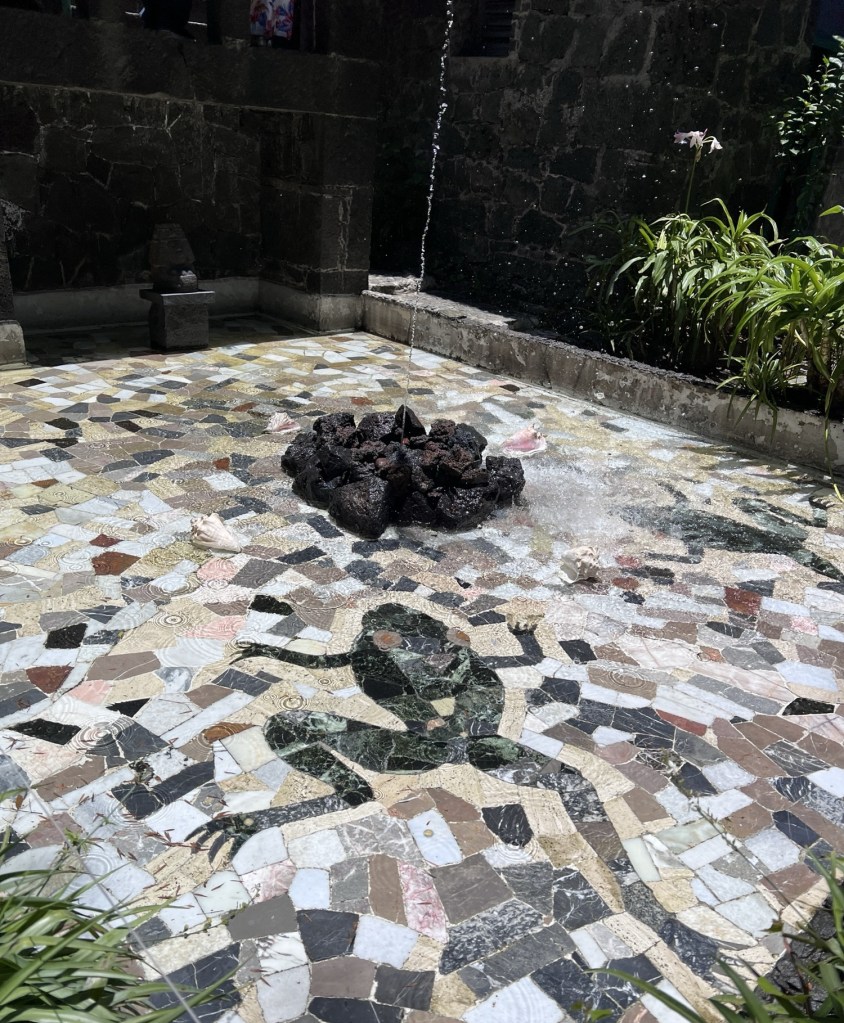
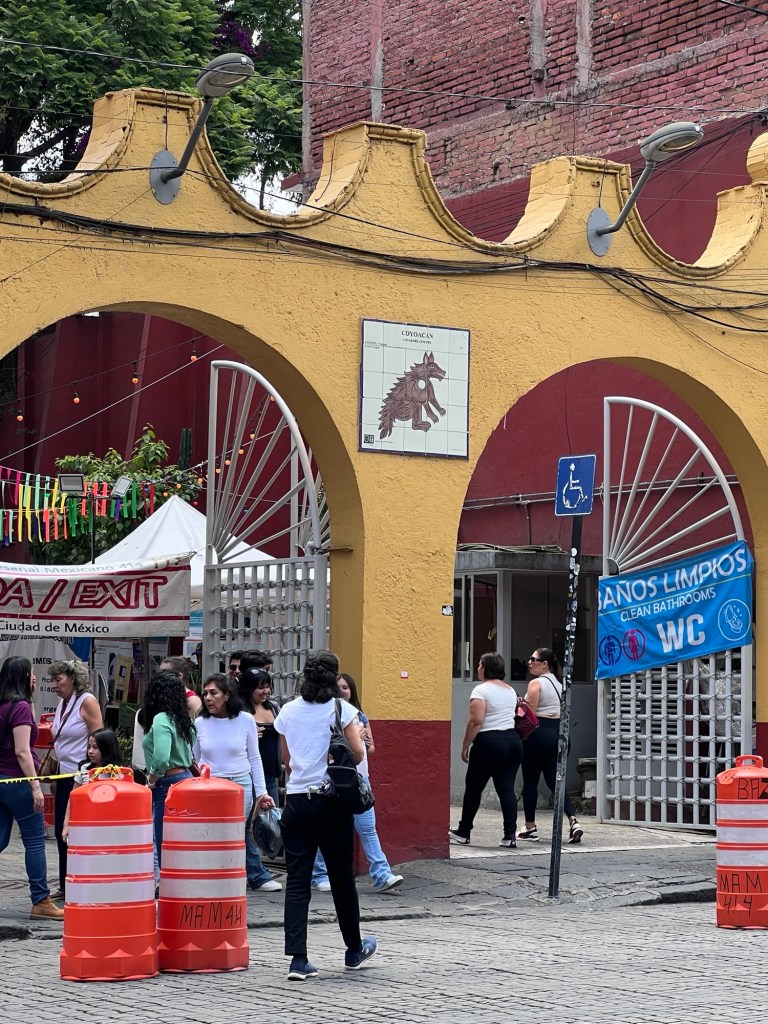
Cuyoacan (Place of Coyotes in the Nahuatl language) was where Hernan Cortez settled after defeating the Aztecs. At the time Kahlo lived there it was a village sitting about 7 miles outside Mexico City, and only in the past few decades has urban sprawl taken over. It is a fascinating place filled with narrow colonial-era streets, cafes, craft markets, parks, shops, and restaurants. Even on a Thursday afternoon the streets were filled with people.
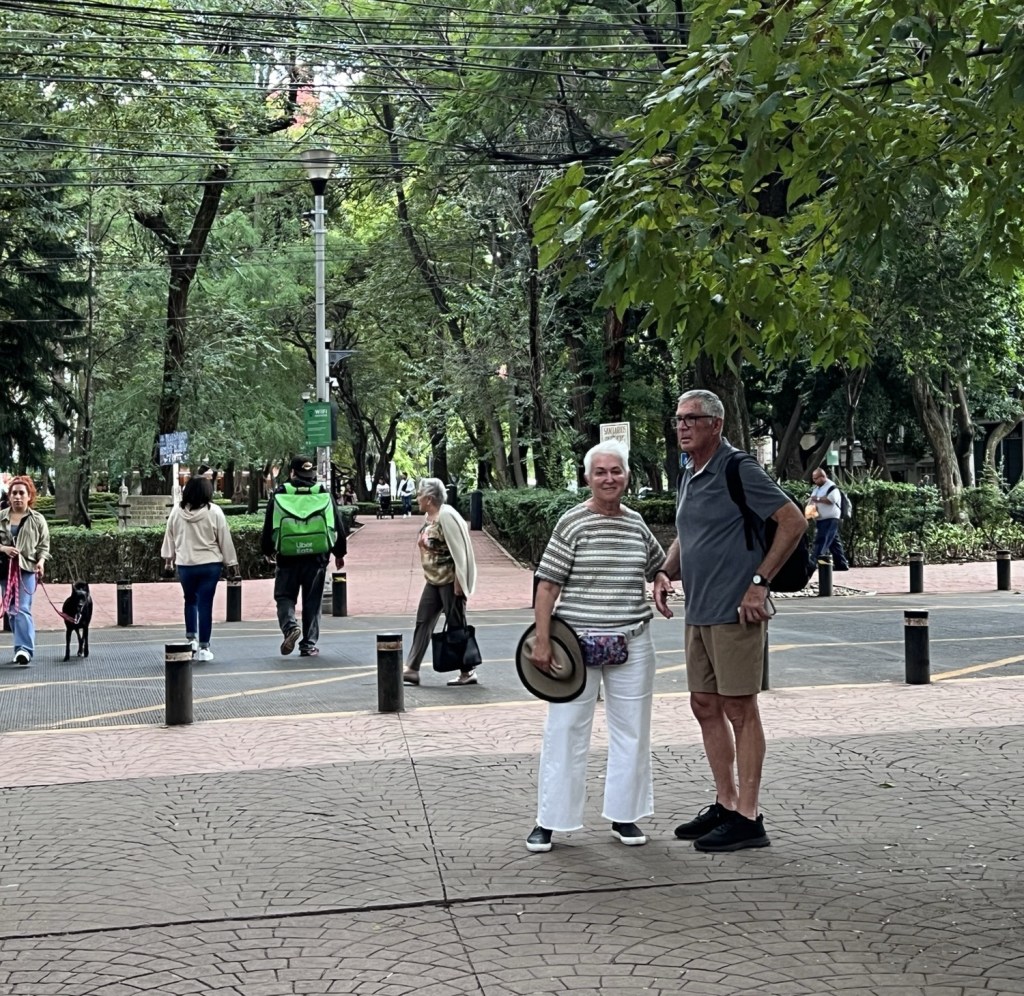
I wish we had more time to wander the charming streets of Cuyoacan, but we wanted to head back in the direction of our hotel. We had dinner reservations at a Michelin star restaurant, Esquina Comun, but first had our Uber driver drop us off in the center of Condesa. Amy and I wanted to do a little shopping and we managed to do some damage at a cute clothing store named Bout Rufina. In the heart of the neighborhood is Parque Mexico designed by Jose Luis Cuevas in 1925. The area was once a race track which accounts for the park’s oval shape. Parque Mexico was beautifully laid out with fountains, trees, and charming walking paths.

Tonight we were once again meeting up with our cousins, this time at Esquina Comun, Originally guests dined in chef Ana Dolores Gonzalez and her partner’s apartment. The restaurant is now located in a rooftop space reached by climbing several flights of steep stairs. The place was small, charming and had a very relaxed vibe. Oddly, only plastic sheeting protected us from the rain showers that started that evening. The restaurant offered a tasting menu, which was perfect for sharing. Dan and I ordered the amazing dishes below:
- Fish tostada, rice and seaweed, chintextle mayo (made from Oaxaca smoked chili paste made from dried chili peppers, avocado leaves and garlic), chile manzanita (Oaxacan chili paste fused with a fruit component and a creamy base), tangerine and cashew salsa, quelites (a generic term for edible plants or herbs native to Mexico), and radishes
- Shrimp crudo (an Italian inspired appetizer made from thinly sliced prepared or raw shrimp), passion fruit and lemongrass sauce, salt and vanilla oil, chochoyotas (small,round corn masa dumplings from Oaxaca), basil seeds, chalaca (a Peruvian sauce made with lime juice, onions, tomatoes, and Peruvian ahi amarillo. Ahi Amarillo is an orange Peruvian chile pepper) and elderflowers
- Wagyu cross (crossbred cattle), smoked bacon stock, baked on embers, sweet potato purée, chicatana mayo (condiment made with ground, toasted flying ants known as Chicatanas), pineapple pico de gallo, and pickled cabbage. Note: We had no idea we ate ants until I looked up the ingredients.
- Dessert: Tonka bean grenache (tonka beans are seeds from a South American tree prized for its complex aroma and flavor which is a mix of vanilla, almond, and cinnamon), mango, coconut foam, fresh lychee, tonka bean oil, and coconut powder
The dishes were extraordinary and delectable, and the service impeccable.

We headed back to our hotel feeling very satisfied with how we had spent our day, and how it ended with a marvelous dinner.
 BY THE WAY WITH WENDY & DAN