
Today is going to be full of visual and sensory experiences, and it is another early morning departure. As we make our way to Bologna, we will visit a Parmigiano Reggiano cheese factory, mingle with Ferraris, and learn about the production of balsamic vinegar all of which are located in Modena.
The moment you enter 4 Madonna Caseificio dell Emilia you are overwhelmed with the aroma of CHEESE. Established in 1967, the company is the largest cooperative in the area. It is best known for its Parmigiano Reggiano D.O.P., along with other dairy products. Throughout its nine century history the processing and ingredients for making parmigian cheese has remained unchanged. It is 100% natural and made with cow’s milk, rennet, and salt with different ages of maturation from 12 months up to 36 months. Older maturations can be special ordered. Each age of maturation offers different flavors.

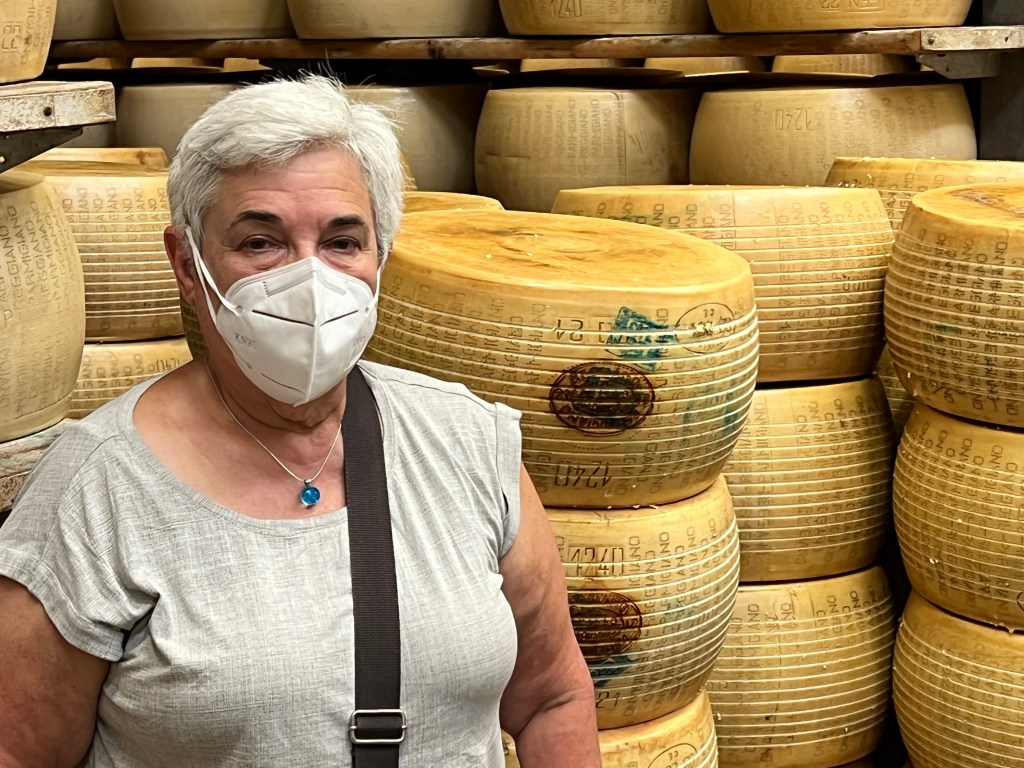
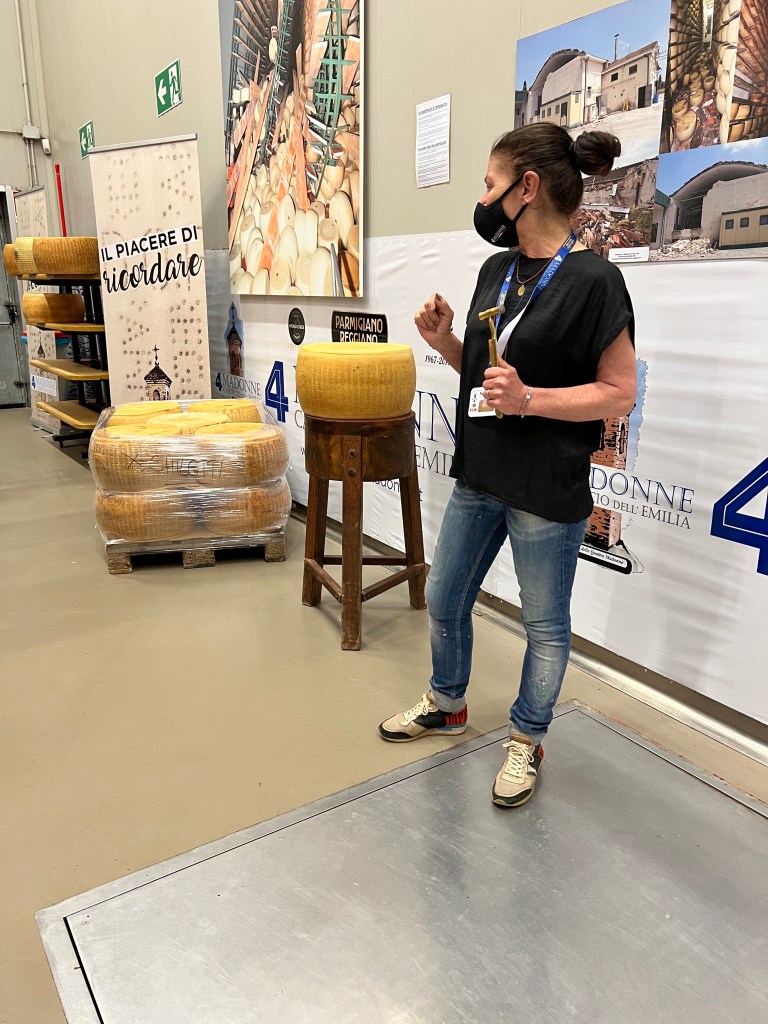
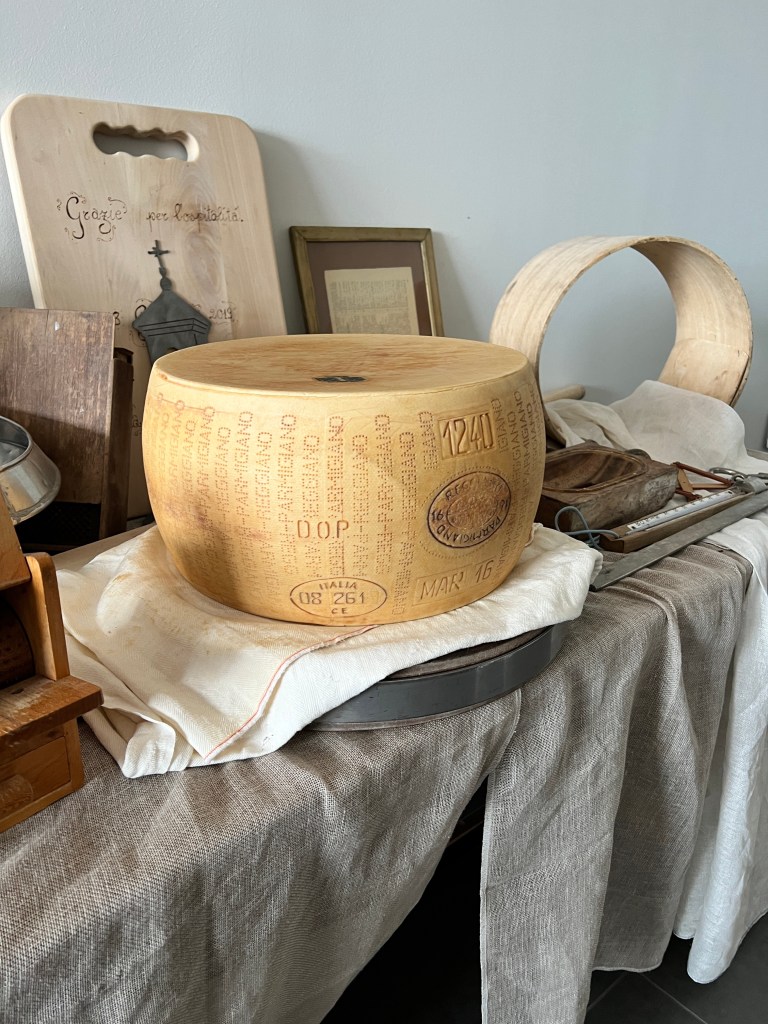
Just like champagne can only be given that name if produced in the Champagne region in France, the same goes with Parmigiano Reggiano. It must be produced in the provinces of Parma, Reggio Emilia, Modena, Bologna (to the west of the Reno River) and Matua (to the south of the Po River). It isn’t until the end of 12 months of maturation that a wheel of cheese is subject to quality inspection and can receive a grade selection mark that it is truly Parmigiano Reggiano. An expert examines each wheel individually with a small hammer. You can tell the quality of a wheel of cheese based on the sound it makes when gently hit. Once approved the rounds are fire-branded with the indelible mark that guarantees quality.
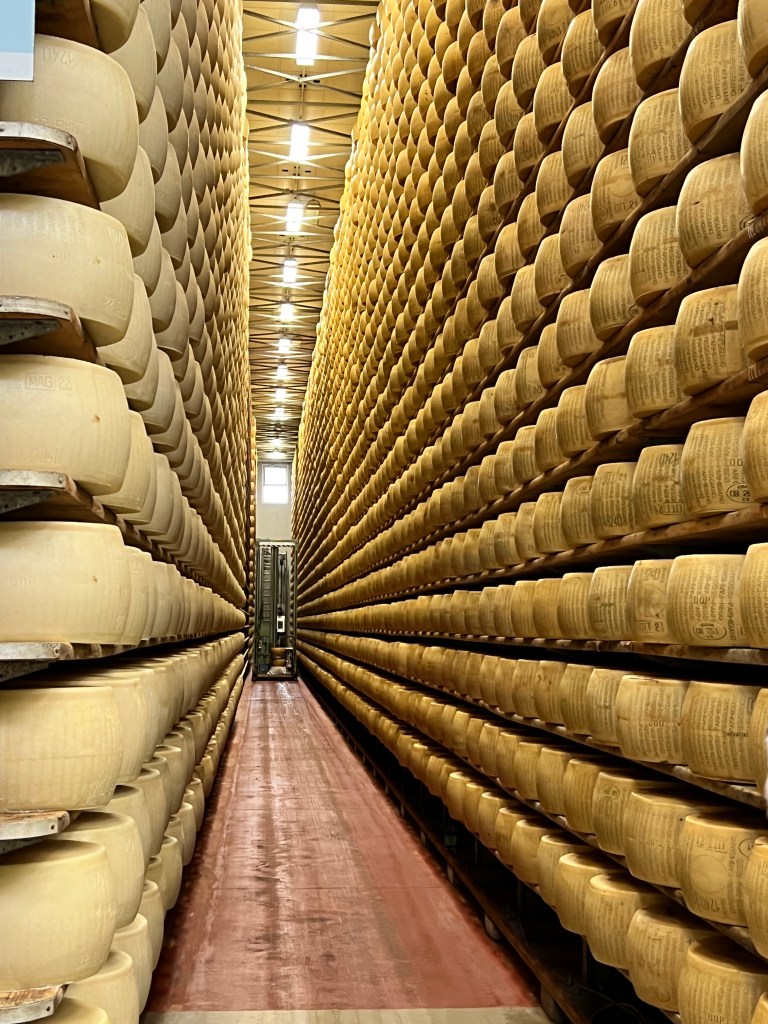
After a tour of the production and warehouse facility (33,000 wheels of cheese are stored) we were given the chance to taste a variety of aged Parmigiano Reggiano, ricotta and creamy Parmigiano. The creamy cheese was even better than delicious. We discovered that the cheese served alone with sauces, jams, balsamic vinegar and meats is wonderful. At home we only serve it on pasta or in recipes, now we have another easy appetizer to try. To Dan and I the older the cheese the drier and saltier it became, so we preferred the younger versions. If properly wrapped we were told that the Parmigiano Reggiano could make the journey home, but we were afraid to do so.
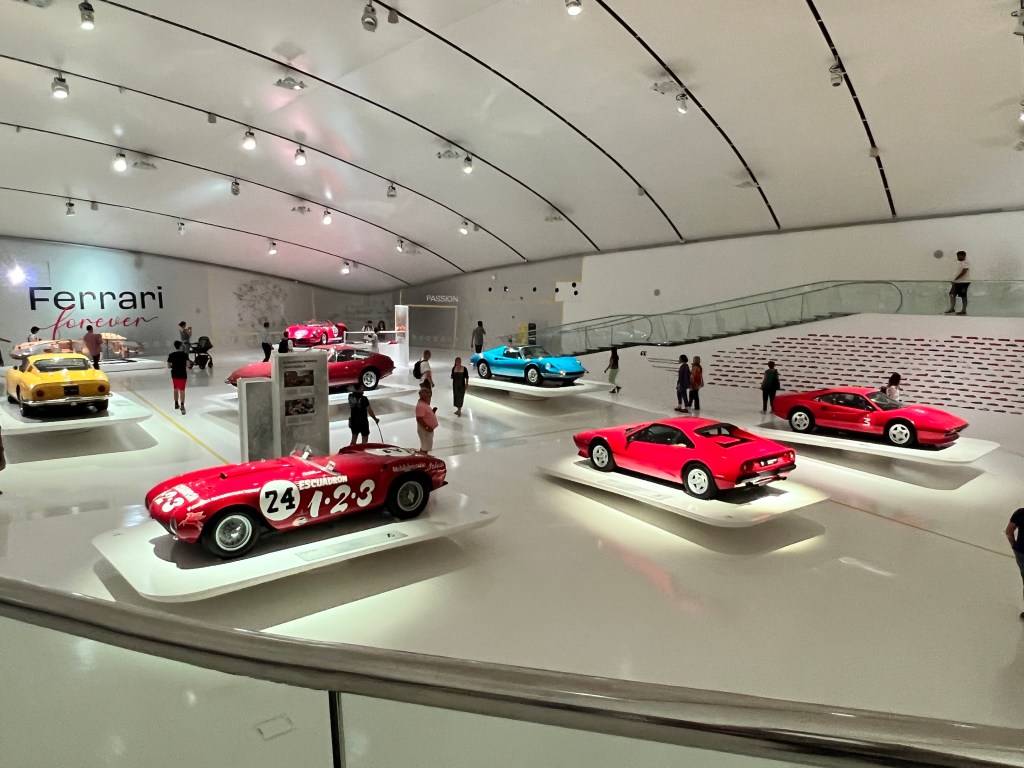
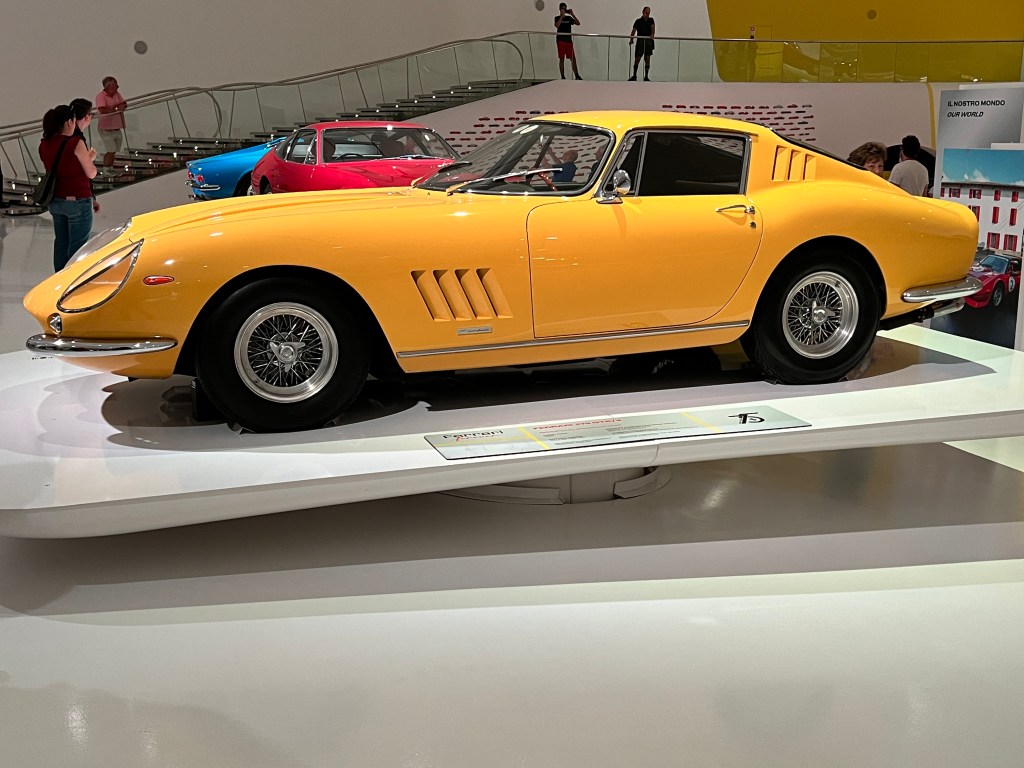
Italy is renown for design whether it be for clothes or cars. At the Museo Enzo Ferrari Modena the physical beauty of the cars is what impressed us the most. As for speed, we all know that they are fast. Still mostly handmade, about 14 cars are made daily compared with Ford that makes between 8,000 to 10,000 daily. In fact the only part of the manufacturing process that is automated is the connection of each vehicle’s valve mechanics. Their newest entry to the market will be a high performance SUV. About 8,400 Ferraris are sold per year.
The museum opened in 2012 and is dedicated to the life and work of Enzo Ferrari. The house where Enzo Ferrari was born in 1898 is part of the museum, although we did not go inside. Enzo’s son, Piero Ferrari was the brains behind the project. The museum building itself was worth the visit. The roof is modeled after the hood of a car, not to mention it is bright yellow.



Another taste treat awaited us at Boni’s Acetaia. Since the early 1900’s generations of the Boni family have been producing balsamic vinegar. Over the years, new wooden barrels have been added to create a line of balsamic vinegar products aged from 7 up to 130 years. The Trebbiano grapes are harvested by hand and its juice allowed to naturally ferment. The balsamic vinegars differ because of aging and the different woods used to make casks. Our guide, one of the family members, said the entire process takes place naturally, and the main thing he has to do is be patient and wait until the product is ready.

Just as there was with the certification of Parmigiano Reggiano cheese, the same is true with balsamic vinegar. The very shape of the bottle can tell you if it was certified or not. Boni sells certified bottles along with their own non-certified version. The non-certified of course costs a little less.
We were offered tastes of balsamic vinegar aged 7, 15 and 30 years old. The older it is the more fragrant and thicker it becomes. I have to admit that when I tried the 30 year old product I started to choke — it was too strong for me. In the past people made their own balsamic vinegar primarily for medicinal reasons. When a child was born new barrels were started that would be ready for them when they reached adulthood. It is highly nutritious, and supposedly good for the digestive and respiratory tracts.
After the tour we enjoyed a simple lunch that included cherries and fresh salad. Of course we used balsamic vinegar and olive oil for the salad dressing. Having fresh salad was a wonderful change. For some reason we haven’t had much in the way of fresh veggies on this trip.
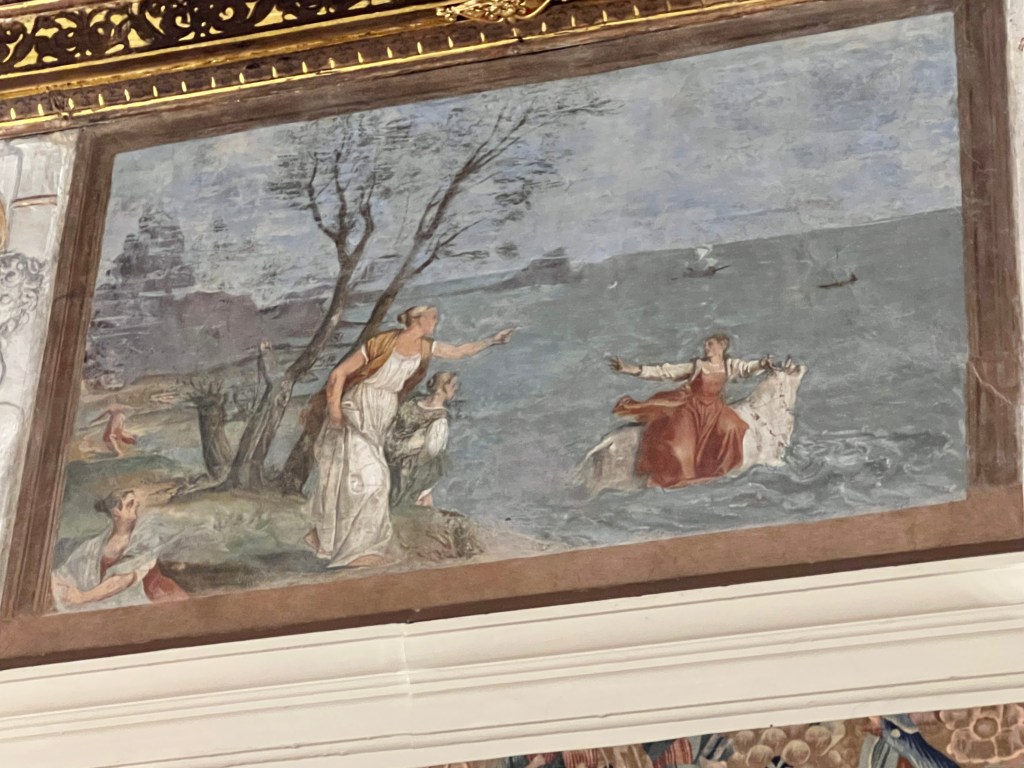
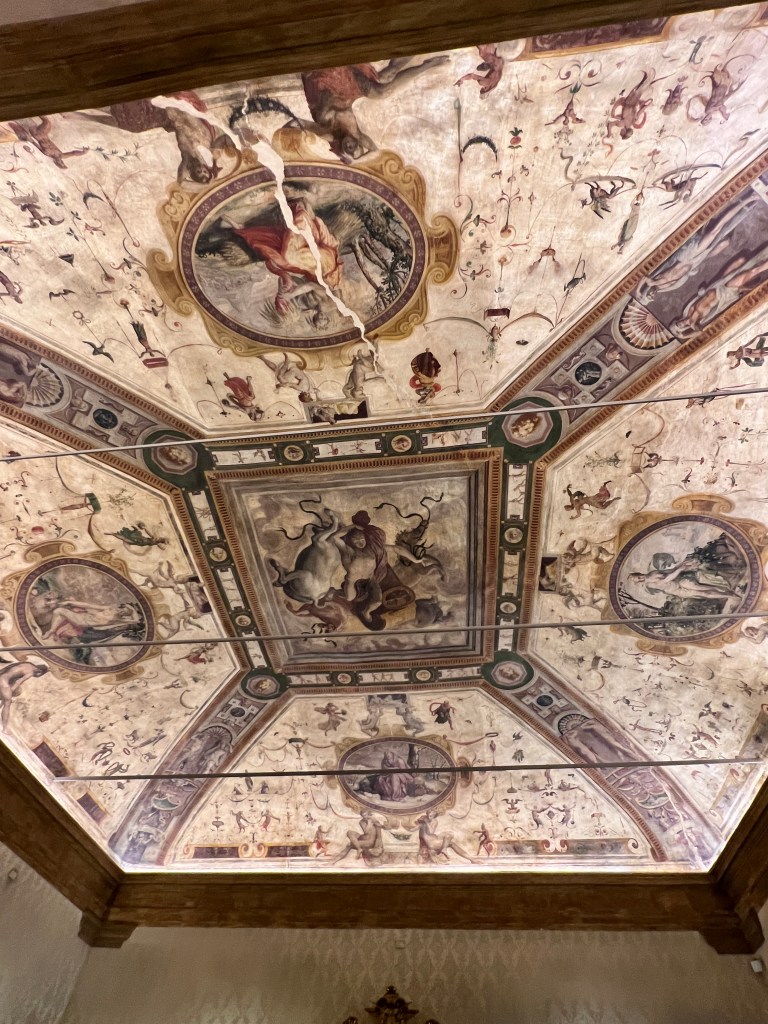
At long last we arrived at our hotel in Bologna, the lovely Grand Hotel Majestic. The building was turned into a hotel in 1909. Shortly after we arrived we were given a tour. Our guide informed us that on October 1944 an explosion was set off in an attempt to destroy a Nazi commando base posted in the hotel. Part of the building was destroyed. He then took us to a beautiful frescoed room called the Little Room of Europe, probably the first commission entrusted to the brothers Agostino and Annibale Carracci. It is thought to have been arranged on the occasion of the wedding between Filipino Fava and Ginevra Orsi’t wedding in 1579, but not actually painted until about 1584. The paintings depict the story of the birth of Europe. The paintings and ceilings are original. We were also taken to the hotel’s main dining room which was also beautifully decorated with paintings.

Dinner at Ristorante Montegrappa “da Nello” wasn’t until after 7:00 PM. We took a walk into the nearby Piazza del Nettuno, in the historic center of Bologna. This is a college town, so the streets are full of young people generating lots of good energy. In the center sits the Fountain of Neptune. It is an example of the Mannerist style of the mid-1500’s. Besides the powerfule Neptune situated at the top of the fountain, there are four lactating Nereids (sea daughters of the old man of the sea), who are holding their breasts from which jets of water emerge. Very impressive fountain to say the least, but not sure how it gained approval from the Catholic Church.
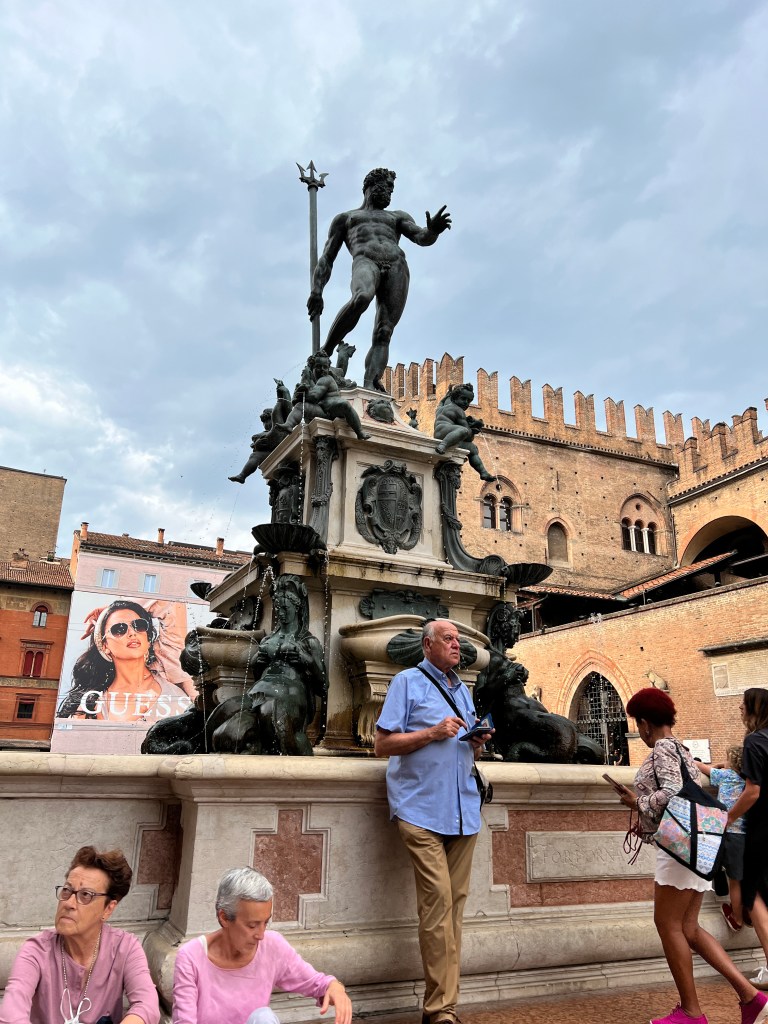
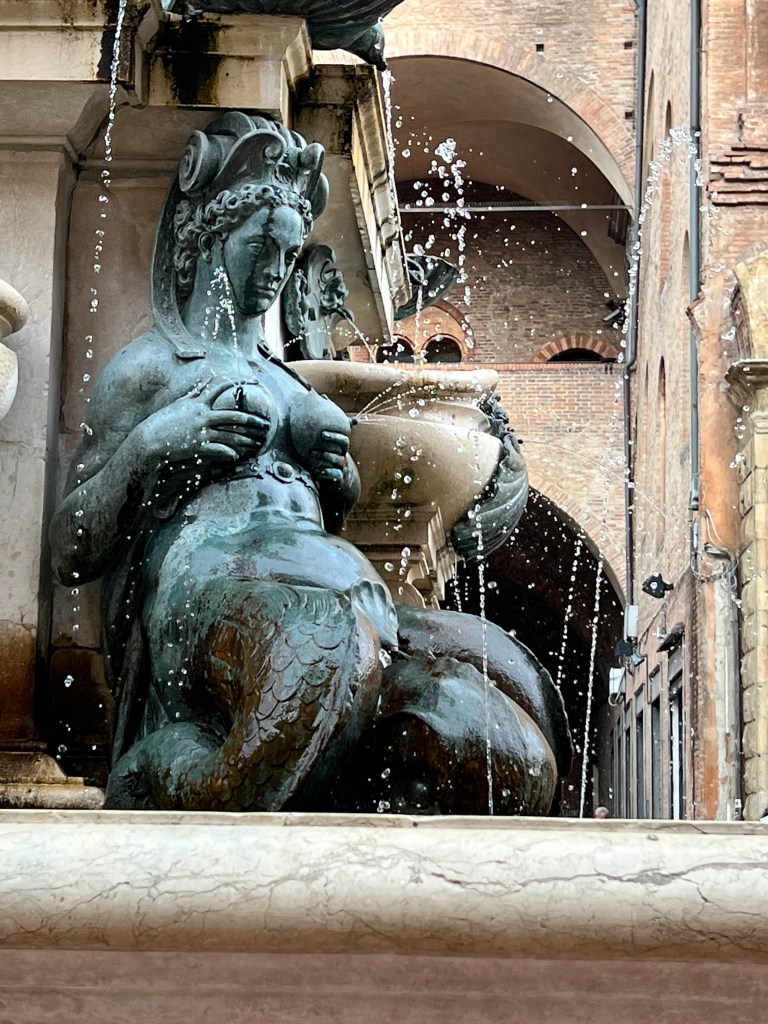
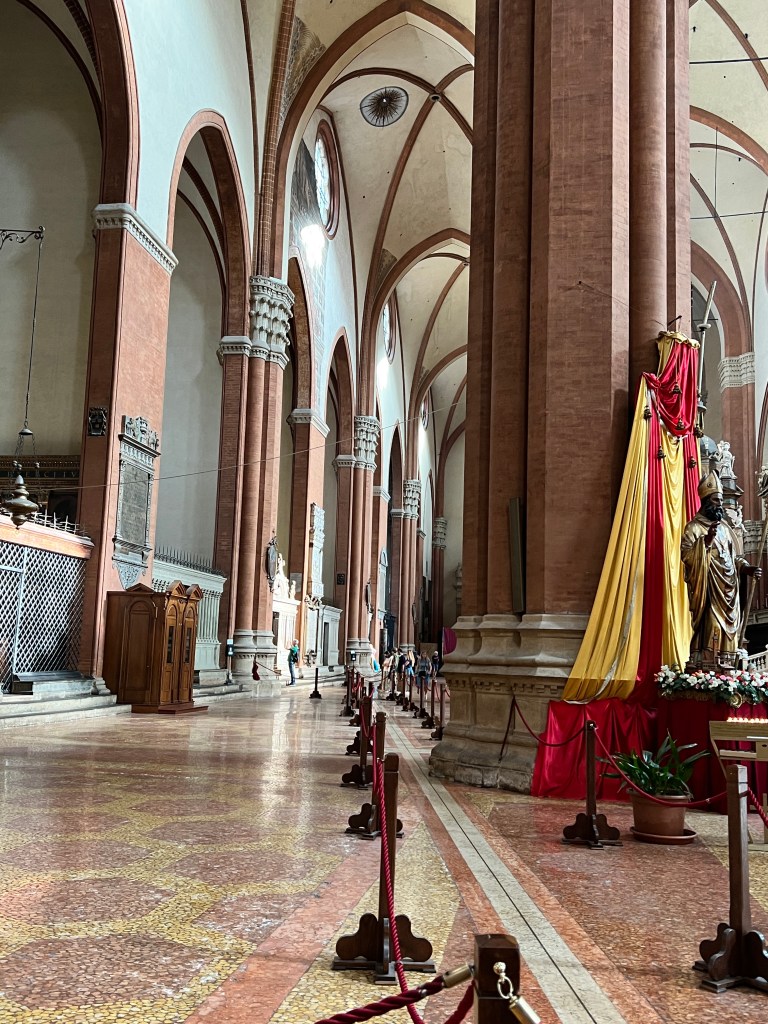
It is a bit confusing but I believe the Piazza Neptune sits within the larger Piazza Maggiore, which is surrounded by important buildings of medieval Bologna. This includes the Basilica di San Petronius which we visited along with Eileen and Jim. The Basilica is Bologna’s largest and most important church, dedicated to the 5th century bishop and the city’s patron saint, St. Petronius. Construction began in the 14th century, but it was never completed.

Not quite as impressive inside as many of the other churches we have visited, it did have a few features we found interesting. A ball hung on a wire showing the earth’s movement, something that one usually finds in a science museum. It also had a long meridian clock. We’ve seen several of these throughout Italy. Each day the sun aligns perfectly with a hole in the basilica’s ceiling sending a ray of light that lands on the line at exactly noon. The time of the year can also be determined by where on the line the light falls as it veers towards either end of the line approaching each solstice.
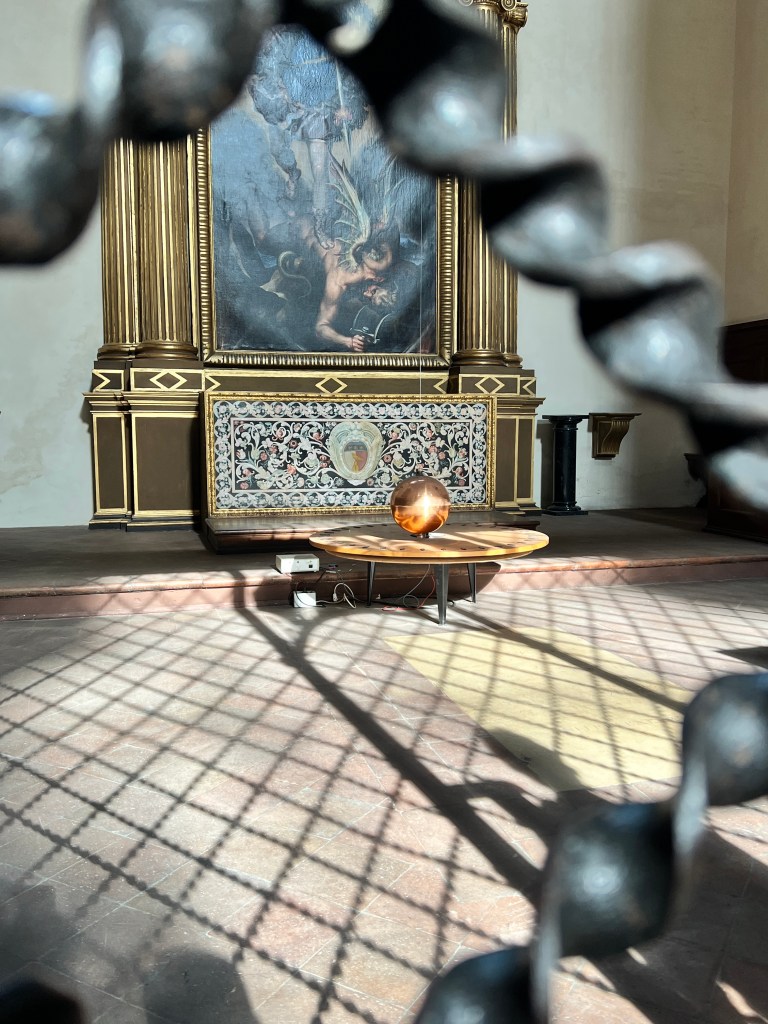
Dinner was at the Ristorante Montegrappa “da Nello,”a quick walk from the hotel. We enjoyed a local specialty of fried zucchini flowers which was very good. What began as a nice quiet dinner evolved into a very noisy one as three families with several children each sat at a large table near us. The children were well behave, but loud. What else we had that night for dinner is just a blur. It has been a very long day and we returned to our room directly after dinner.
Unfortunately it was not a good day for Dan. His cough troubled him throughout the day. We think the fumes from the cheese and balsamic vinegar factories set him off, along with air conditioning. Tomorrow we are going to forgo the tour of Bologna and once again try to have him seen by a doctor. In addition, we’ll find a pharmacy to give him a COVID test to put our fellow travelers more at ease, as well as ourselves.
 BY THE WAY WITH WENDY & DAN