
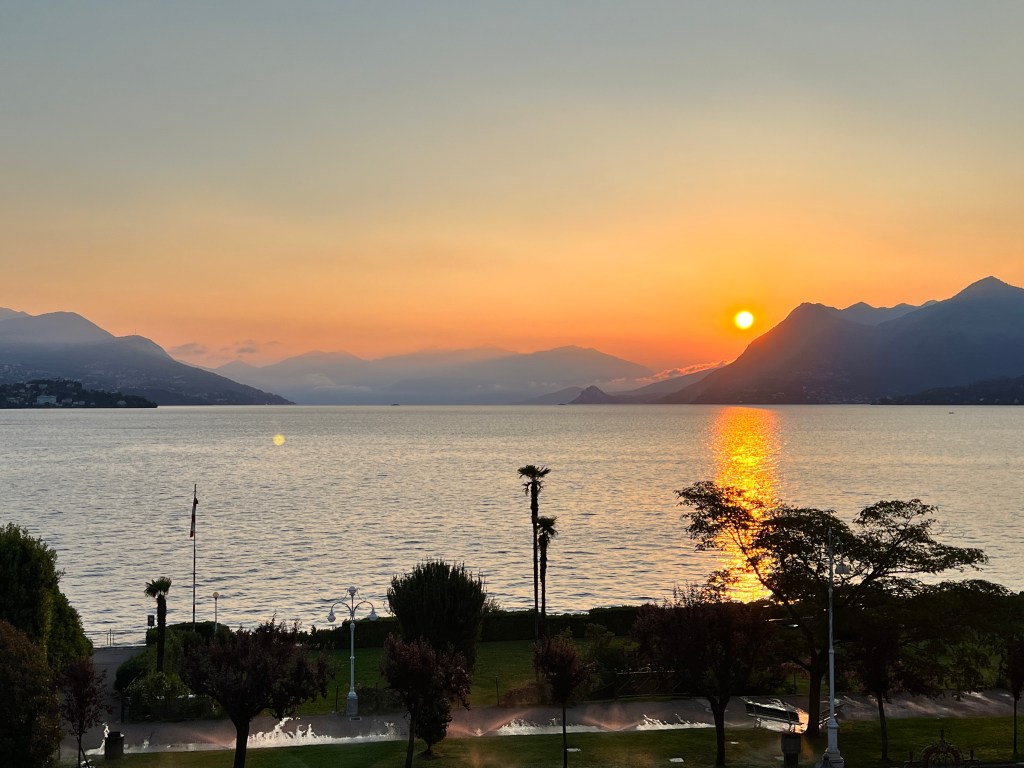
We could have used a few more days of destressing in Stresa, but that isn’t how Tauck tours work. It was another early morning departure. I was up at sunrise, a very unusual event for me to witness. Then after breakfast it was back onto the bus as we headed out into the countryside toward Bergamo.
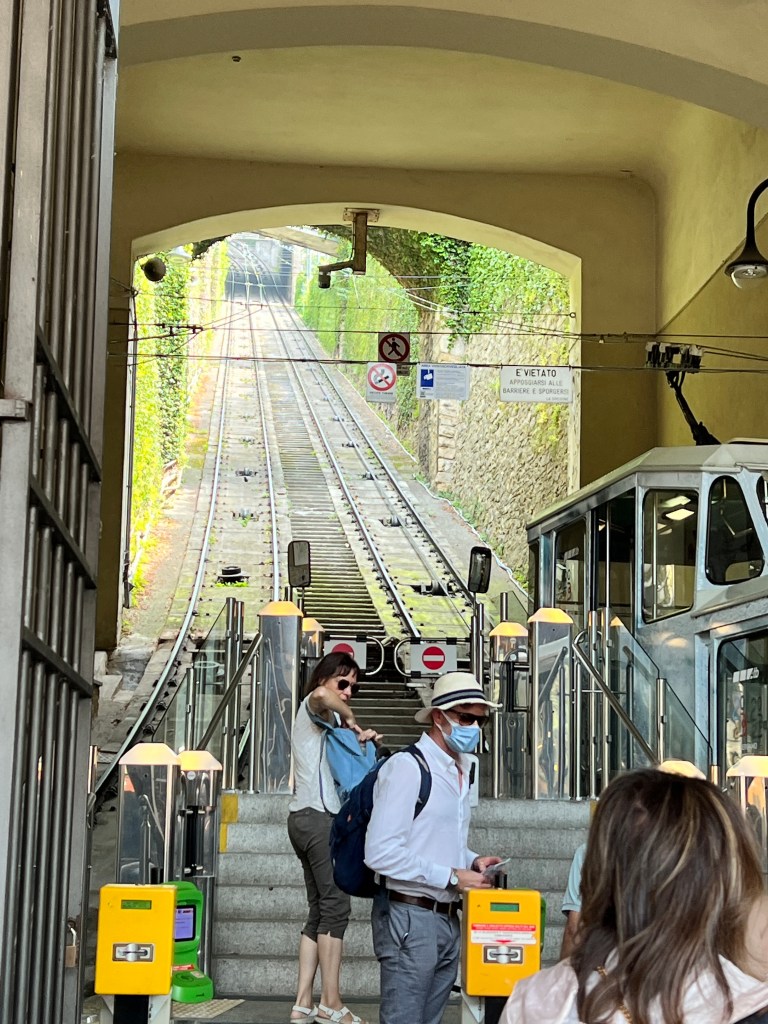
Bergamo has a split personality. The upper city, Citta Alta, is a medieval and Renaissance town up on a hill. Down below is Citta Bassa, mostly built in the 19th and 20th centuries. Our guided tour was in the old part of Bergamo. In order to reach it we had to take a funicular up a steep hill.
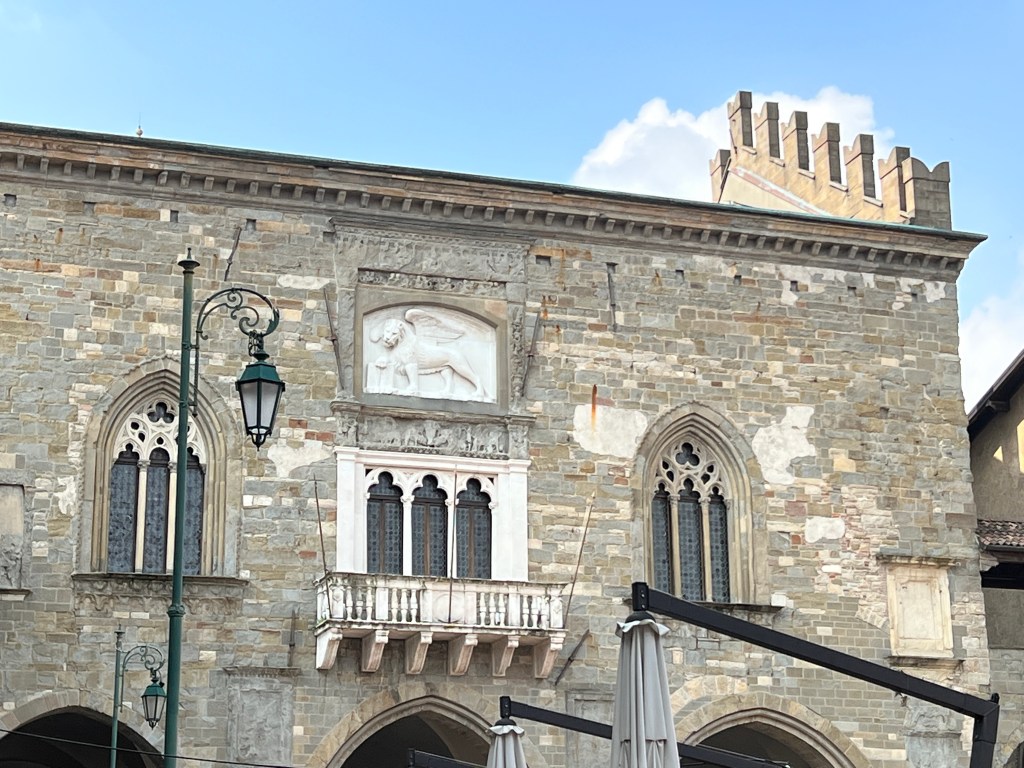
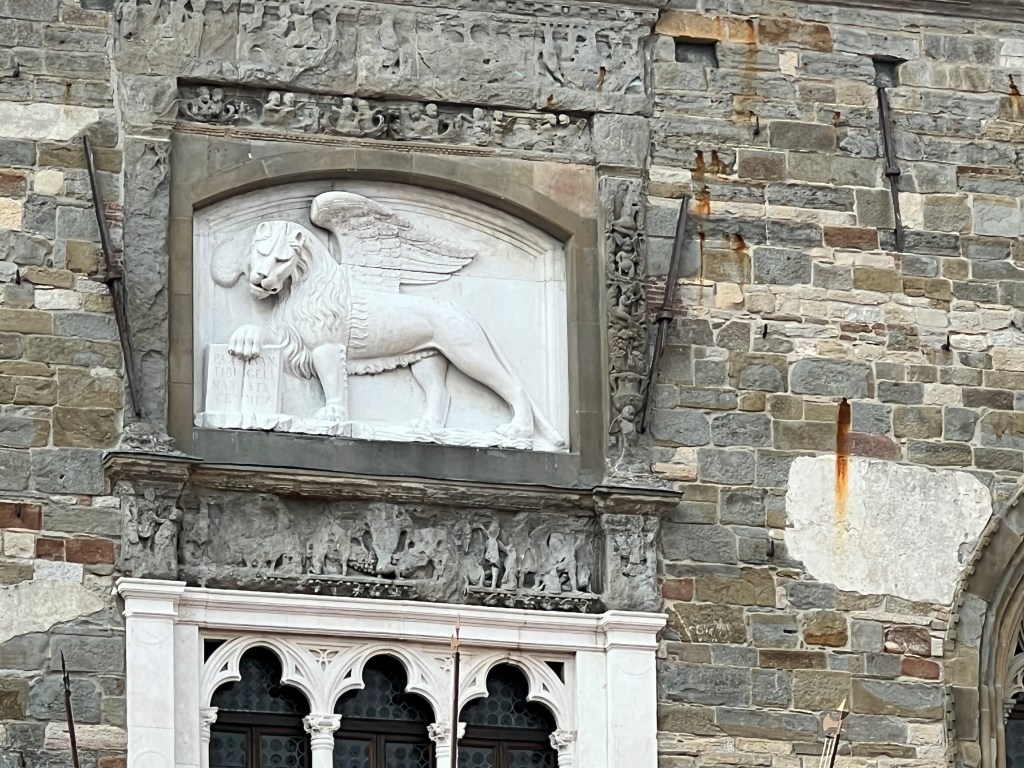
The old part of the city is surrounded by a 16th century Venetian wall. Our tour guide led us to the beautiful Piazza Vecchio, the hub of Bergamo’s political and civic life from medieval times. The 12th century Palazzo Della Ragione (Court of Justice) was built by the Venetians who ruled from the 13th to late 18th century,. It is said to be the oldest communal palace in Italy. You can see the Lion of St. Mark, the symbol of the Venetian Republic, on the building. There was also a meridian line under the arches of the palazzo.
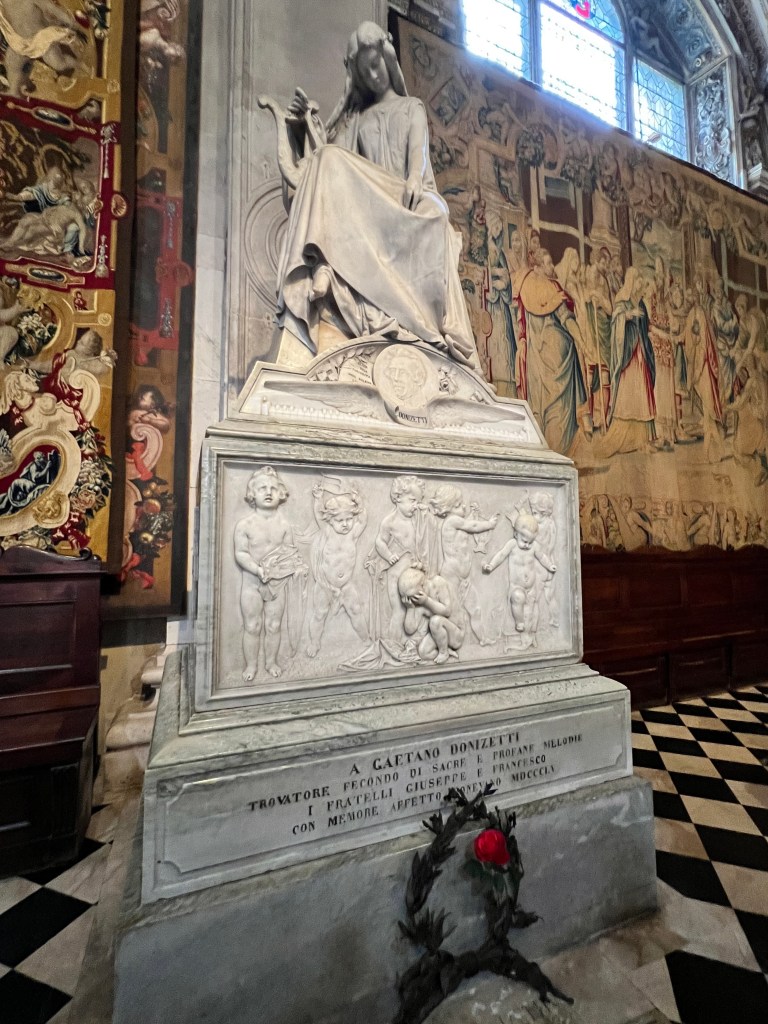
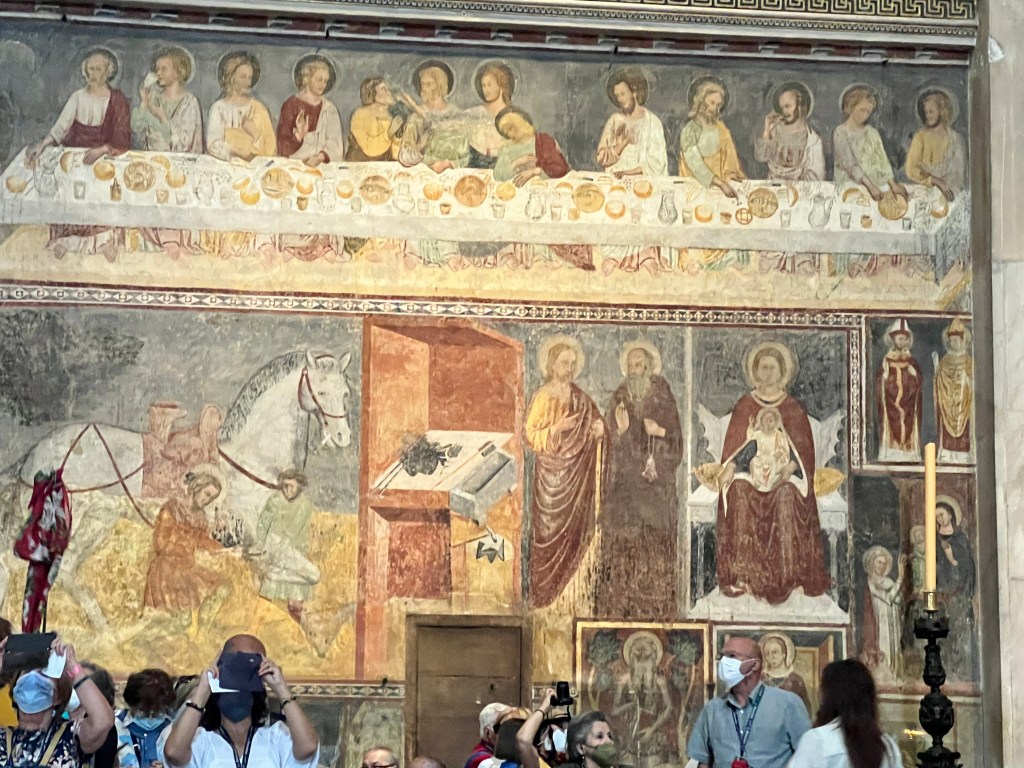
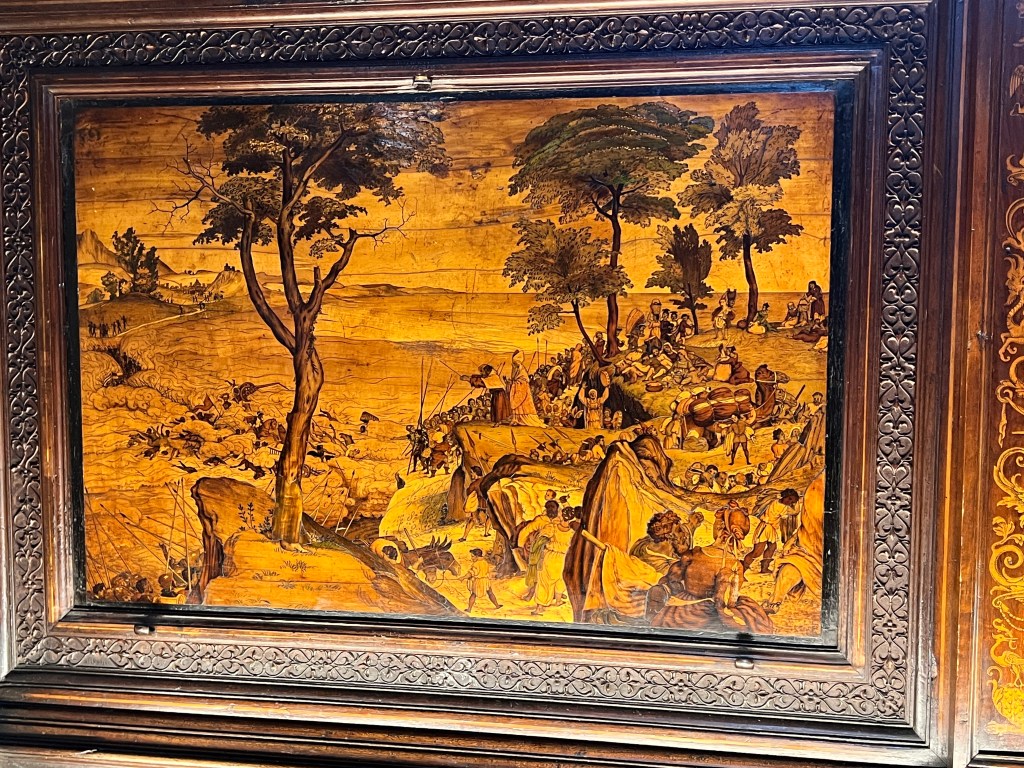
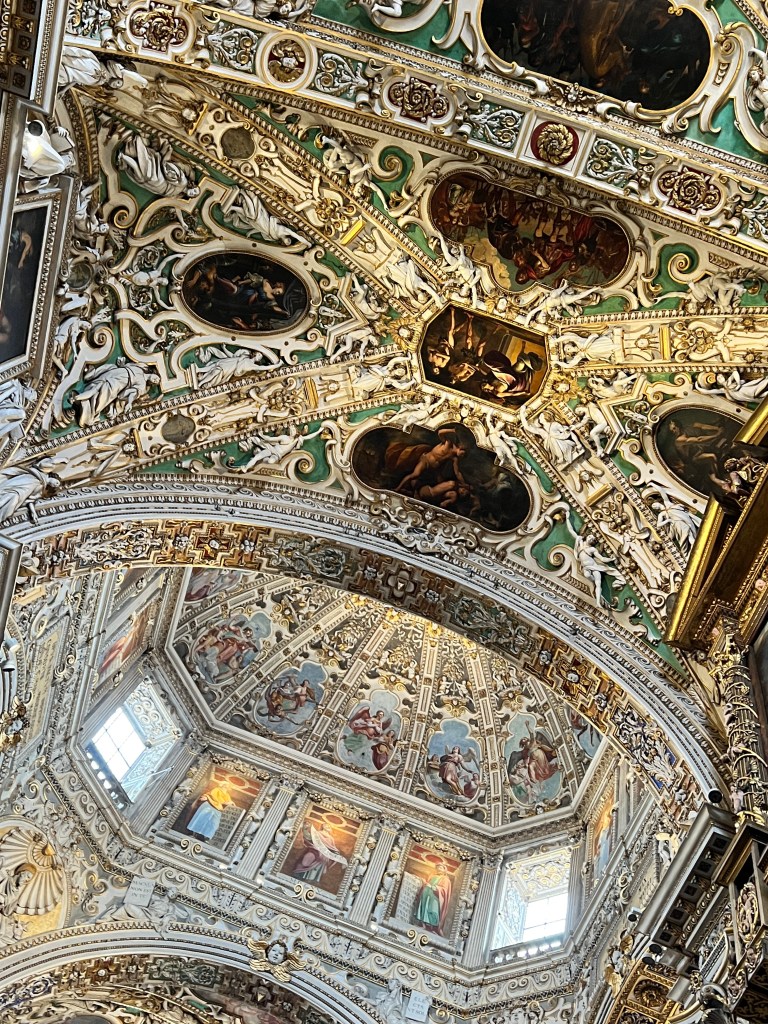
We walked through the arches of the Palazzo Della Ragione to reach the Piazza del Duomo and the Basilica di Santa Maria Maggiore. The church is filled with ornate Baroque giltwork. It really was a hodgepodge of excessive decoration. There were Renaissance tapestries, intricately pieced together inlaid wood pictures, the tomb of Gaetano Donizetti a popular composer in his time, and a simple fresco fragment that depicts the last supper.
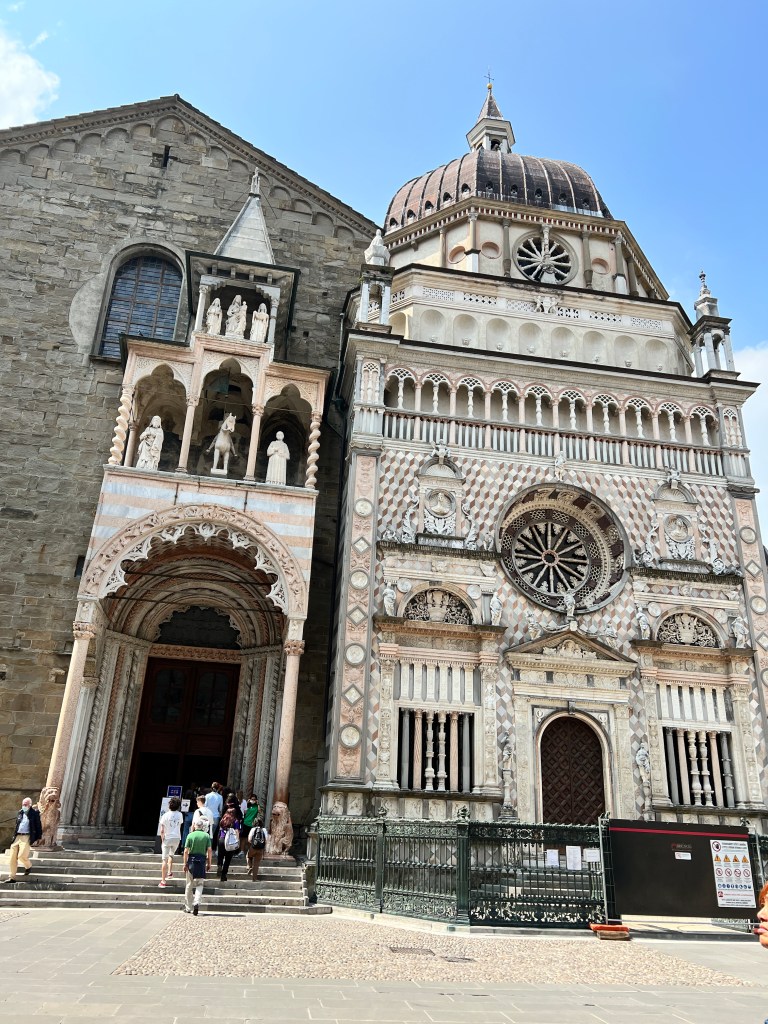

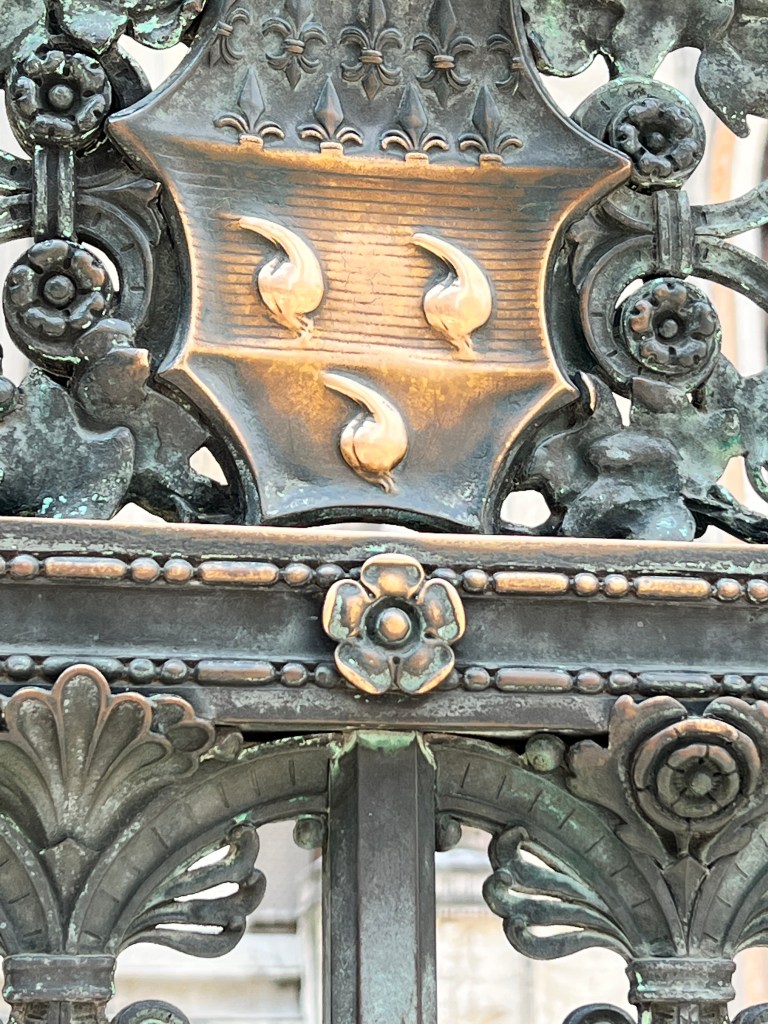
The Cappella Colleoni, located near the basilica, is the burial chamber for Bartolomeo Colleoni. He was a mercenary who fought for the Venetians. As a reward for his loyalty he was given Bergamo to rule as he wished. On the front gate pictured below you can see the coat of arms of the Colleoni family which consists of three testicles. Colleoni means testicle. It’s not clear why there are three. There is no evidence that Bartolomeo suffered from any congenital anomaly. Perhaps three was simply more powerful than two. Some believe that it is good luck to rub them, which is why they are shiny. One guide book stated that “it is the closest one can get to touching a medieval mercenary’s testicles.” I passed on that one.
As a treat, Scott purchased some famous Bergamo pastries for each of us to try, Called Polenta e Osei, they are made from sponge cake using maize flour, covered with yellow marzipan and then dusted with crystals of yellow sugar. Inside is a chocolate and hazelnut cream. The chocolate shapes sitting on top in an apricot jam represent birds. It is a very complex dessert and a very sweet one as well.

After our tour we had about an hour to explore Bergamo on our own. I purchased a white blouse that I just happened to spot in a shop window. It was then time to take the funicular back down to our bus. Our destination was a wine tasting and lunch at the Cantina al Rocol in the Franciacorta wine region.
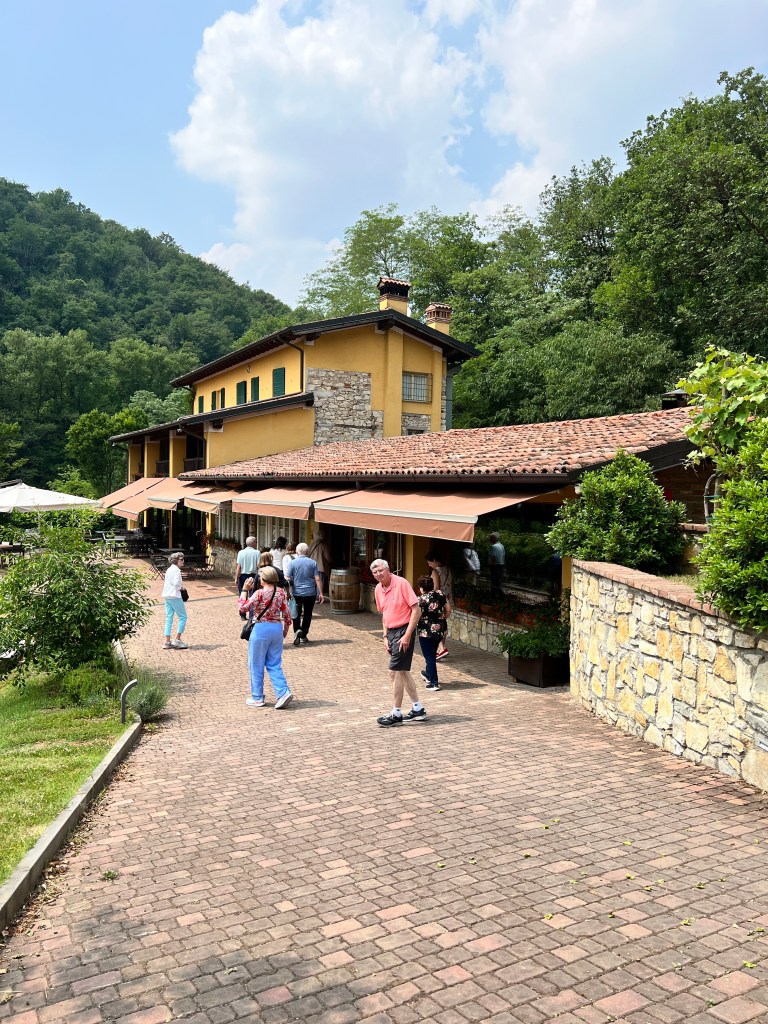
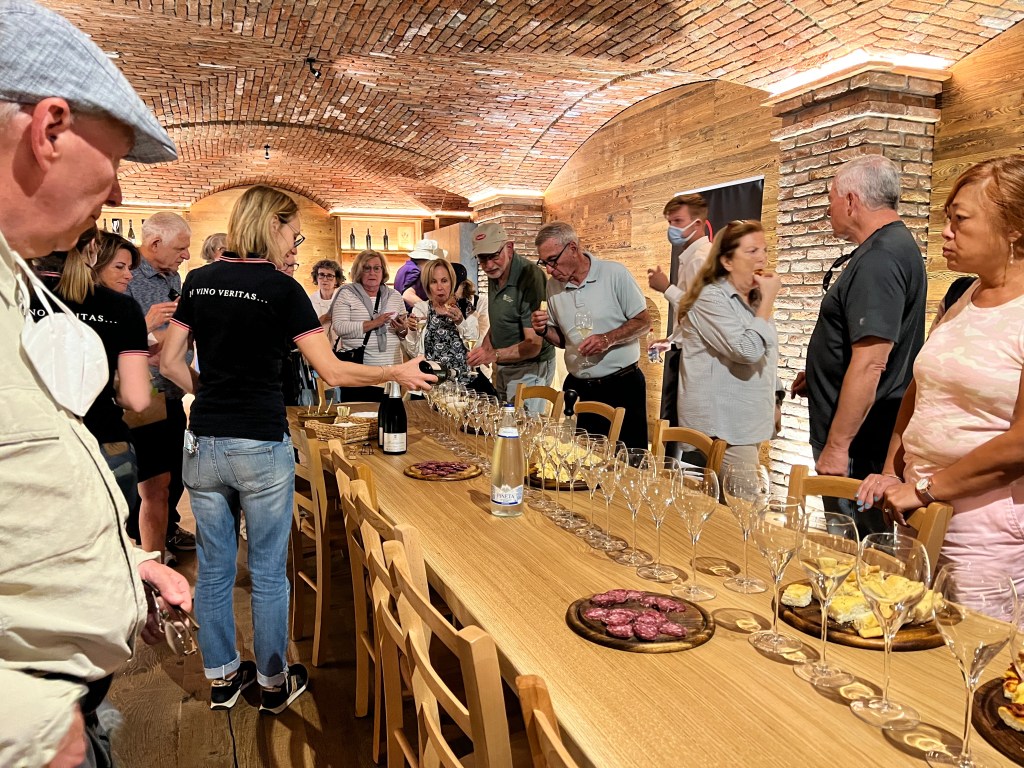
The Castellini family has owned the vineyard and winery since the beginning of the 20th century. I believe it was Francesca Castellini who gave us a tour of their facility. She explained how their main product is Franciacorta wine. Franciacorta is a sparkling wine similar to champagne. Francesca stated that they produce it in exactly the same way champagne is produced, but since it isn’t made in that region of France it cannot be called champagne. The family also produces other wonderful wines. All of their wines are made from grapes grown in their vineyards including Charadonnay, Pinot Blanc, and Pinot Noir.
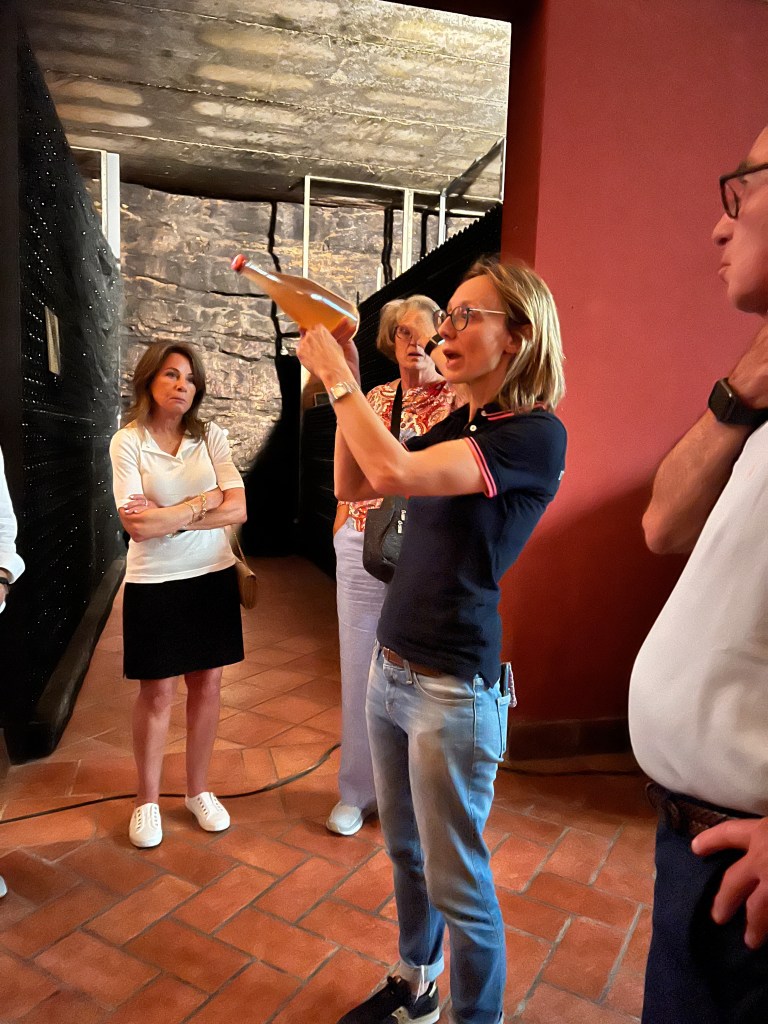

We had the opportunity to try their wines with various delicious tidbits. First there were several items of cheese and meats followed by an absolutely fantastic pasta. Simple but delicious. This is one agritourismo that I think would be a wonderful place to stay.
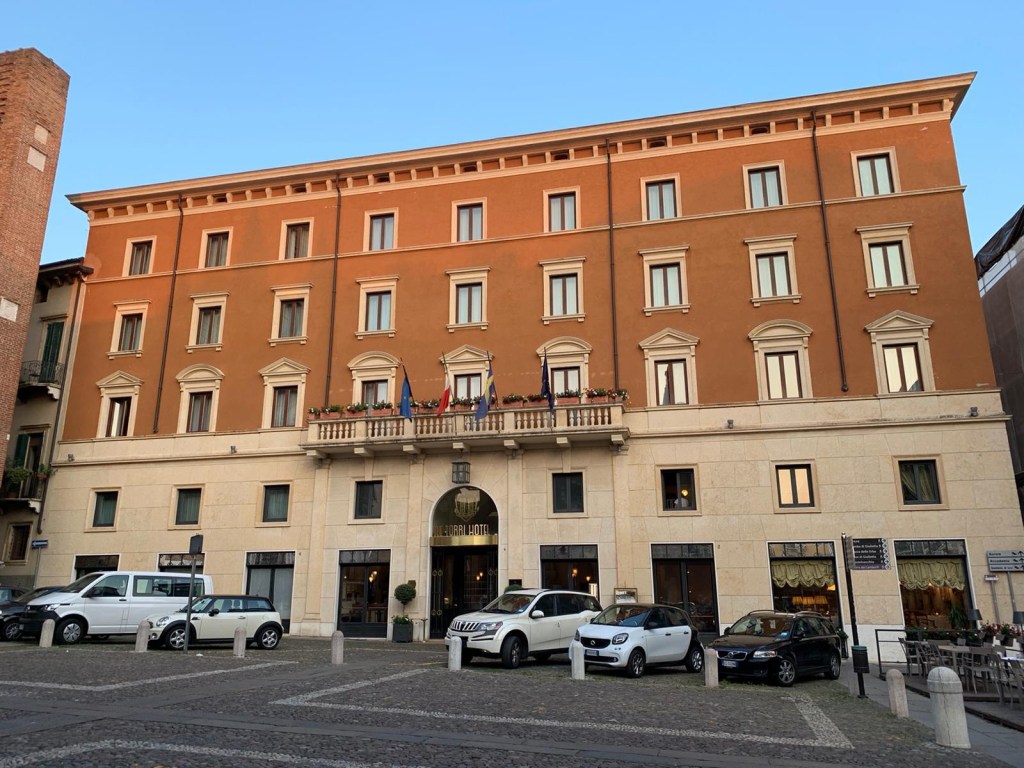
Finally we were heading to our final destination, Verona. Our hotel is the Baglioni Due Torre. Buses are not allowed in the historical center of town, so vans had to transfer us to the hotel with our luggage to follow. According to my friend Eileen, the hotel building dates back to the 1300’s and has hosted people such as Mozart,, Goethe, and Garibaldi.
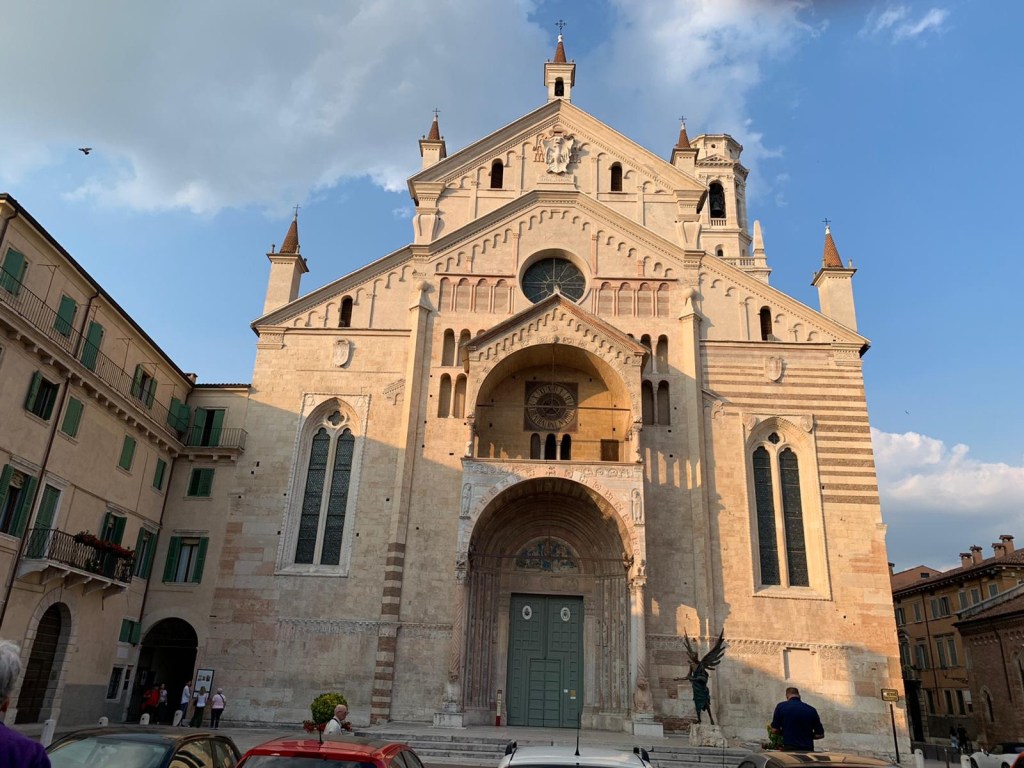
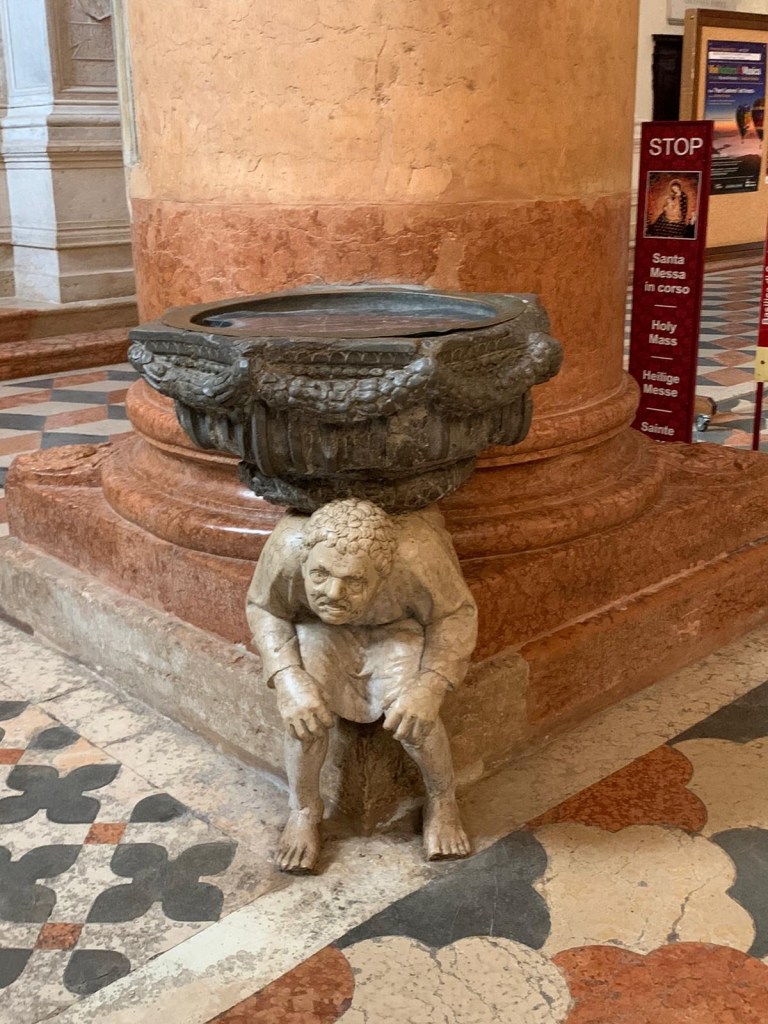
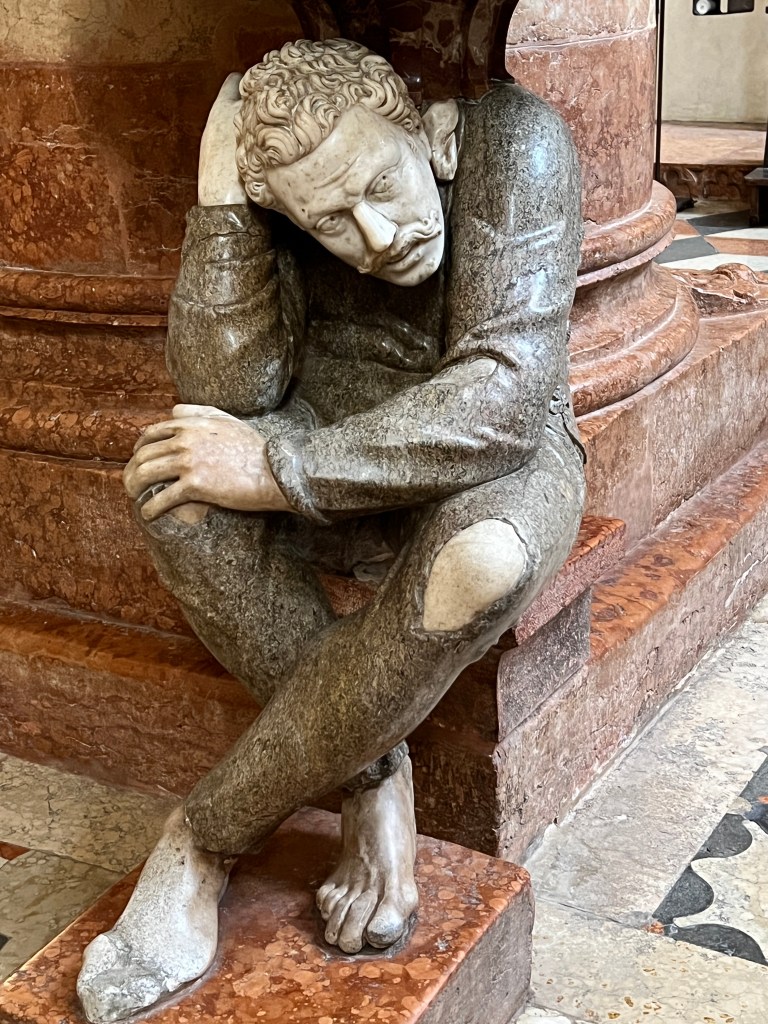
It was early evening when we arrived, so Eileen, Jim, Dan and I did a little exploring. We visited the Basilica di Santa Anastasia and got to see it right before closing. In around 1290 the order of the Dominicans began the building of a convent and the basilica. It took two centuries to build and only the facade was never completed. The inside of the church is quite impressive. Of particular note were two sculpted grimacing hunchbacks holding holy water basins on their backs.

We then looped around and headed toward the Adige River and the Ponte Pietra, or Stone Bridge. The Roman bridge was completed in 100 BC and is the oldest bridge in Verona. The arch at the far left is the only one which escaped destruction in 1945. However, the original marble stones were dredged from the river and used to rebuild it.


On the other side of the bridge we attempted to visit what was once a Roman theater. It appeared to be under reconstruction and closed to the public. Above the theater is the fortress, Costello San Pietro. The original was destroyed first by the French and then the Austrians. What we now see was a barracks/fortress built by the Austrians in 1840. Near this part of the river was where boats full of grain would unload in order to be milled by the water wheels located along the river.
We then headed back toward the hotel. Dan, Jim and myself ended up eating dinner at a pasta place called La bottega della Gina located near our hotel. We selected three different pastas and shared them like one would Chinese food. The best dish was the one with Parmesan and truffles. Mmmmm Good! The leftovers were packed up and shared with Eileen. Eileen was busy writing her daily recap on What’s App, as for me, I choose to eat rather than write. Arrivederci until tomorrow.

 BY THE WAY WITH WENDY & DAN