
One last breakfast fighting off Rome’s aggressive birds and then on to the train station by taxi. It was a bit confusing entering Rome’s Central Station without a clue as to where to go, but we managed to get ourselves on the train to Naples.
We had standard seats, which turned out to be just fine. There was plenty of room to store our luggage without having to lift them onto shelves — Thank Goodness!!! It was a very pleasant trip of about 1 hour. It felt as if we were on an airplane when drinks and snacks were served.
Once in Naples it was easy to spot our driver, especially since he was holding a sign with our ames on it. Just like all of the drivers we’ve had so far, Davide was young and dressed nicely with a sports jacket. As he drove we got our first view of the infamous Mt. Vesuvius looming in the distance.
Our driver had been surprised when he learned that we had wanted to go to the Villa Oplontis. It isn’t a popular tourist spot — yet. I had learned about it on the internet when doing research for our trip. It is one of the best preserved villas from the Roman period with much of its colorful painted walls still intact.
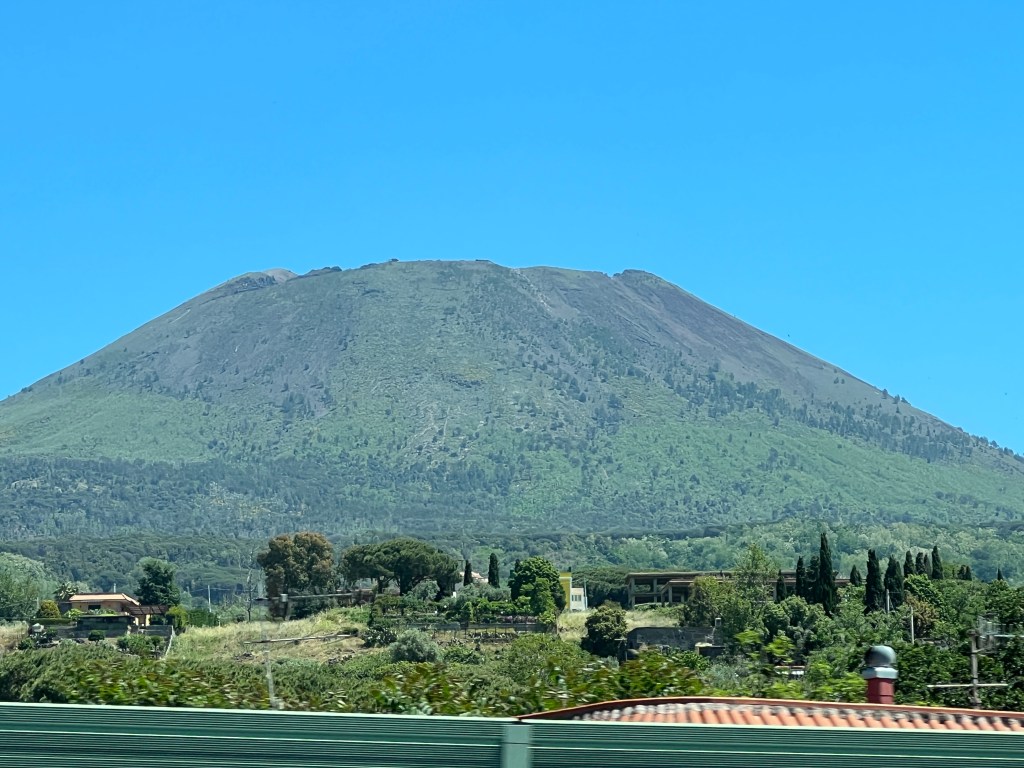
The Villa belonged to the family of Nero’s second wife, Poppaea Sabina. It’s construction dated back to the first century B.C. It now sits in the middle of what now is a rather sad small town, but it was the height of elegance in its time. Just like Pompeii, the Villa had been buried by the Vesuvius eruption in 79 A.D., but most likely no one was home at the time. TheVilla had been undergoing renovations due to a violent earthquake in 62 A.D.
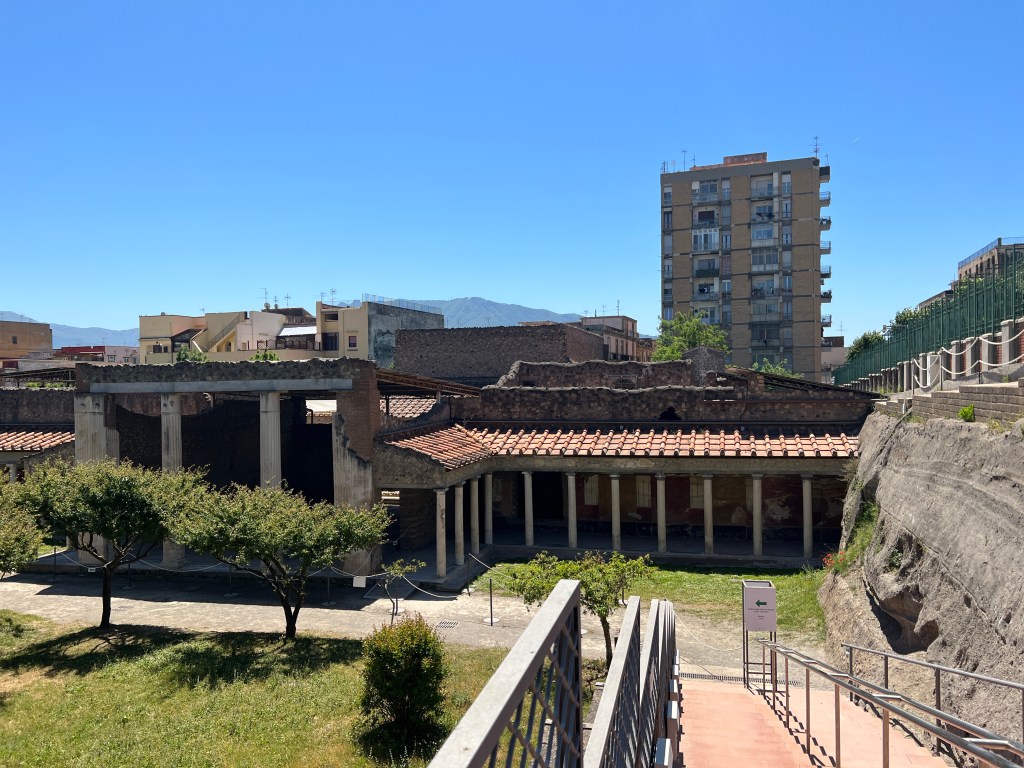

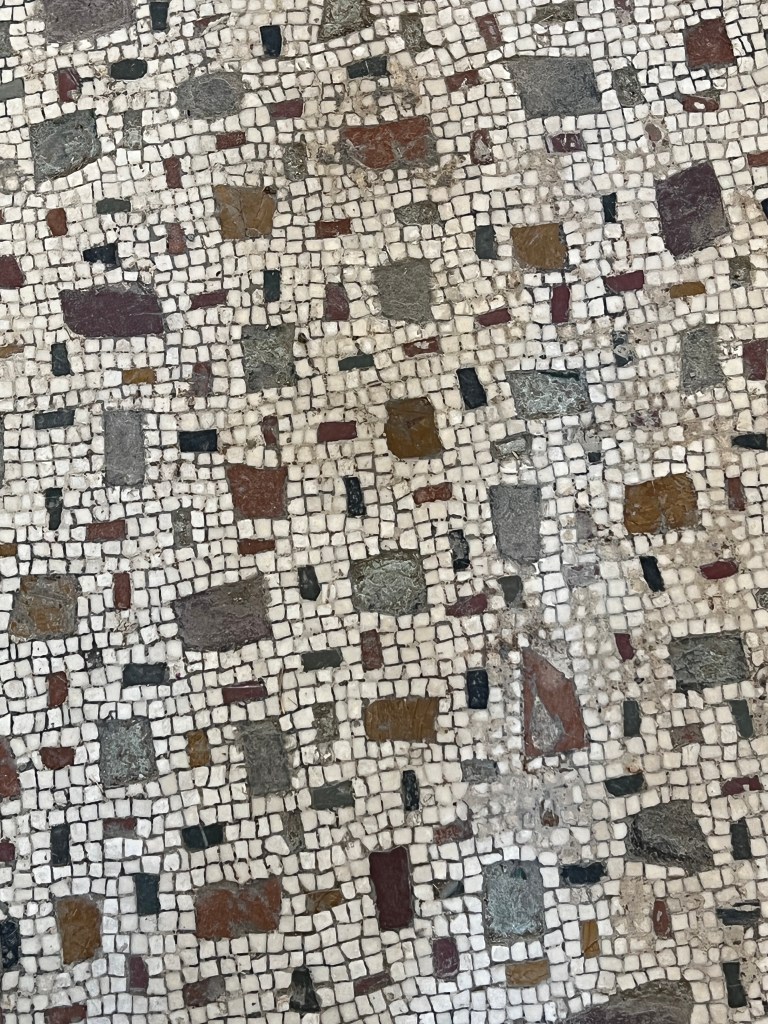
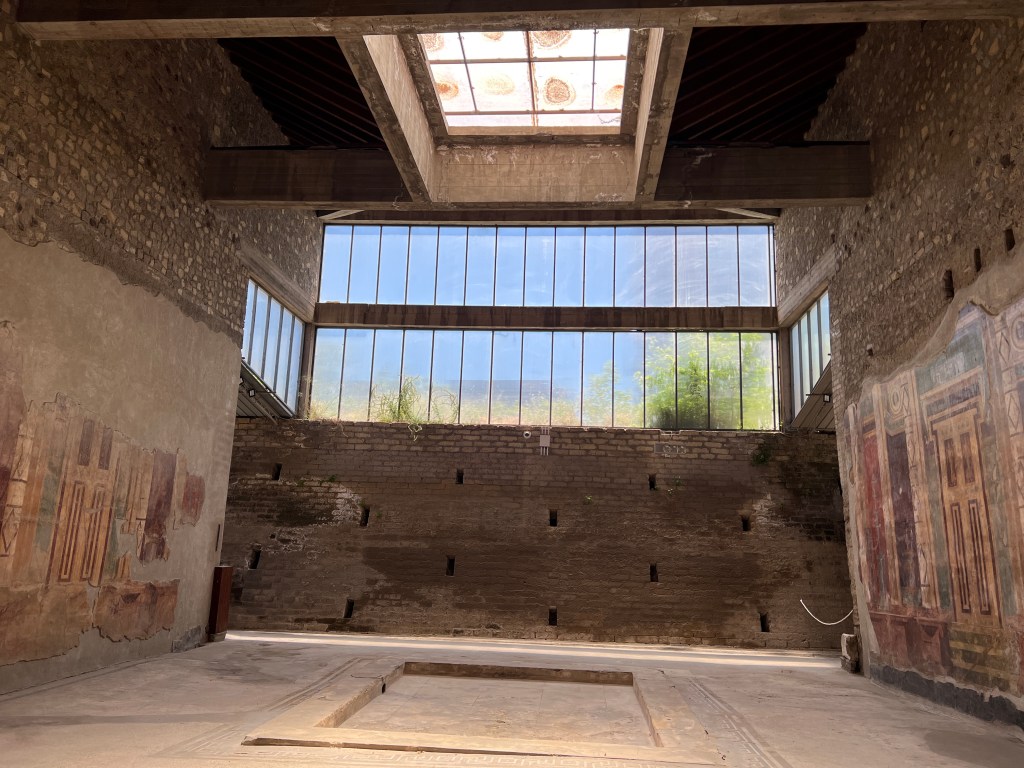
We were the only visitors and had free reign of the place. It was incredible that so much of it survived, with the exception of the roof. The place was sprawled out like a massive ranch home with too many rooms to count. All of the floors were covered in mosaics or stone, and all of the walls and columns at one time had been colorfully painted. Much of it could be seen today. Some of the rooms were enormous in size, including several courtyards. The home had indoor plumbing for its numerous fountains, drinking water, bathing, bathrooms and large outdoor pool. At one time it must have also had beautiful gardens.
The only downside on our visit was that there were no tour guides and it was difficult for us to know how many of the rooms had been used. Some rooms were labeled, but we didn’t know what was meant by the word Triclinium or Calidarian. We will have to do some research when we return home.


After about an hour we hopped back into the car and headed to Sorrento. Our hotel, Antiche Mura, sits on the edge of a crevice splitting Sorrento into two, and very near the main square. It was a perfect location in that it was close to the center of town, but quietly tucked away on a side street. The grounds were lovely, and were filled with lemon trees and other beautiful plantings.
Once settled, we ventured out into charming Sorrento and saw it’s beautiful coast line. As to be expected the town was filled with shops and restaurants, including the usual limoncello stores. We selected a restaurant that appeared to be popular, Taverna dell’ 800, and enjoyed pasta dishes made with local seafood. The pasta has been very good everywhere we have eaten, and is always cooked al dente. It was another wonderful day in Italy. Tomorrow we head for the Amalfi coast.
 BY THE WAY WITH WENDY & DAN