
We began the morning with a lovely breakfast at our hotel. It was a beautiful buffet that included some wonderful pastries, which we enjoyed on a small outdoor patio. One lesson we learned is that Roman birds are as aggressive as Roman drivers. If you left your plate unattended they would swoop down and carry some of your breakfast away. Fortunately there was enough for everyone.
Today we didn’t waste time trying to walk to our tour on our own. It was so much easier to simply have the hotel call us a taxi. Our tour guide was a very knowledgeable and animated Italian woman. The Colosseum was built at the peak of the Roman Empire’s power, in 80 A.D., and could hold 50,000 people. One major event it was used for were wild animal fights. It gave the audience a chance to see lions, tigers, giraffes, elephants and other exotic animals from all over the Roman Empire. This spectacular performance was a demonstration of Rome’s power.
As for the gladiators, many fought and died, but many fought and survived. People would root for their favorites, and it wasn’t good business to kill off one of the celebrities. The Emperor was too small for him to simply give a thumbs up or down as shown in the movies. Instead it was the crowd that determined who won or lost by how loudly they yelled.


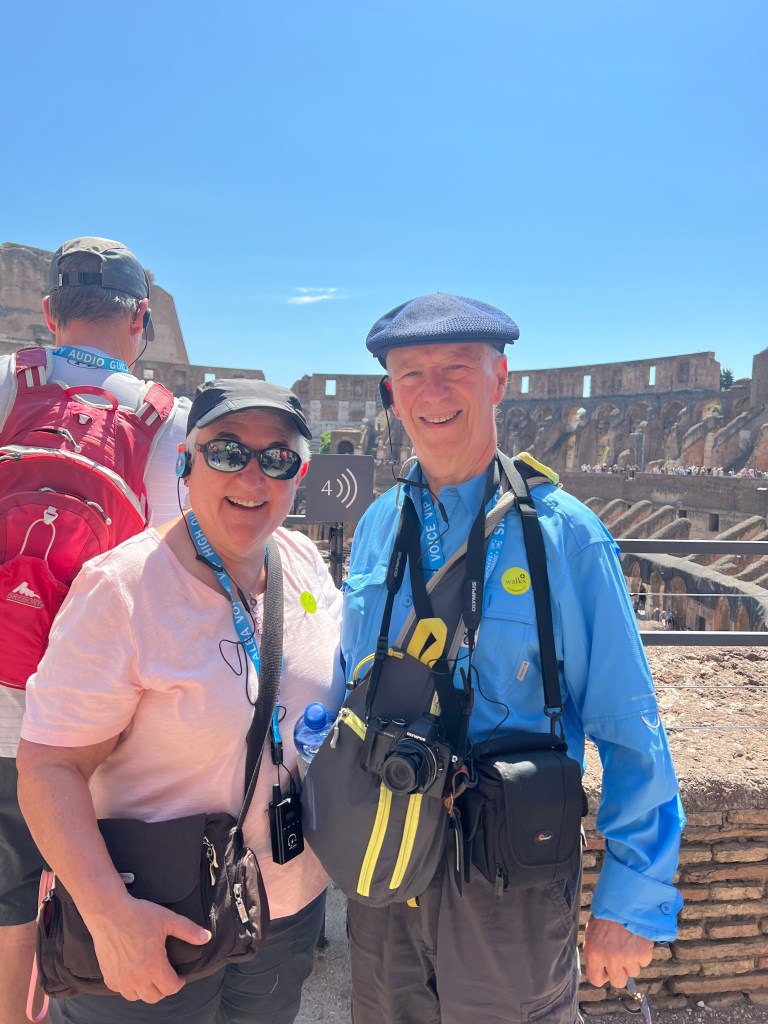
Our guide explained how the colosseum was built, materials used, where people were allowed to be seated based on status and sex, and so much other information I’m afraid I’m too tired to report on details. Only about a third of the building still exists due to earthquakes and people simply carting off parts of it to build other buildings. What is left, however, is truly amazing.
Our next top was the Roman Forum and Palatine Hill. To be honest I was surprised by how large the area covered given that Rome is such a large growing city. However, I do know tourism dollars spent to see these incredible sites must be huge. Back in 1970 when I visited as a college student, I paid nothing to enter. That is no longer the case.
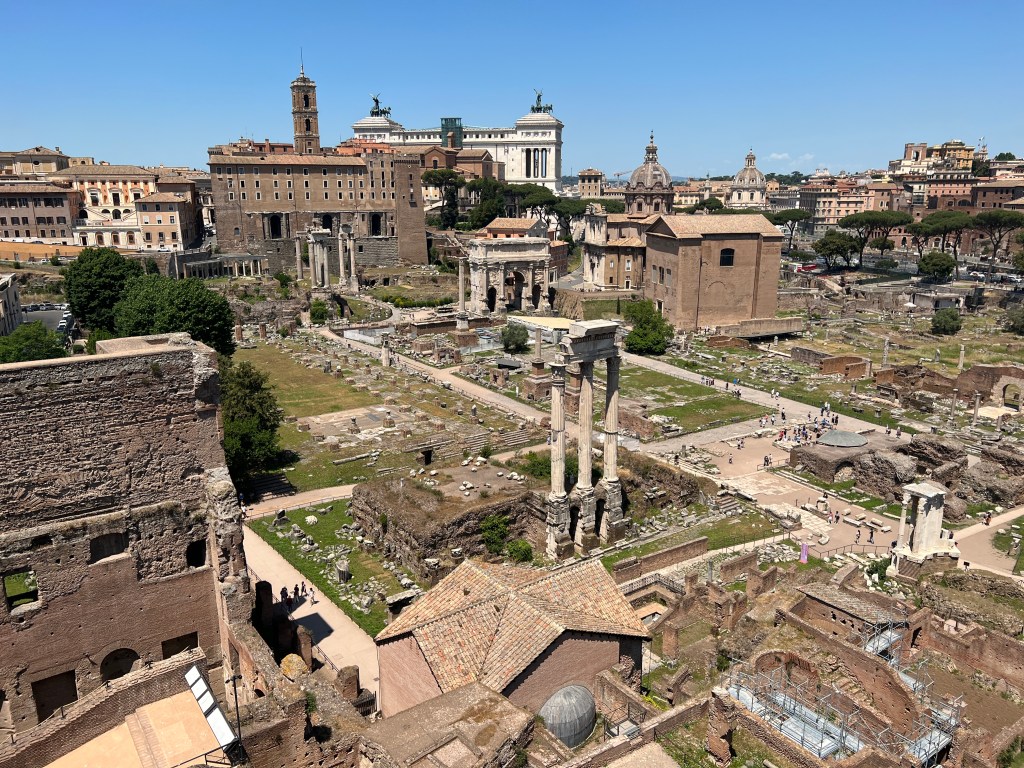
There are so many arches, temples and other buildings that it is too much information for me to process in this blog. A few things did stand out to us. The Arch of Titus commemorated the Roman victory over the province Judaic (Israel) in 70 A.D. Once defeated the Israelites were supposed to worship the emperor as their g-d, but the Israelites believed in one G-d and refused. The Romans then destroyed and plundered the Temple.

The Temple of Vesta was the only place in the forum where people lived. Those people were the seven Vestal Virgins. They tended a flame that was never to go out. The burning flame insured that Rome would never fall. They were selected for their beauty between ages of 6 and 13, and served for 30 years. If one were found not to be a virgin, they would be buried alive.
Lastly, was the Temple of Julius Caesar, where Caesar’s body was cremated, The area was not much to look at, but interesting in itself. Just 13 years after he was stabbed to death for attempting to become Rome’s 1st emperor, his son was named Emperor Augustus. In dedicating this temple in the name of Julius Caesar, Augustus helped make his father the first Roman to become a god.
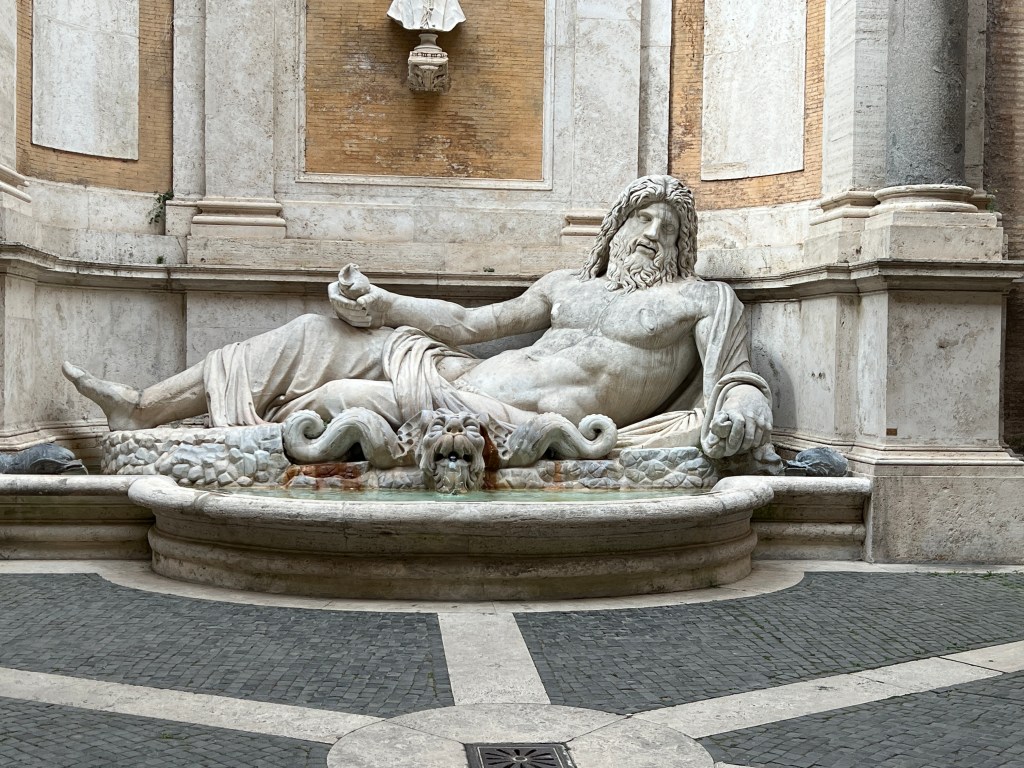
In order to kill some time before our next activity, Small Group Food Tour, we headed over to the enormous Capitoline Museum, that houses an incredible array of ancient statues, mosaics, etc. Some statues were amazing in their details and in their size. Once again we were museumed out, but bided our time until 6:00 when we were to meet our foodie group.
Anastasia collected us a the Piazza Farnese along with another 10 people. Our first stop was at Rucceri’s, a shop that specialized in meats and cheeses. We sampled olives, salami, and some other delicious tidbits. Anastasia then took us through a beautifully painted “secret” shortcut between the streets that led to Rossioli’s, where we tasted two kinds of Roman pizza. The next restaurant was located in the former Jewish ghetto, The Taverna del Ghetto. Here we tasted fried artichokes, rice balls, and white wine. Already full, the tour kept on going. Our next stop Sette Oche in Altadena was across the Tiber River in the Trastevere neighborhood. We were served two types of local pasta dishes: one with pepper and parmesan cheese, and the other with a light red sauce, parmesan and bacon. Of course, we also enjoyed some more wine, this time red. Now almost too full to walk we had gelato at Fior di Luna. Did you know that the best gelato should not be overflowing. If it is there is too much air in it. Also, if the store advertises with the word “genuine” gelato, you should keep on walking. It is unnecessary to state that fact.

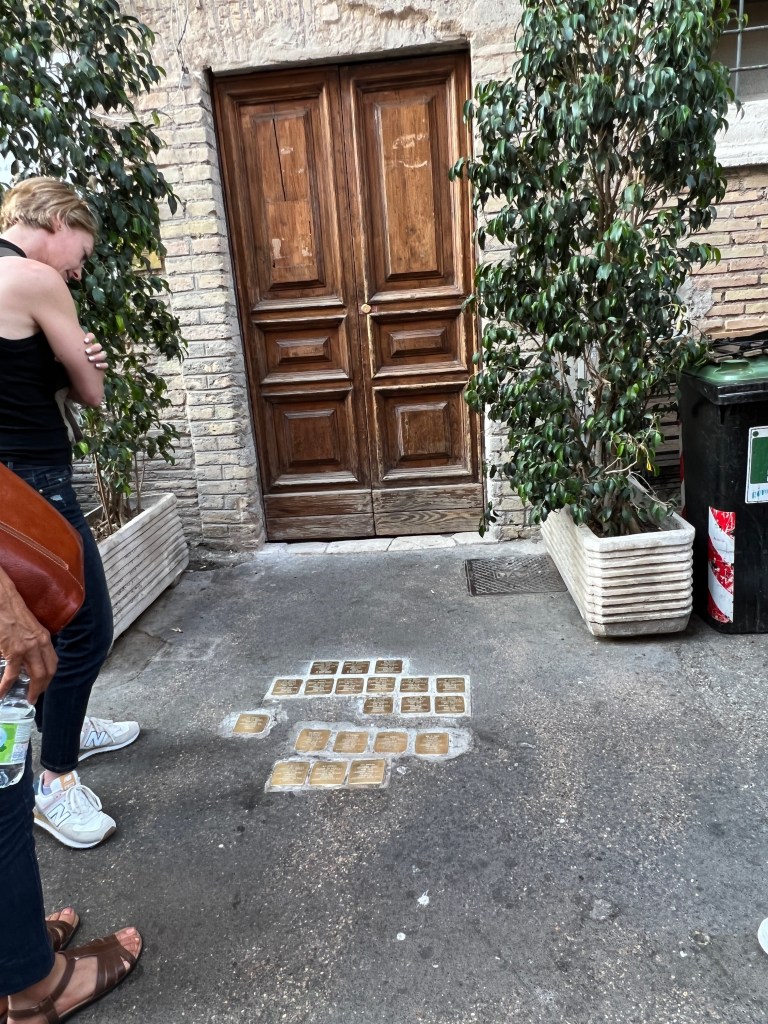
Side Note: From the 16th through 19th centuries Jews or Rome lived in a cramped ghetto area near the Tiber River. Few Jews live there now, but the Synagogue is there along with a Holocaust Museum. There are small metal markers in front of buildings commemorating the names of people that had lived in those buildings and had been deported by the Nazis.
Our gastronomical experience now over, (it was quite wonderful), we grabbed a taxi and headed back to collapse at our hotel. Tomorrow we head to Sorrento.
‘
 BY THE WAY WITH WENDY & DAN